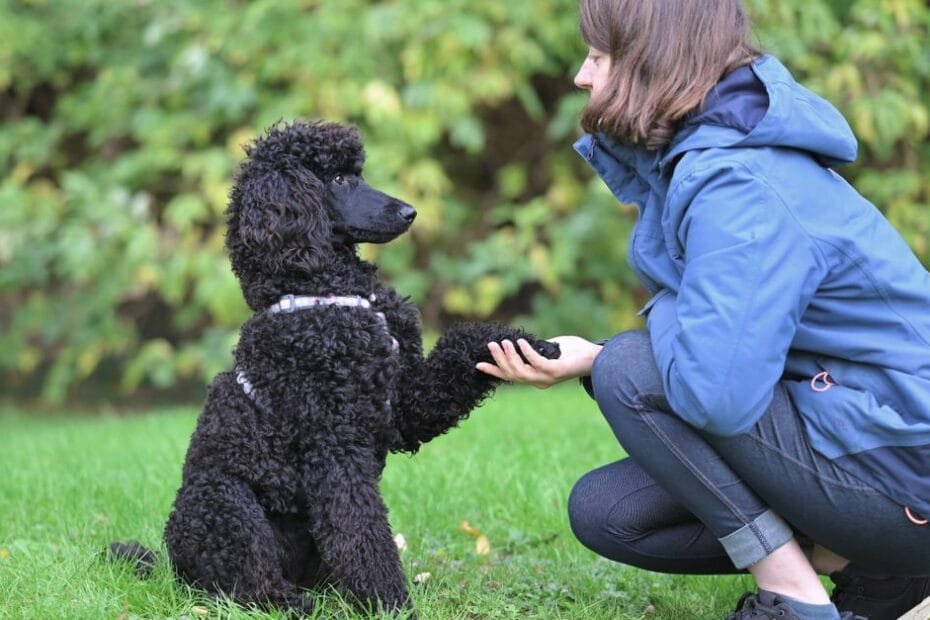
Every confident pet owner runs on about a dozen learnable SKILLS — potty and litter training, crate and carrier conditioning, nail trims, teeth brushing, ear cleaning, giving medication, the body-condition check, basic first aid, introductions between animals, and the grooming fundamentals — and the honest secret is that none of them is talent: each one is a five-minute technique plus the cooperative-care training that makes the animal a volunteer. This page is Pawspera’s skills library: each skill briefed in its essentials with the deep step-by-step guide linked, organized into a learn-one-a-month ladder that takes a brand-new owner to fully-equipped inside a year — and cross-wired into the five system pillars (care, health, nutrition, training, gear) that every skill ultimately serves.
Below: the skills ladder and how to learn any skill right (the watch-practice-pay method), the twelve skills in training order — house skills, handling skills, medical skills, and social skills — the troubleshooting protocol for when a skill stalls, the skills that should NOT be DIY’d, and the printable one-a-month plan.
Key Takeaways
- Skills, not talent: every owner competency is a five-minute technique plus cooperative-care training — all learnable.
- Learn in order: house skills first (potty, litter, crate), handling second (nails, teeth, ears), medical third, social last.
- The method is watch-practice-pay: one good video, one short daily rep, generous payment — the training pillar’s engine applied to yourself.
- Stalled skills diagnose the same way every time: too fast, underpaid, or the animal’s consent withdrawn — back up one step.
- Some skills stay professional: anal glands, matted-coat rescues, and anything the animal meets with genuine aggression.
- One skill a month makes a fully-equipped owner in a year — the ladder below is the syllabus.
How to Learn Any Pet Skill (The Watch-Practice-Pay Method)
WATCH: one credentialed demonstration (each skill below links its deep guide; the videos embedded across this site are vetted for exactly this) — watched TWICE, once for the sequence and once for the hands, because pet skills live in grip, angle, and timing more than in steps.
Also Read



PRACTICE in the smallest possible unit: the nail skill starts as touching the clipper to one nail and paying — no cut — for a week; the pill skill starts as an empty pill-pocket routine; the training pillar’s mark-pay engine runs the whole curriculum with the OWNER as the second student: your hands are learning a motor skill, and five calm minutes daily beats the weekend marathon for you exactly as it does for the animal.
PAY on both ends: the animal per cooperative care (consent behaviors, session-ending on wins), and yourself with honest tracking — the skills checklist on the fridge beside the care pillar’s loops, because a checked box per week is how a year-long syllabus actually finishes.
House Skills (Months One to Three)
POTTY TRAINING, the dog household’s first exam: schedule plus supervision plus paid outdoor wins, accidents cleaned with enzyme and never punished — the step-by-step guide runs the full protocol, and the adult-rescue version runs the same system faster. LITTER TRAINING, the cat parallel: mostly setup (the box math and placement from the gear pillar) plus the kitten protocol — and the litter-lapse in a trained cat is the health pillar’s call-tier flag, not a training failure, worth learning on day one.
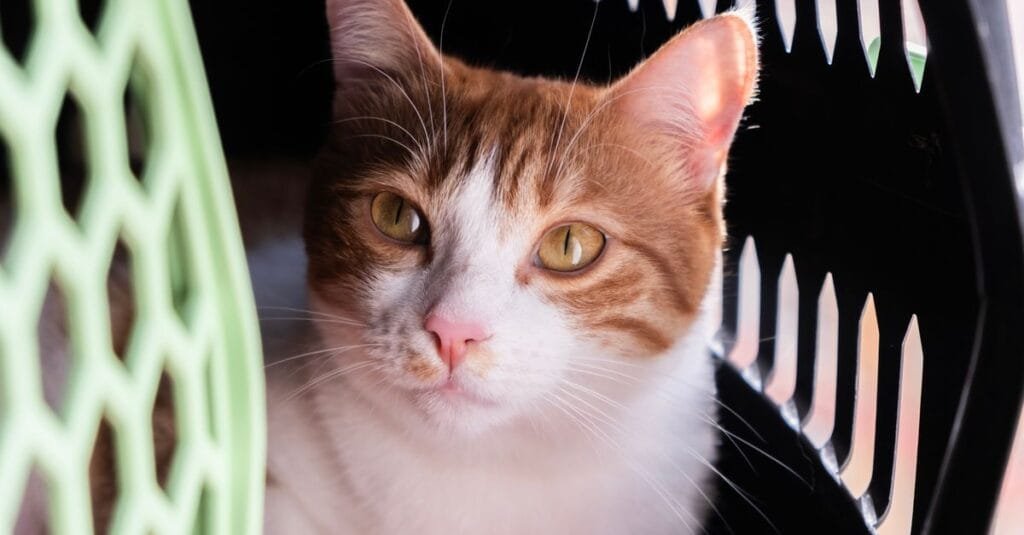
CRATE CONDITIONING: the crate as a paid, door-open den for weeks before the first latched minute, meals inside, duration built in minutes — the skill that buys calm travel, safe recovery from surgeries, and the alone-time foundation; CARRIER CONDITIONING is its feline twin (the carrier as furniture, treats appearing inside daily) and the single highest-return cat skill in this library — the difference between lifelong vet-visit warfare and a cat who strolls in, per the carrier guide’s conditioning chapter.
THE ALONE-TIME SKILL that rounds out the house tier: departures rehearsed short and boring (keys, door, return — before coffee even), duration built gradually, arrivals kept calm — the anxiety-prevention work that is a hundred times easier to install than repair.
The vet-team first-aid kit briefing above covers the medical tier’s foundation skill — what belongs on the shelf and why, before any hands-on technique.
Handling Skills (Months Four to Six)
NAIL TRIMS: the clipper-touch-pay week, then one nail a day (seven days = one dog, sustainably forever), the quick walked back on overgrown nails with weekly slivers, styptic staged — the grooming pillar holds the full technique including the black-nail and grinder variants, and the tool guide picks the hardware.
TEETH BRUSHING, the highest-value handling skill by the health pillar’s own math: pet toothpaste licked from a finger for week one, the finger-brush graduation, the brush-kit arrival only after the mouth-touch is boring — the dental guide runs the ladder, and several-times-weekly is the honest passing grade.
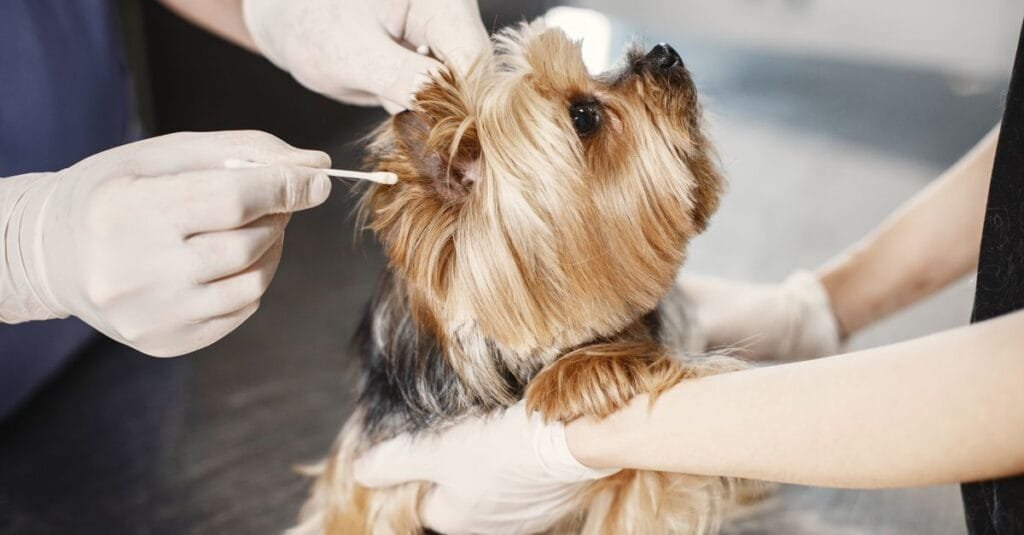
EAR CLEANING: the weekly look-and-sniff literacy first (normal learned so abnormal announces itself), solution-damp cotton pads on the visible surfaces only — the ear guide demonstrates — and the BRUSHING skill itself (line-brushing for the coated breeds, the glove recruitment for cats) graduates here from chore to competence via the grooming pillar’s technique chapter.
Medical Skills (Months Seven to Nine)
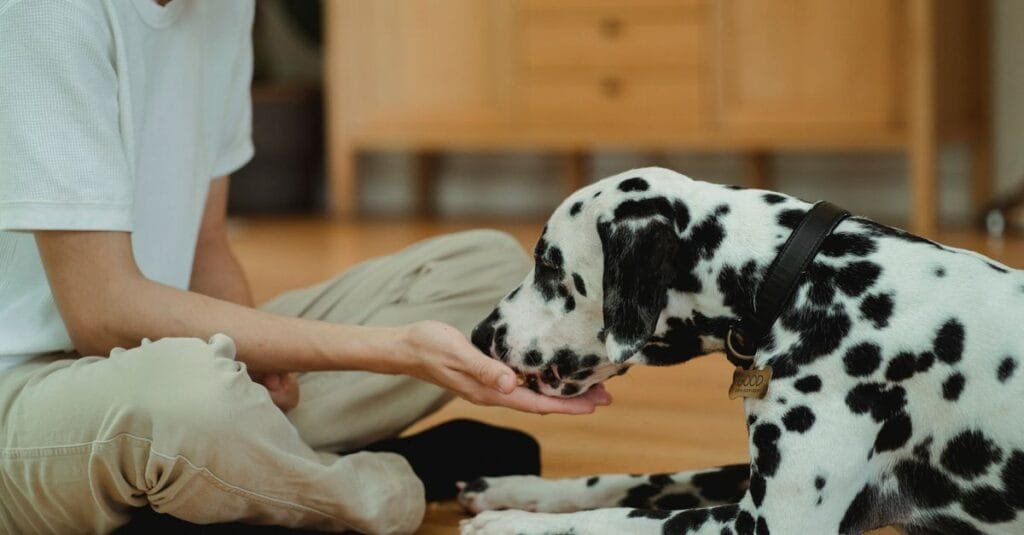
GIVING MEDICATION, the skill every household eventually needs at 9 p.m.: pills ride in pill pockets, cheese, or the three-treat shuffle (dud, loaded, dud — dogs audit the first and last); the direct-pill technique for the wise-to-it tier (gentle head tilt, pill far back, throat stroke, follow with water or food) learns BEFORE it’s needed via empty-handed rehearsal; liquid meds go cheek-pouch slow; and cats get the towel-burrito honesty plus the ask-your-vet-about-alternatives move (many meds compound into flavored liquids — the question is free).
THE BODY-CONDITION CHECK from the nutrition pillar, run monthly until it’s automatic: ribs felt under light touch, waist seen from above, tuck seen from the side — plus the health pillar’s baseline package (resting breathing rate counted during sleep, gum color glanced once) — five minutes that make you the early-warning system this site keeps promising you can be.
FIRST AID, the foundation-and-limits skill: the kit stocked (the video above), the core competencies practiced calm — paw wraps, the tick pull with tweezers at the head, the nail-quick styptic moment, the towel restraint that protects both parties — and the LIMITS internalized: first aid buys transport time to professionals; the emergency-now list is the companion page this skill exists to serve.
Social Skills (Months Ten to Twelve)
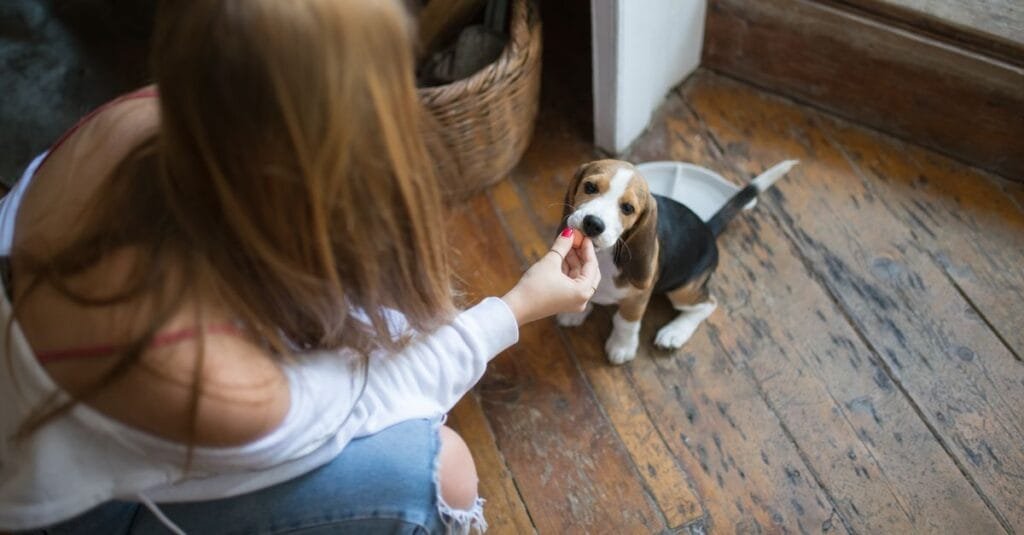
INTRODUCTIONS, the multi-animal curriculum: the dog-and-cat barrier protocol, the neutral-ground dog-to-dog walk, the slow feline merger — each briefed in the adoption pillar and run by the training pillar’s paid-calm engine; the skill’s core is PATIENCE AS TECHNIQUE: weeks-not-days is the method, not the failure.
SOCIALIZATION as an ongoing owner skill rather than a puppy checkbox: the adult-dog protocols, the older-dog pace, and the exposure-paired-with-treats architecture that generalizes confidence — plus the GUEST-AND-KID management skill (the retreat space enforced, the two laws taught to visiting children) that makes the household’s social life compatible with the animal’s.
THE READING SKILL underneath all of them: stress signals (lip licks, whale eye, the frozen not-calm), consent signals (the lean-in, the chin rest), and the species dialects the behavior hub decodes seventeen at a time — fluency here is the skill that upgrades every other skill in the library, and it’s learned the same way: watch, practice, pay attention.
When a Skill Stalls (The Three-Question Diagnosis)
TOO FAST? The universal first suspect: back up one step on the ladder (the nail dog regressing to clipper-touch, the carrier cat back to treats-beside-it) and rebuild at the 80%-success rule — skills stall at skipped steps the way stairs trip at missing treads.
UNDERPAID? The second: the reward that worked in the kitchen deflates at the bathtub — raise the pay to match the ask (the chicken tier exists for nail day), and check that payment is landing within the two-second window the training pillar set.
CONSENT WITHDRAWN? The third and most important: the animal that suddenly refuses a learned handling skill may be reporting PAIN (the sit that slowed, the brush-flinch at one spot — health pillar, vet first), and the one that never consented is telling you the foundation was rushed — both answers are information, neither is defiance, and the professional line below exists for the cases that stay stuck.
The Not-DIY List (And the Pro Handoffs)
STAYS PROFESSIONAL: anal-gland expression (vet or groomer per the scooting guide), matted-coat rescues (the grooming pillar’s shame-free shave-down), anything requiring sedation, wound care beyond the first-aid tier, and EVERY skill the animal meets with genuine aggression — the bite risk converts a home skill into a professional appointment, permanently or until a behavior professional rebuilds the foundation.
THE HYBRID TIER, learned FROM professionals: ask the vet tech to demonstrate the pill technique at the visit (they’ll happily coach — it makes their next visit easier too), ask the groomer to walk your brushing pattern once, and treat every professional appointment as a free masterclass in handling your specific animal — the groomer and vet relationships this site keeps prescribing pay their tuition here.
THE HUMILITY CLAUSE that keeps the library honest: a skill that isn’t working after honest diagnosis is allowed to be outsourced forever — the household that pays the groomer for nails and aces everything else is running a correct system, not a failed one; the goal was always a cared-for animal, not a merit badge.
The One-a-Month Plan (The Printable Syllabus)
THE LADDER, in learning order: (1) potty or litter, (2) crate-carrier conditioning, (3) alone-time, (4) brushing technique, (5) nails, (6) teeth, (7) ears plus the body-condition check, (8) medication rehearsal, (9) first aid and the kit, (10) introductions or socialization, (11) the reading skill’s deliberate month, (12) review-and-maintenance — each month’s skill practiced five minutes daily while the previous months tick along at maintenance dose.
THE NEW-OWNER ACCELERATION: adoption-week households front-load months one-through-three (the house skills ARE the first 90 days per the adoption pillar), then rejoin the calendar — and the EXPERIENCED-owner audit runs the list once honestly, because most veteran households find two or three skipped skills (usually teeth and the breathing-rate baseline) coasting on luck.
THE COMPOUNDING CLOSE: every skill above makes the care loops faster, the health system’s data better, the grooming bills smaller, and the animal’s vet visits calmer — a year of five-minute sessions, and the owner the animal deserved is just who you are now.
The Household Skill-Share (Splitting the Syllabus)
THE ASSIGNMENT LOGIC for multi-adult households: skills assign by aptitude and schedule, not by default (the steadier hands take nails; the earlier riser owns the morning meds), every skill has a PRIMARY and a BACKUP (the vacation-and-flu-week insurance the care pillar’s minimum-viable-day card assumes), and the handoff standard is a demonstration, not a description — watch the primary run it once before owning the backup slot.
THE KIDS’ LADDER, imported and extended: school-age kids apprentice on the paying-the-animal half of cooperative care (the treat dispenser role is a real job), tweens graduate to brushing under audit, teens can own full skills with the adult spot-check — and the two-generation dividend is real: the kid who grew up running the syllabus arrives at their first apartment already the owner this library builds.
THE CONSISTENCY CLAUSE that makes sharing work: one technique per skill household-wide (the pill shuffle run three different ways teaches the dog to audit everyone), documented in one shared note with the care sheet — because skills are protocols, and protocols forked are protocols broken.
Choosing Teachers (Video-Learning Literacy)
THE CREDENTIAL FILTER for the watch step: veterinary channels and credentialed trainers first (the sources this site embeds — AVMA-tier for medical skills, certified-trainer-tier for behavior, working professionals for grooming), the force-free filter applied to any training content (the same hire-a-pro filter from the training pillar works on videos: how does the teacher handle it when the animal gets it wrong?), and the RED FLAGS retired on sight: dominance theater, “instant fix” promises, and techniques the comments section is quietly reporting injuries under.
THE SPECIES-SPECIFIC note: dog technique does not transfer to cats unedited (restraint especially — the towel wrap replaces the hug; the session clock halves), and the exotic-and-small-mammal tier deserves its own credentialed sources rather than dog-video improvisation — the rabbit’s nail trim is its own skill with its own spinal-safety rules, learned from rabbit people.
The Emergency-Skills Drill (Practice Before the Panic)
THE QUARTERLY FIVE-MINUTE DRILL that converts knowledge into reflex: locate the first-aid kit blind, recite the emergency clinic’s address aloud, run the towel-restraint rep on the willing animal, check the styptic and expiry dates, and rehearse the transport plan (who drives, who calls ahead, where the carrier is) — households drill fire escapes; the pet version costs one coffee’s length per season.
THE PHONE SETUP done once: the vet, the after-hours ER, and poison control in contacts under “VET” (findable by a panicking family member who isn’t you), the pet’s photo set current, and the microchip number in the same note — the five-minute setup that makes every emergency skill above executable by whoever is home when it matters.
THE CALM ITSELF as the master skill: animals read handler stress fluently, the practiced household moves slower and lower-voiced in crisis BECAUSE the drill made the steps boring — and the difference at the emergency clinic between the rehearsed arrival and the chaotic one is measured in treatment minutes; practice is how you buy them.
The Renewal Loop (Skills Decay; Schedules Don’t)
THE MAINTENANCE DOSE: learned skills hold on small regular reps (the weekly nail sliver, the several-weekly teeth, the monthly body check) — and the skill unused for a season re-enters at one ladder step down, on purpose, before it’s needed at full speed; the medication rehearsal especially renews QUARTERLY empty-handed, because the 9 p.m. real thing is the wrong first rep in six months.
THE ANNUAL AUDIT beside the health pillar’s records refresh: the twelve skills glanced down once a year — which are automatic, which decayed, which the animal’s new life stage just changed (the senior’s nail clock accelerates as walks shorten; the arthritic cat’s brushing promotes from grooming to necessity) — ten minutes with the checklist, and the syllabus stays current with the animal it serves.
Frequently Asked Questions
What skills should every pet owner learn?
The twelve-skill library: potty/litter training, crate and carrier conditioning, alone-time building, brushing, nail trims, teeth brushing, ear cleaning, giving medication, the body-condition check, first aid, introductions, and reading stress-and-consent signals — one a month makes a fully-equipped owner in a year.
How do I learn to trim nails or brush teeth without a fight?
The watch-practice-pay method: one credentialed demo watched twice, then the smallest unit practiced daily (clipper-touch-and-pay for a week before any cut; toothpaste licked from a finger before any brush), paid generously. Skills stall at skipped steps — back up one and rebuild.
How do you give a dog or cat a pill?
Dogs: pill pockets or the three-treat shuffle (dud, loaded, dud); the direct technique — head tilt, pill far back, throat stroke, food after — rehearsed empty-handed before it’s needed. Cats: the towel-burrito honesty, and ask your vet about flavored compounding — the question is free.
What pet care should you never DIY?
Anal glands, matted-coat rescues, sedation-tier anything, wound care beyond first aid, and any skill the animal meets with genuine aggression — that’s a professional appointment until a behavior pro rebuilds the foundation. And outsourcing a stalled skill forever is a correct system, not a failure.
Why does my pet suddenly refuse something it used to allow?
Run the three-question diagnosis: too fast (back up a ladder step), underpaid (raise the reward to match the ask), or consent withdrawn — and sudden refusal of learned handling often reports pain: the vet exam comes before the training fix, per the standing rule.
Where do I start as a brand-new pet owner?
Front-load the house skills in your first ninety days (potty/litter, crate-carrier, alone-time — they overlap the adoption pillar’s settling protocol), then run the one-a-month ladder. Five minutes a day; the checklist on the fridge does the rest.
The Skill You Practice on Yourself
The syllabus’s quiet thirteenth entry: OBSERVATION — the daily four-dials glance from the care pillar, the monthly hands-on scan, the brush’s feedback loop — is a skill with reps like any other, and it improves measurably: first-year owners miss what fifth-year owners catch at a glance, not because of talent but because of five thousand accumulated repetitions. Every skill in this library sharpens it; it repays every skill in the library. Start the ladder anywhere — observation is climbing with you either way.
The Bottom Line
Learn watch-practice-pay, climb the ladder one skill a month, diagnose stalls with the three questions, hand the pro list to the pros, and let the skills compound through every pillar they serve — competence is the cheapest thing on this site, and it’s bought in five-minute installments.
A year from now the nail trim is boring, the pill is a snack, and the carrier is furniture. That’s not a talented owner — that’s a finished syllabus.

Hello! I'm Khan Hisham, a dedicated student with a profound passion for enhancing the lives of pets through comprehensive care. At Pawspera, our mission—"Prospering Pets, Every Day"—drives everything we do. We are committed to providing the latest insights, tips, and products that ensure your pet's health and happiness. Join us at Pawspera as we explore innovative ways to care for our furry friends with love and dedication.