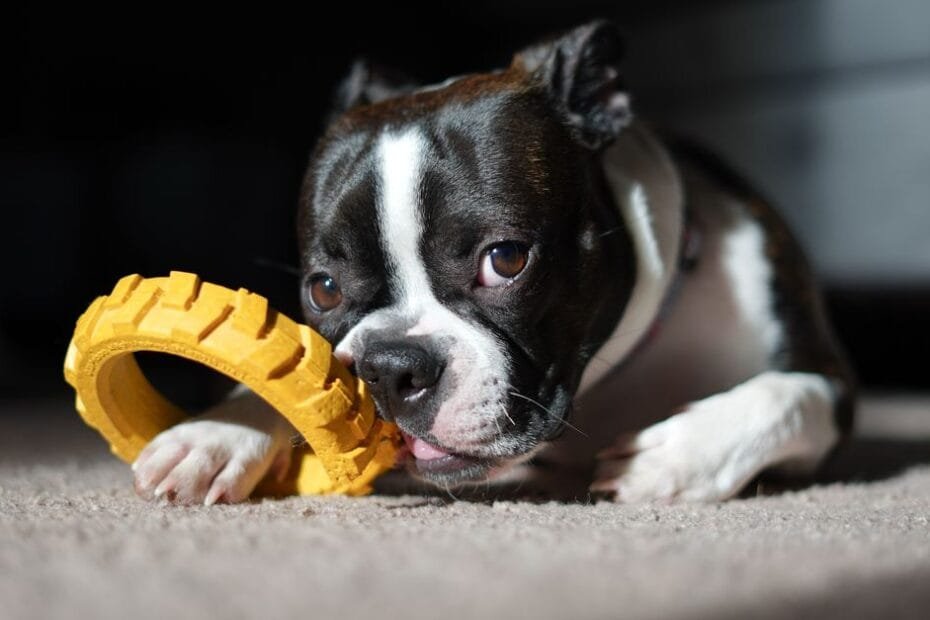
Puppy teething runs on a fixed calendar you can’t negotiate but can absolutely survive: 28 needle-sharp baby teeth erupt by about six weeks, start FALLING OUT around twelve-to-sixteen weeks, and by roughly SIX MONTHS the full set of 42 adult teeth has landed — which means the shark phase your furniture is currently funding is a three-ish-month weather system, not a personality. Survival is a three-part system: SUPPLY (a rotating menu of legal chews across textures — rubber, rope, soft nylon — plus the frozen tier: a wet washcloth twisted and frozen, a rubber toy stuffed and frozen, because cold genuinely numbs inflamed gums); REDIRECTION (every illegal chew — hands, chair legs, shoes — gets calmly traded for a legal one, ten thousand times, without drama, because the puppy isn’t defiant, it’s DENTATE); and MANAGEMENT (puppy-proofing, baby gates, and the crate’s chew-safe zone doing the supervision your attention can’t). The two vet flags worth knowing in advance: RETAINED baby teeth (the double-tooth look when an adult tooth erupts beside a baby tooth that won’t leave — a vet visit, since crowding writes permanent bite problems) and anything broken, bleeding beyond spotting, or making eating painful.
This is the complete guide: the timeline tooth by tooth, what normal teething looks like (and the blood-spot honesty), the chew-toy menu built by texture with the hardness safety test, the frozen tier that actually relieves pain, the redirection protocol that saves your hands and furniture, the teething-versus-play-biting distinction that confuses every first-time owner, the retained-tooth and vet flags, and the six-month dental audit that closes the chapter.
Key Takeaways
- Teething runs ~12 weeks to ~6 months: 28 baby teeth out, 42 adult teeth in. It ends. Really.
- Cold is the analgesic: frozen washcloths and stuffed-frozen rubber toys numb inflamed gums for free.
- The thumbnail test governs hardness — if your nail can’t dent it, it can crack a puppy tooth. No antlers, no bones.
- Redirect, never punish: trade every illegal chew for a legal one, calmly, ten thousand times.
- Rotate a small menu of textures (rubber, rope, soft nylon, frozen) — novelty does half the work.
- Double-teeth (retained baby teeth), broken teeth, or painful eating are vet visits, not phases.
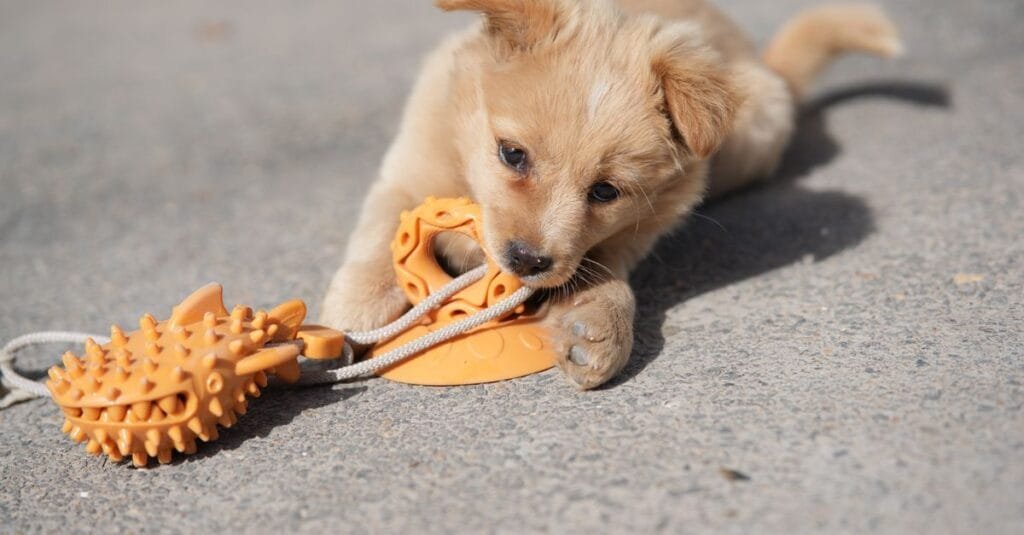
The Timeline (What Erupts When)
WEEKS 3–6, mostly at the breeder’s: the 28 DECIDUOUS teeth arrive — incisors first, then canines, then premolars (no baby molars; those slots stay vacant until the adult set) — and they arrive needle-sharp on purpose: littermate play with those needles is how puppies learn bite pressure, the built-in curriculum your redirection work continues.
Also Read
-
How to Socialize a Kitten: The Window, the Food Rule, and the Checklist

-
How to Stop a Cat Scratching Furniture: The Reroute, the Placement Law, and the Specs
-
How to Crate Train a Dog: The Four Stages, the Whining Tree, and the Physiology Table
-
Back to School With Pets: The Two-Week Taper, the Alone-Time Rebuild, and the Distress Line

WEEKS 12–16, on your watch: the baby teeth start LOOSENING and shedding as adult teeth push from beneath — incisors again first — and you’ll mostly never find the evidence: the majority of baby teeth get swallowed harmlessly with dinner, so the occasional tiny tooth on the floor is a bonus, not the census.
MONTHS 4–6, the peak and the finish: canines and premolars swap out, the adult MOLARS erupt into the empty back slots (often the crankiest weeks of the whole arc), and by six-ish months the 42-tooth adult set is seated — the vet confirms completion at the spay/neuter-era visit, which is exactly when the retained-tooth check below happens for free; the full development arc sits inside the puppy care guide’s bigger calendar.
The video above is Zak George — the positive-reinforcement training standard this site’s dog content leans on — running the redirection-and-management system on a real land-shark puppy; the techniques below are that system in print.
What Normal Looks Like (And the Blood Honesty)
THE NORMAL LIST, so 2 a.m. googling doesn’t escalate: increased chewing on EVERYTHING (the defining symptom — pressure genuinely relieves gum ache), drooling beyond baseline, tiny BLOOD SPOTS on toys (a loosening tooth’s exit paperwork — spotting is normal; dripping is not), mild gum redness and swelling, a day or two of picky eating when the back molars move, and the general crankiness of a toddler with a mouthful of construction.
THE COMFORT MENU for the rough days: frozen offerings (below), softer food or kibble briefly moistened with warm water during molar week, and shorter-but-more-frequent play sessions — a sore mouth still needs its energy budget spent, just not through an hour of tug.
THE NOT-NORMAL LIST that skips to the vet section: refusal to eat beyond a day, a genuinely broken or discolored tooth, swelling of the face or jaw, bleeding that drips rather than spots, and pain that makes the puppy flinch from face-touching — teething explains a lot this quarter, but it shouldn’t explain everything.
The Chew Menu (Built by Texture, Governed by the Thumbnail Test)
THE SAFETY LAW first: the THUMBNAIL TEST — if your thumbnail can’t leave a dent in the chew’s surface, that chew can crack a tooth, and puppy teeth (thin-walled, immature) crack easier than adult ones; antlers, hooves, real bones, and rock-hard nylon fail the test outright, no matter how proudly the pet store aisles stack them — the same honest-evaluation reflex the product framework applies everywhere.
THE ROTATION MENU across textures, because variety does half the work: RUBBER (the stuffable classic tier — puppy-specific formulations are softer than adult versions on purpose), ROPE toys for the floss-and-tug texture (inspected and retired at fray, per supervision rules), SOFT NYLON puppy chews (the dent-able kind), and a plush or two for the gentle-mouth moods — three-or-four toys OUT at a time, the rest banked, the sets swapped weekly so Tuesday’s old toy returns Friday as a new one.
THE FROZEN TIER, the genre’s actual pain relief: the wet WASHCLOTH twisted and frozen (cheap, replaceable, perfectly gum-shaped), the rubber toy STUFFED (soaked kibble, plain yogurt, banana mash) and frozen into a twenty-minute project, frozen carrots for the supervised chewer, and puppy-safe ice cubes floated in the water bowl — cold numbs inflamed gums the way nothing at room temperature can, and the freezer should run a two-toy rotation all quarter.

The Redirection Protocol (Hands, Furniture, and the Ten-Thousand Trades)
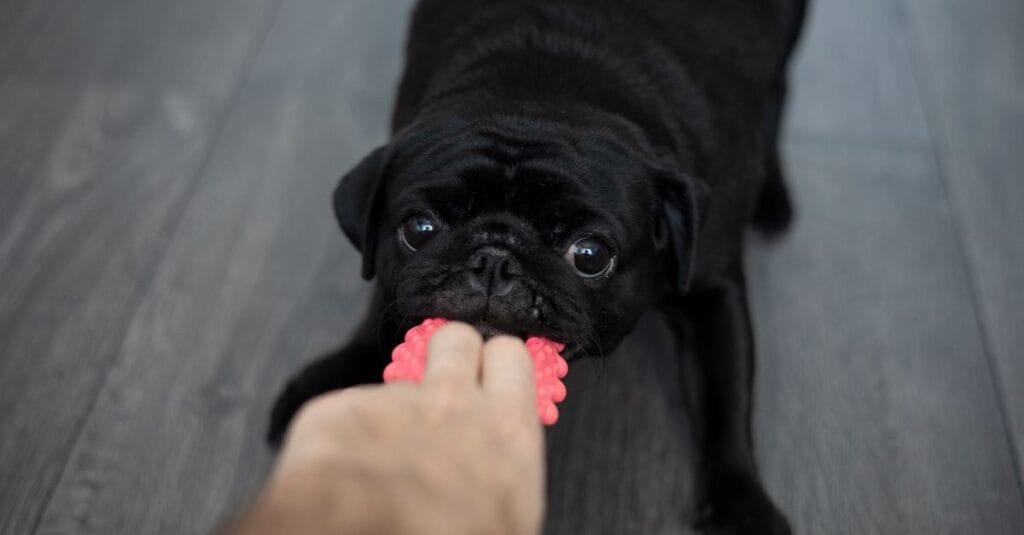
THE TRADE MECHANIC: the instant teeth meet skin or chair leg, the fun STOPS (a calm “oops,” hands still — drama is a reward), the legal chew appears, and enthusiasm for the legal chew gets celebrated — repeated with the boring consistency of a toll booth, because the puppy isn’t testing you: its mouth is its hands AND it hurts, and every trade writes the adult rule “teeth go on toys.”
THE HANDS-SPECIFIC ADDENDUM: teething amplifies PLAY BITING but they’re different curricula — teething wants pressure on objects (supply problem: solve with the menu), play biting wants interaction (training problem: the yelp-and-pause, session-ending consequences, and bite-inhibition work the puppy-biting guide covers) — and running both protocols at once is normal this quarter; the distinction matters because a frozen washcloth fixes one and a consistent fun-stops rule fixes the other.
THE MANAGEMENT LAYER doing the invisible work: puppy-proofing at shark-height (shoes elevated, cords sleeved or blocked, the chair-leg deterrent sprays as backup on the furniture that can’t move), baby gates rationing the unsupervised map, and the crate or pen — stocked with a frozen project — as the chew-safe zone for every moment eyes aren’t on the puppy; management isn’t giving up on training, it’s what makes the training math winnable.
Retained Teeth and the Vet Flags (The YMYL Paragraphs)
THE DOUBLE-TOOTH CHECK, weekly and thirty seconds: lift the lip and scan — an adult tooth erupted BESIDE a baby tooth that hasn’t left (canines are the classic culprits, small breeds the classic patients) is a RETAINED deciduous tooth, and two teeth in one slot traps food, tilts the adult tooth, and writes permanent bite problems — it’s a vet visit this month, not a wait-and-see, and extraction commonly rides along with the spay/neuter anesthesia when timing allows.
THE OTHER VET FLAGS, restated as the list they are: broken or gray-discolored teeth (dead pulp hurts silently), facial or jaw swelling, drip-grade bleeding, eating refusal past a day, an obvious bite misalignment as the adult set seats, and any teething story still running strong past seven months — each is a phone call, and none is answered by a tougher chew toy.
THE SIX-MONTH AUDIT that closes the chapter: at the adult-set-complete visit, have the vet count and confirm (42, aligned, no retentions), then convert the teething quarter’s mouth-handling tolerance into the adult DENTAL habit — the dog tooth-brushing ladder starts now while the mouth is young and the handling deposits from puppyhood are fresh; the puppies who got daily lip-lifts during teething become the dogs who get their teeth brushed for twelve years.
The Survival Mindset (For the Humans)
THE REFRAME that keeps households sane: the shark phase is a WEATHER SYSTEM with a published end date — roughly ninety days between first loose tooth and seated adult set — and the puppy chewing your table leg is not previewing the adult dog it will become; the adult dog is being written by your redirections, not by the teething it can’t help.
THE HOUSEHOLD CONTRACT: everyone runs the SAME rules (one family member who plays rough with hands undoes four who don’t — the consistency law every training guide on this site repeats), the trade protocol gets taught to the kids as a game, and the shoes-elevated discipline holds for one quarter — cheaper than one replaced sneaker.
THE ENERGY TRUTH hiding under half of “teething problems”: a bored puppy chews catastrophically regardless of gums — the walk-play-train-nap structure from the routine guide spends the energy budget legally, and the crankiest teething weeks go smoother in households where the puppy is tired for good reasons; the chew menu treats the gums, but the schedule treats the dog.

Frequently Asked Questions
How long does puppy teething last?
Baby teeth start falling out around twelve-to-sixteen weeks and the full 42-tooth adult set is seated by roughly six months — about a three-month arc, with the molar weeks near the end usually the crankiest. Chewing pressure past seven months is habit or boredom, not teething.
What helps a teething puppy the most?
Cold: a wet washcloth twisted and frozen, or a puppy rubber toy stuffed with soaked kibble and frozen — cold numbs inflamed gums like nothing at room temperature. Around it, run a rotating texture menu and trade every illegal chew for a legal one, calmly, every time.
Is it normal for puppies to bleed when teething?
Tiny blood spots on toys are normal — a loosening tooth’s exit paperwork — as are drooling, gum redness, and a briefly picky appetite. Dripping blood, facial swelling, a broken or graying tooth, or eating refusal past a day are vet calls, not phases.
What chew toys are safe for teething puppies?
Anything that passes the thumbnail test — if your nail can’t dent the surface, it can crack a puppy tooth. Puppy-formulation rubber, rope (retired at fray), soft nylon, and the frozen tier are the menu; antlers, hooves, real bones, and rock-hard nylon fail the test.
Why does my puppy have two teeth in one spot?
That’s a retained baby tooth — the adult tooth erupted beside a deciduous tooth that didn’t fall out, classically a canine in a small breed. It traps food and tilts the adult bite, so book a vet visit this month; extraction often pairs with the spay/neuter anesthesia.
Do puppies swallow their baby teeth?
Usually, yes — most of the 28 baby teeth get swallowed with meals, harmlessly, which is why owners rarely find more than a few tiny teeth on the floor. Finding none at all is completely normal; the vet confirms the changeover at the six-month check.
The Freezer Drawer Checklist
The whole survival kit in one restock list: two twisted-wet WASHCLOTHS in rotation (one working, one freezing), one stuffed rubber toy loading while another serves, a bag of carrot batons for supervised afternoons, and the ice-cube tray running puppy-safe cubes for the water bowl — the quarter runs smoother when the freezer restock joins the routine checklist like any other chore, because the household that improvises pain relief at 9 p.m. improvises it out of shoes.
The Bottom Line
Know the calendar (twelve weeks to six months, start to finish), stock the freezer and rotate the texture menu, run the thumbnail test on every chew that enters the house, trade calmly ten thousand times while management guards the gaps, scan weekly for double-teeth, and close the quarter with the six-month dental audit and the brushing habit it sets up.
The needles are temporary. The rules you trade into that mouth are permanent — and the furniture, mostly, survives.

Hello! I'm Khan Hisham, a dedicated student with a profound passion for enhancing the lives of pets through comprehensive care. At Pawspera, our mission—"Prospering Pets, Every Day"—drives everything we do. We are committed to providing the latest insights, tips, and products that ensure your pet's health and happiness. Join us at Pawspera as we explore innovative ways to care for our furry friends with love and dedication.