You give a cat a pill by climbing the ESCALATION LADDER from least invasive to most — and most households never need the top rungs: RUNG ONE hides the pill in food (a pill pocket, a butter-smeared treat, a meatball of wet food — AFTER asking the vet two gating questions: “can this drug go with food?” and “can it be crushed or split?”, because some medications can’t do either); RUNG TWO is the direct method (head tilted gently up, pill dropped at the BACK center of the tongue, mouth closed, throat stroked, and — non-negotiable — a CHASER of water or food, because a dry-swallowed pill can lodge in the esophagus and certain drugs genuinely injure it there); RUNG THREE deploys tools and workarounds — the pill gun, the towel wrap, and the pharmacy exits (flavored compounding, liquids, and transdermal gels) that most owners never learn exist. The meta-rule above every rung: speed and calm beat force, the fight you lose today makes tomorrow’s dose harder, and a course you CAN’T finish is a vet phone call, not a surrender — unfinished antibiotics are their own medical problem.
This is the complete guide: the two vet questions that unlock the easy method, the food-hiding craft (and the suspicious-cat counterintelligence problem), the direct technique step by step, the chaser rule explained, the pill gun and towel wrap done kindly, the compounding-pharmacy escape hatch, the multi-day-course strategy that keeps the cat cooperative through day fourteen, and the red flags that pause the project.
Key Takeaways
- Ask the vet two questions first: “with food OK?” and “crush/split OK?” — they unlock or veto every easy method.
- Hide the pill in a strong-flavored coating, feed a decoy first and a chaser after — the cat is auditing you.
- Direct method: back-center of tongue, close, stroke throat — then ALWAYS water or food after. Never dry-pill.
- The pill gun protects fingers; the towel wrap contains wigglers kindly. Both improve with rehearsal, not force.
- Can’t pill at all? Compounding pharmacies make flavored liquids and transdermal gels — ask; most owners never do.
- Finish every course; a course you can’t finish is a call to the vet for an alternative, not a quiet abandonment.
The Two Vet Questions (Ask Before the First Dose)
QUESTION ONE — “CAN IT GO WITH FOOD?”: some drugs absorb better fed, some demand an empty stomach, and the answer sorts you instantly onto or off the food-hiding rung — thirty seconds at the discharge desk that saves a week of guessing.
Also Read
-
How to Brush Your Cat’s Teeth: The Three-Week Ladder and the Paste Law

-
How to Remove a Tick From a Dog: The Grip, the Folklore Ban, and the Watch Window
-
Why Does My Cat Drink So Much Water? The Benign List, the Big Three, and the Measure

-
How to Protect Dog Paws From Hot Pavement: The Seven-Second Test and Three Substitutions

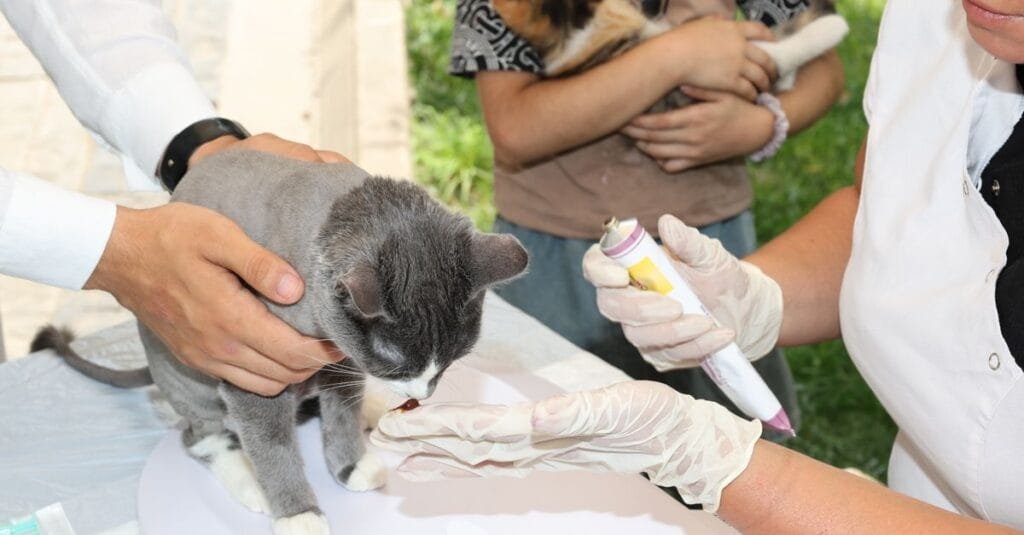
QUESTION TWO — “CAN IT BE CRUSHED, SPLIT, OR OPENED?”: enteric coatings exist to survive the stomach, extended-release matrices exist to meter the dose, and bitter drugs hide inside coatings on purpose — crushing any of those can break the medicine or detonate a bitterness that ends food-hiding forever; NEVER crush on your own authority, and while you’re at the desk, ask them to DEMONSTRATE the direct method on your actual cat — vet techs are the best pilling teachers alive and love being asked.
THE LOGISTICS LAYER from the care loops: doses anchor to existing routine events (breakfast, dinner) so nobody forgets day nine of fourteen, the label’s WITH-FOOD/EMPTY-STOMACH line gets read twice, and twice-daily means roughly twelve hours apart — the schedule is part of the medicine.
The demonstration above is from atDove — veterinary-team training footage of the direct method on a real cat: watch the hand cradle the head, the speed of the drop, and how fast the whole event is over.
Rung One: The Food Method (Craft, Not Luck)
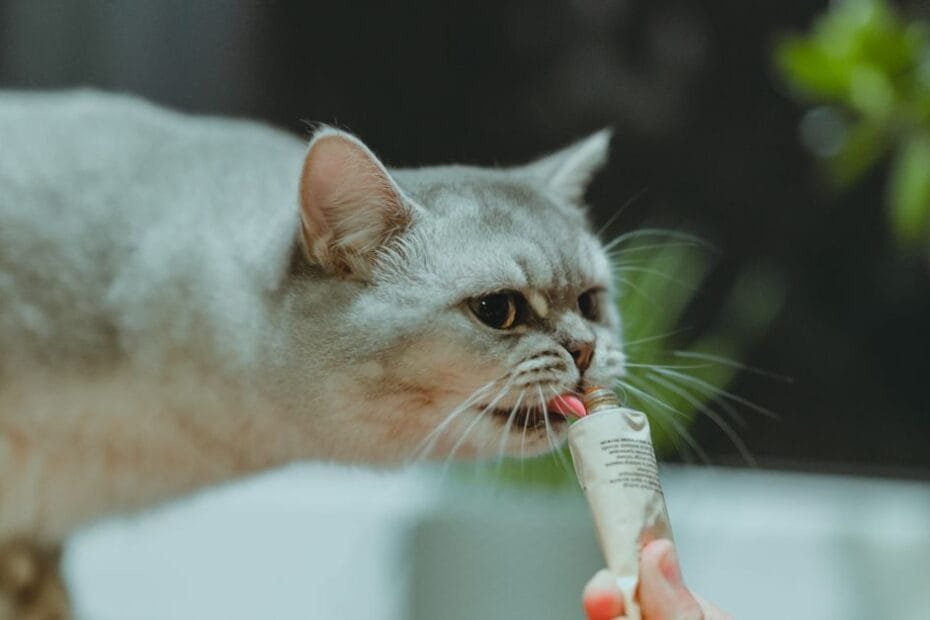
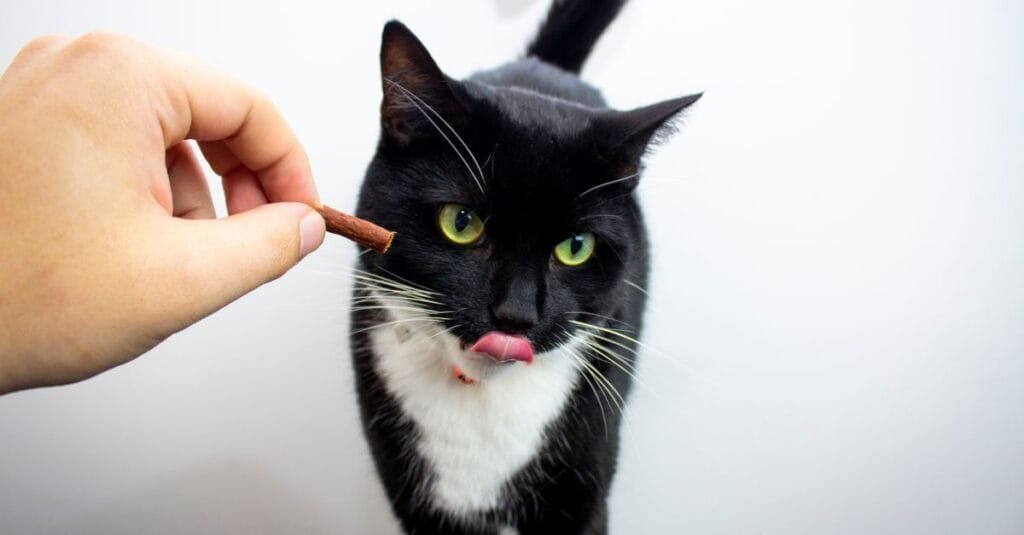
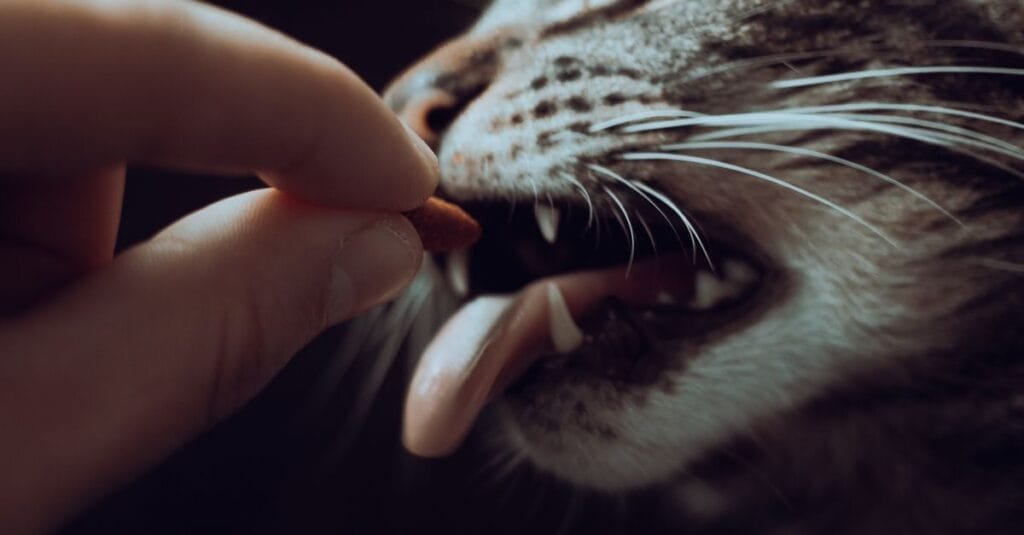
THE COATING TIER: commercial pill pockets (moldable cones the pill disappears into), a pea of butter or cream cheese, a fold of lickable-treat paste, or a meatball of the strongest-smelling wet food in the house — the goal is a swallow-whole morsel, sized so small the cat gulps rather than chews, because one bitter crunch converts the food method from asset to liability for the rest of the course.
THE DECOY PROTOCOL, the craft that separates pros: treat one (empty — builds trust), treat two (LOADED — while the cat is still in gulp rhythm), treat three (empty — the chaser that clears the palate and the suspicion) — delivered casually at treat time, never with the ceremony and hovering that announce Something Is Up; cats read your body language better than you read theirs.
THE COUNTERINTELLIGENCE PROBLEM: the cat who eats around the pill and leaves it glistening on the floor has beaten the method — escalate the coating once (stinkier, smaller), then move rungs rather than arms-racing; and the MULTI-CAT footnote: dose behind a closed door, because the resident vacuum-dog or food-thief cat eating a dropped pill is a genuine emergency, per the same supervision math as the multi-pet resource rules.
Rung Two: The Direct Method (Fast, Kind, Chased)
THE SETUP: cat facing away on a counter or your lap (the same escape-proof geometry as tooth brushing — the two skills train each other, and the brushing ladder’s handling deposits pay out here), pill staged in your dominant hand between thumb and forefinger, everything within reach BEFORE the cat arrives — the direct method is a five-second event or it’s a wrestling match; there is no middle speed.
THE TECHNIQUE: non-dominant hand cradles the head from above (thumb and fingers at the cheekbones — not the throat), tilts the nose gently toward the ceiling — the jaw naturally slackens — the dominant hand’s middle finger lowers the jaw, the pill DROPS at the back-center of the tongue (past the hump; sides and tip get spat), mouth closes, nose returns level, and a soft throat-stroke or nose-touch cues the swallow — the nose-lick is the receipt.
THE CHASER RULE, the paragraph this whole guide exists for: follow EVERY pill with three-to-five milliliters of water (a needleless syringe to the cheek pouch, slowly) or an immediate treat and meal — because dry-swallowed pills can lodge in the feline esophagus, and certain drugs sitting there can cause real injury (your vet will name the culprits; doxycycline is the classic). Dry-pilling isn’t a shortcut; it’s the one genuinely dangerous laziness in this genre.

Rung Three: Tools — the Pill Gun and the Towel Wrap
THE PILL GUN (piller): a soft-tipped syringe that places the pill at the back of the tongue while your fingers stay outside the bite radius — load, part the jaw at the side gap behind the canines, tip past the tongue-hump, plunge, close, chase — and rehearse the motion on a treat first, because a fumbled gun teaches the same lesson as a fumbled hand; for the needle-shy owner, it’s honestly the confidence upgrade that saves the course.
THE TOWEL WRAP (the burrito): a bath towel on the counter, cat set in the middle, one side snugged across the shoulders, then the other, then the tail-end folded forward — firm enough to contain the paddle, never tourniquet-tight — producing a calm, compact, claw-managed patient with only the head on duty; rehearse it OUTSIDE medication events with treats so the towel doesn’t become the announcement that bad things are coming.
THE TWO-PERSON SPLIT where available: one human holds the burrito and murmurs, the other runs the technique — and either way the ninety-second cap applies: two failed attempts ends the session (treat, walk away, retry at the next calm window), because attempt three against a fully-alarmed cat teaches permanent lessons and lands scratches, and tomorrow’s dose matters more than this minute’s pride.
The Escape Hatch: Pharmacies, Formats, and the Unfinished Course
THE COMPOUNDING EXIT most owners never learn exists: veterinary compounding pharmacies remake many drugs as FLAVORED LIQUIDS (tuna, chicken — dosed by syringe into the cheek), chewable treats, or — for a handful of drugs like the thyroid standards — TRANSDERMAL GELS rubbed into the ear’s inner skin with a finger cot; not every molecule converts and compounding costs more, but for the fourteen-day course in an unpillable cat, one phone call from your vet can replace the entire wrestling calendar.
THE LIQUID TECHNIQUE while we’re here: syringe tip into the cheek pouch at the side gap, plunge SLOWLY in small pushes (a flooded mouth aspirates or foams), aimed across the tongue rather than down the throat — and the drooling-foam response some bitter liquids trigger looks dramatic while being mostly commentary; note it for the vet, but don’t panic-quit the course over it.
THE UNFINISHED-COURSE RULE, stated as the medical fact it is: antibiotics stopped at “he seems better, day five of fourteen” select for the survivors and invite the relapse — if the method has genuinely failed, the move is the VET CALL (“we can’t get it in him — what are our options?”: injections at the clinic, format changes, drug swaps all exist), never the quiet drawer of half-finished bottles every multi-cat household recognizes; the monitoring habits that caught the illness deserve a finished treatment.
Red Flags and the Long-Course Diplomacy
PAUSE-AND-CALL FLAGS: gagging or pawing at the mouth after dosing, any choking or respiratory distress (emergency, now), vomiting within the absorption window (ask whether to re-dose — don’t guess), the swollen or painful mouth that makes pilling cruel before it’s difficult, and the cat whose ESCALATING resistance across a course signals pain or nausea rather than stubbornness — the patient’s vote is data.
THE LONG-COURSE DIPLOMACY for the two-week-plus calendars: vary WHO doses if the cat has soured on one human, keep every other interaction generous (the cat being medicated should also be having the best play-and-treat fortnight of its year — the account stays balanced), and bank goodwill deposits between doses; the relationship survives the course when the course isn’t the whole relationship.
THE KITTEN-AND-SENIOR CALIBRATIONS: kittens take tiny volumes and gentler tilts (and mouth-handling drills from the socialization checklist make kitten courses trivially easy — another compounding dividend), while seniors with arthritic necks get shallower tilts, extra towel padding, and the arthritis conversation at the next visit if handling itself seems to hurt.
Frequently Asked Questions
How do you give a cat a pill easily?
Hide it — after the vet confirms the drug can go with food: a pill pocket or wet-food meatball, sized to gulp, delivered as treat two in a three-treat sequence (empty, loaded, empty) at normal treat time with zero ceremony. Most courses never need more than this.
How do you pill a cat that refuses food tricks?
The direct method: head cradled and tilted gently up, pill dropped at the back-center of the tongue, mouth closed, throat stroked until the nose-lick receipt — the whole event in five seconds — followed always by a water or food chaser. A pill gun does the same with your fingers out of range.
Can you crush a cat’s pill into food?
Only with the vet’s explicit OK — enteric coatings, extended-release designs, and deliberately-coated bitter drugs all break when crushed, and one bitter mouthful can end food-hiding for the whole course. Ask “crush or split OK?” at the discharge desk before dose one.
Why do you give water after pilling a cat?
Because dry-swallowed pills can lodge in the esophagus, and certain drugs sitting there cause real injury. Chase every pill with a few milliliters of water by syringe or an immediate treat and meal — never dry-pill, ever.
What if I can’t give my cat its medication at all?
Call the vet rather than abandoning the course: compounding pharmacies remake many drugs as flavored liquids, chewables, or transdermal ear gels, and clinics can sometimes swap to injections. An unfinished antibiotic course is its own medical problem — the phone call is the fix.
How do you wrap a cat in a towel for medication?
Cat centered on a bath towel, one side snugged over the shoulders, the other side over that, tail-end folded forward — firm, not tight — leaving only the head out. Rehearse it with treats outside medication time so the towel stays neutral equipment, not a warning siren.
The Bottom Line
Ask the two vet questions before dose one, run the three-treat decoy craft while food-hiding works, learn the five-second direct method with the chaser rule welded on, keep the pill gun and rehearsed towel wrap for the escalation days, remember the compounding exits when nothing works, and finish every course — or convert it with a phone call, never a drawer.
The cat has one job in this story: getting better. Yours is making sure the medicine actually makes the trip — five calm seconds at a time.

Hello! I'm Khan Hisham, a dedicated student with a profound passion for enhancing the lives of pets through comprehensive care. At Pawspera, our mission—"Prospering Pets, Every Day"—drives everything we do. We are committed to providing the latest insights, tips, and products that ensure your pet's health and happiness. Join us at Pawspera as we explore innovative ways to care for our furry friends with love and dedication.