Introducing a new kitten to your resident cat runs on one governing truth: cats bond to TERRITORY before they bond to each other — so the protocol is territorial diplomacy in five stages: the kitten’s SAFE ROOM (days, not hours), SCENT swapping until both cats read each other as furniture, the BARRIER phase (cracked door, then gate or screen) where they eat progressively closer, short SUPERVISED merges that end before tension starts, and the slow handover of shared territory with resources DUPLICATED everywhere — two of everything, plus one. The timeline honesty up front: days for easygoing pairs, WEEKS for the average, months for the crotchety senior — and rushing is the classic regret, because a botched first impression takes ten times longer to repair than a slow introduction takes to run; hissing is negotiation, but sustained stalking, flattened-ear fixation, or a genuine fight means back a full stage, and the guide’s job is making “back a stage” feel like progress — because it is.
This is the complete kitten-introduction playbook: the pre-arrival setup and vet gate, the safe-room stage done properly, scent diplomacy in detail, the barrier-and-feeding ladder, supervised merges with the body-language scorecard, the resource math that prevents ninety percent of conflict, the senior-cat and personality adjustments, and the setback protocol that rescues rushed starts.
Key Takeaways
- Territory before relationship: the kitten gets one room; the resident keeps the house — nobody “shares” on day one.
- Scent is the first introduction: swapped bedding and cheek-cloth trades until both cats read each other as boring.
- The barrier phase does the real work: feeding closer and closer across a cracked door builds the good association.
- Merges end BEFORE tension: five calm minutes beat thirty that end in a chase — always quit while it’s boring.
- Resource math prevents most conflict: two of everything plus one — boxes, bowls, beds, perches — spread apart.
- Hissing is negotiation; sustained stalking or a real fight means back a full stage — and backing up IS progress.
Before Arrival (The Setup and the Vet Gate)
THE VET GATE, non-negotiable: the kitten sees a vet BEFORE meeting the resident — parasites, respiratory infections, and the retrovirus screen protect the established cat, and the kitten guide’s first-week medical checklist runs concurrent with the safe-room stage; the timing works because the quarantine the vet would prescribe IS the protocol’s first stage anyway.
Also Read




THE SAFE ROOM STOCKED: one quiet room with everything duplicated small — litter box, food and water separated, bed, scratcher, hiding spots, and toys — and the RESIDENT’S resources untouched: the established cat’s boxes, bowls, and favorite perches stay exactly where they were, because the fastest way to poison an introduction is for the new arrival’s existence to cost the resident anything visible.
THE HOUSEHOLD BRIEFING: the kids’ version of the protocol (the kitten is not a tour attraction — visits are calm, seated, and kitten-initiated), the two-laws refresher, and the expectation-setting sentence worth saying aloud: the goal of week one is two cats who are CALM, not two cats who are friends — friendship, where it comes, arrives on cat time.
Jackson Galaxy’s kitten-introduction walkthrough above runs the same staged diplomacy — his “scent soldiers” framing for the swapped-bedding stage is the best explanation of why the smell work matters more than the face time.
Scent Diplomacy (The Introduction Before the Introduction)
THE SWAP MECHANICS: bedding trades rooms every day or two, a soft cloth rubbed on each cat’s cheeks (the friendly-pheromone real estate) gets presented to the other at treat time — scent paired with good things, per the same association engine as everything — and the under-door paw games that start on their own are the negotiation beginning without appointments.
THE SITE-SWAP STAGE: once both cats read swapped scent calmly, they trade SPACES for an hour — kitten explores the house (and deposits scent everywhere) while the resident investigates the safe room — repeated until the house smells co-owned; this is the stage impatient households skip, and it’s the one doing the deepest work.
THE READING GUIDE: flat sniffing, bored walk-aways, and eating near the door are green lights; prolonged growling AT the scent items, urine marking, or door-charging are stage-hold signals — not failures, just the negotiation running at that pair’s honest pace, and the behavior hub’s body-language chapters translate the finer print.
The Barrier Ladder and the Supervised Merge
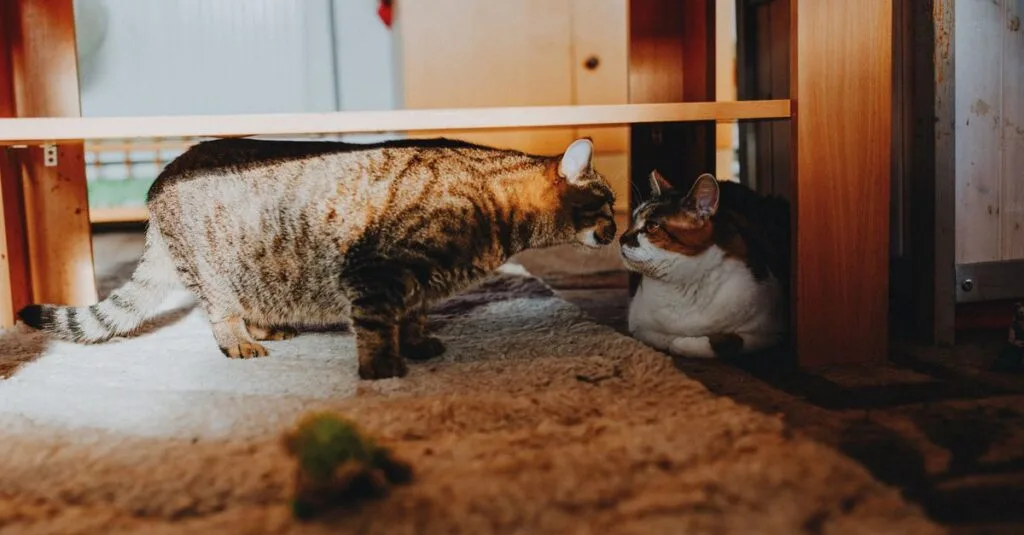
THE FEEDING LADDER: meals on either side of the closed door, bowls walking closer session by session until both cats eat calmly AT the door — then the barrier upgrades to visual: the door cracked with a stopper, the pet gate stacked or screen insert, brief mutual viewing at mealtime, retreat always available — the association under construction is exactly one sentence: the other cat appearing predicts good things and costs nothing.
THE FIRST MERGES: short, supervised, and engineered boring — the kitten occupied with a wand toy at one end, the resident with treats or their own toy at the other, five-to-ten minutes ending BEFORE tension (the quit-while-boring law), with escape routes and vertical options open in every direction and the tree and tunnel geometry giving both cats dignified exits that prevent corner panic.
THE SCORECARD per session: parallel existence (each cat doing its own thing in shared space) is the actual win condition — not play, not cuddling — and the escalation reads run: tail flicks and hard stares = redirect and wind down; sustained stalking or flattened-ear fixation = end the session calmly; an actual FIGHT = full stage back plus a few days’ cooling, and never reach into a cat fight — the blanket-toss or cushion-slide separation protects all hands involved.
The Resource Math (Preventing the Conflict Economy)
THE FORMULA: cats-plus-one of every critical resource — litter boxes (the standing box law), food and water stations, beds, scratchers, perches — SPREAD across the territory, not clustered, because clustered resources create chokepoints and chokepoints create the ambush economy where most “they suddenly hate each other” stories actually live.
THE VERTICAL DIMENSION doubles the map: the perch and tree tiers let two cats share a room at different altitudes — the senior on the sunny sill, the kitten in the tunnel — and territory measured in three dimensions is how a small apartment hosts two complete feline worlds without a treaty crisis.
THE FEEDING SEPARATION, permanent: cats are solitary eaters by wiring — the side-by-side bowl photo is a human aesthetic, and visual separation at meals (opposite counter ends, or rooms) prevents the slow-motion resource stress that presents months later as the bold cat inflating and the shy cat shrinking; the multi-pet feeding chapter owns the details.
Personalities, Seniors, and the Setback Protocol
THE PAIRING PHYSICS: kitten energy is relentless and adult tolerance is finite — the single-kitten-vs-settled-senior pairing needs the kitten’s energy SPENT elsewhere (the two daily hunt sessions, the tunnel circuit) so the senior isn’t the only toy in the house, and the honest note adopters deserve: two kittens together often integrate EASIER with a senior than one does, because they exhaust each other first.
THE SENIOR ADJUSTMENTS: older residents get the pace slowed by half, their routines held sacred through the transition (the routine-is-welfare rule at double strength), premium retreat spaces the kitten physically can’t reach, and the health watch — a senior who stops eating or starts hiding through an introduction is presenting medically, per the four dials, and the pace answers to the vet.
THE SETBACK PROTOCOL that rescues rushed starts: after a fight or a fear spiral, full reset to scent-and-barrier for several days minimum, the association ladder rebuilt with better payment, pheromone diffusers deployed in both zones (the adjunct with reasonable evidence), and the professional line honored — introductions stuck at mutual hostility past several weeks of honest protocol earn a feline behavior consultant, because two cats sharing a house unhappily for a decade is the expensive version of one consultation.

Frequently Asked Questions
How long does it take to introduce a kitten to a cat?
Days for easygoing pairs, weeks for the average, months for crotchety seniors — the stages (safe room, scent, barrier feeding, short merges) advance on calm, not calendar. Rushing is the classic regret: a botched first impression takes ten times longer to repair.
Should I let my cat and new kitten just work it out?
No — the “toss them together” method gambles the entire relationship on one unmanaged first impression. The staged protocol costs two-to-four weeks; the failed free-for-all costs months of repair and sometimes a decade of cold war.
Is hissing normal during introductions?
Yes — hissing is negotiation and boundary-setting, especially from the resident. The escalation reads matter more: sustained stalking, flattened-ear fixation, or an actual fight means back a full stage — and backing up is progress, not failure.
How many litter boxes do two cats need?
Three — the cats-plus-one law — spread across the territory, never clustered: chokepoints create the ambush economy behind most litter avoidance in multi-cat homes. The same plus-one math applies to beds, bowls, scratchers, and perches.
My cats had a fight — is the introduction ruined?
No: run the setback protocol — full reset to scent-and-barrier for several days, rebuild the feeding ladder with better payment, add pheromone diffusers, and advance slower. Never reach into a fight (blanket-toss to separate) — and hostility past several honest weeks earns a feline behavior consultant.
Will my older cat ever like the kitten?
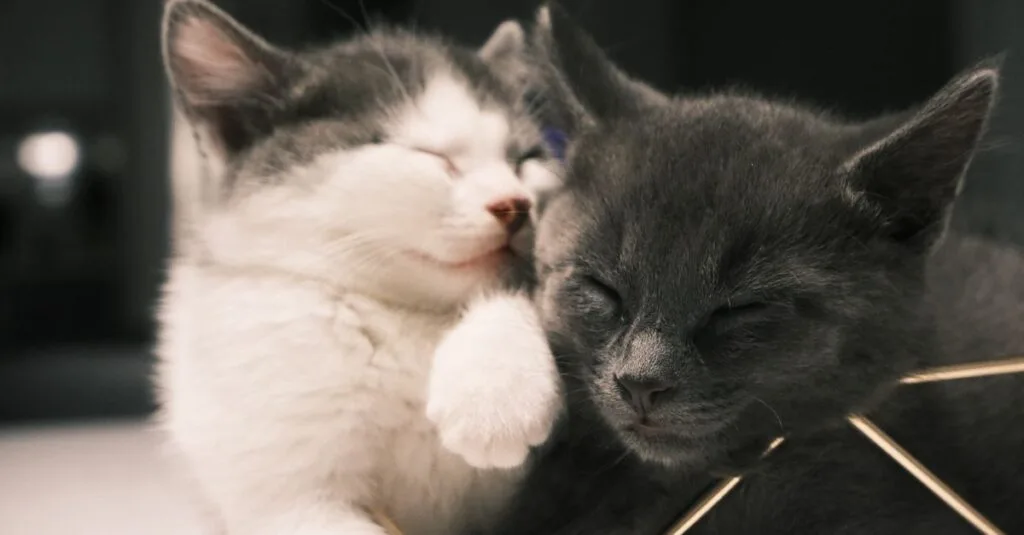
The honest win condition is parallel calm — two cats sharing territory at different altitudes, each doing its own thing. Many pairs graduate to grooming and pile-sleeping on cat time; some settle at civil roommates — and a senior with sacred routines, kitten-proof retreats, and a well-exercised kitten usually lands warmer than week one predicts.
The First Year Together (After the Protocol Ends)
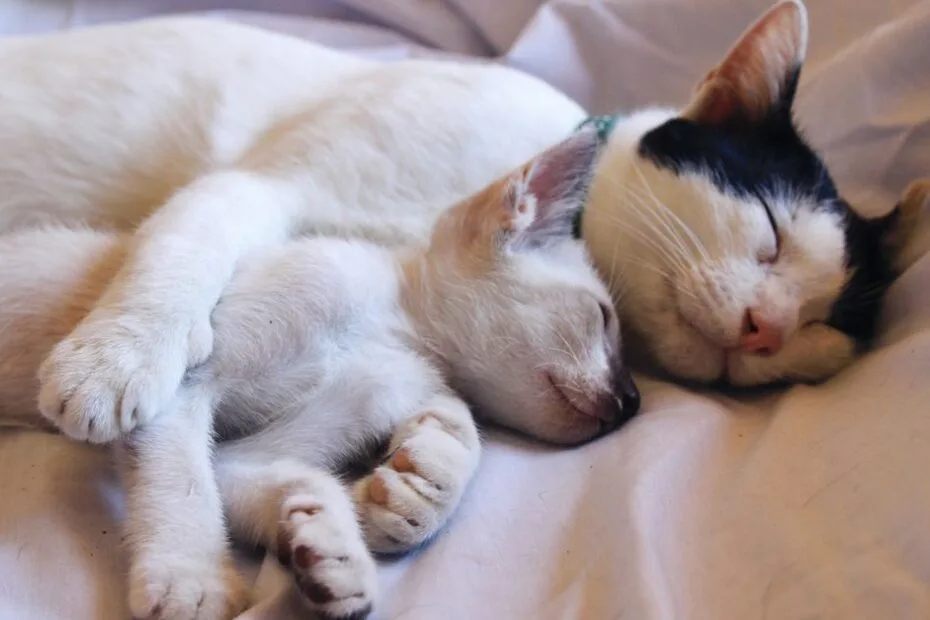
THE RELATIONSHIP ARC, set honestly: months one-to-three establish parallel calm, months three-to-six usually add play sessions and loose proximity, and the pile-sleeping photo — where it comes — tends to arrive with the first cold snap (shared warmth negotiates what diplomacy couldn’t); the pairs that never pile still patrol, eat, and nap in the same rooms, which is feline friendship’s honest median.
THE GROWTH RE-NEGOTIATION at kitten adolescence: the six-month kitten is suddenly the resident’s size with double the energy — expect a second round of boundary-setting (the hiss-and-swat curriculum resumes briefly), keep the hunt sessions absorbing the adolescent surplus, and hold the resource math as the power balance shifts; the households that coast through this window are the ones that never dismantled the duplicated stations.
THE ANNUAL AUDIT the pair earns: resources re-counted as habits settle (the abandoned third box consolidates only when BOTH cats have visibly stopped using it), the vet visits kept separate-carrier and same-practice (shared records catch the multi-cat patterns), and the play-versus-fight literacy refreshed each time the dynamic shifts — because two-cat households re-negotiate quietly for years, and the humans who can read the treaty keep it cheap.
The Adult-Cat-Introduction Note
Introducing a second ADULT runs this same protocol at three-quarter speed with the hierarchy stakes higher — two settled adults negotiate rank where kitten-to-adult mostly negotiates tolerance — so the barrier phase runs longer, the merges stay shorter, and the win condition holds at parallel calm without the play-graduation expectation; the same stages, the same scorecard, patience budgeted at months without apology.
The Bottom Line
Gate at the vet, give the kitten one room and the resident the whole house, let scent negotiate first, feed the friendship across a barrier, merge in boring five-minute doses, and duplicate every resource plus one — the introduction is territorial diplomacy on cat time, and the pairs that got the slow version spend the next fifteen years proving it was worth two weeks.
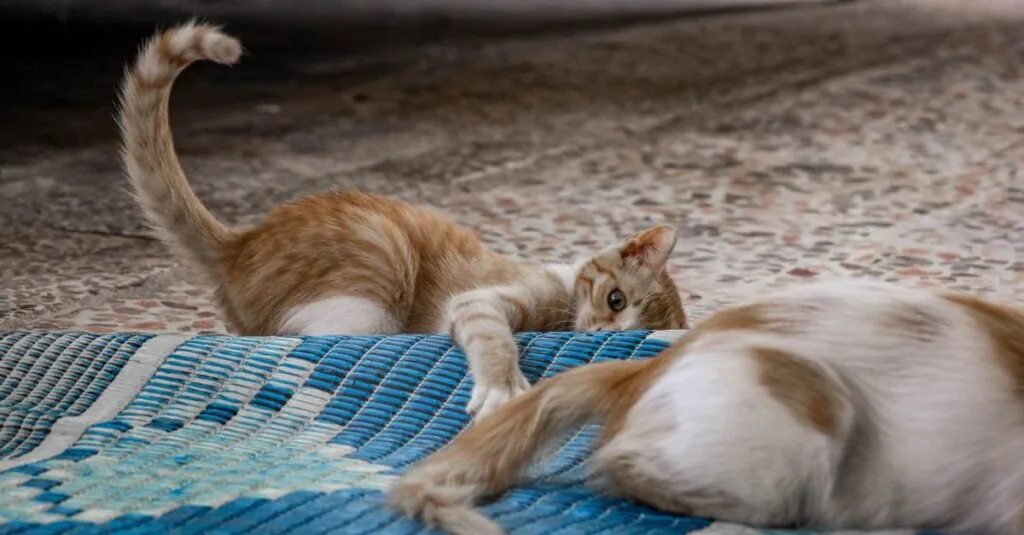
The play-versus-fight literacy that keeps supervision honest through the first months: PLAY runs reciprocal (roles swap — the chaser becomes the chased), paused (breaks where both reset), soft-bodied, and mostly silent; FIGHTING is one-directional, escalating, vocal (the yowl-and-scream register), and leaves tufts — and the kitten who never learns to read the adult’s enough signal gets the adult’s correction (the hiss-and-swat tier), which LOOKS alarming and is usually the education working: a clawless, calibrated correction from a socialized adult is how kittens learn cat manners, and interrupting every one of them raises the cat nobody taught. The line to actually police is the pinned-and-screaming tier and any correction that draws blood — those get the session ended and the pace slowed, per the standing scorecard.
The resident isn’t rejecting a friend. It’s auditing a stranger’s visa application — and the paperwork just takes longer with claws.

Hello! I'm Khan Hisham, a dedicated student with a profound passion for enhancing the lives of pets through comprehensive care. At Pawspera, our mission—"Prospering Pets, Every Day"—drives everything we do. We are committed to providing the latest insights, tips, and products that ensure your pet's health and happiness. Join us at Pawspera as we explore innovative ways to care for our furry friends with love and dedication.