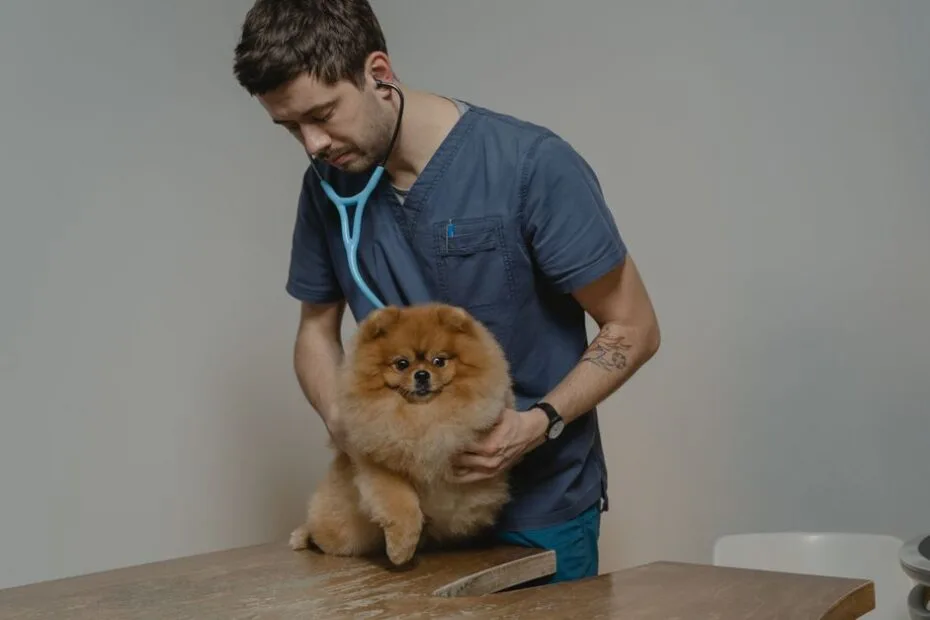
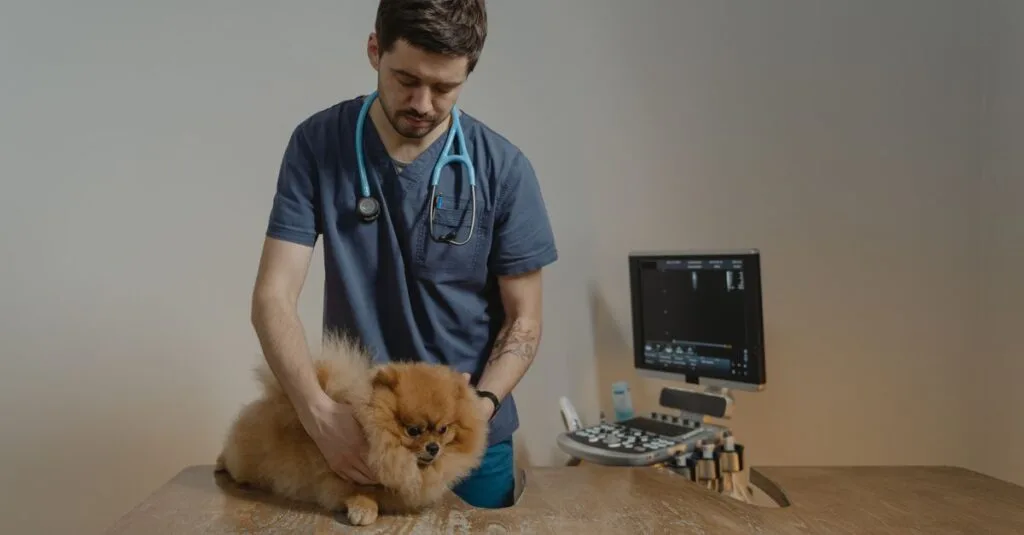
A puppy’s first vet visit happens within the FIRST FEW DAYS of coming home (not when something looks wrong — the exam’s whole job is finding what new owners can’t see: heart murmurs, hernias, cleft issues, the parasites most puppies carry), and it runs a predictable script you can prepare for: a nose-to-tail EXAM (eyes, ears, mouth and bite, heart and lungs on the stethoscope, belly palpation, joints and gait, skin and coat), a FECAL TEST (bring a fresh stool sample — the single most-forgotten item in the genre), the VACCINE plan mapped onto whatever the breeder or rescue already gave (which is why the paperwork is the second most-forgotten item), a PARASITE-PREVENTION start (deworming, flea-tick, and the heartworm conversation), and the QUESTION WINDOW where a prepared list beats a blank stare — food, portions, socialization timing, spay/neuter scheduling, and the money conversations (wellness plans and insurance) that are cheapest to have now. The under-rated deliverable of visit one isn’t medical at all: it’s the IMPRESSION — a puppy who meets the clinic as a treat-dispensing adventure builds a lifetime of easier visits, and the prep drills below are how that impression gets manufactured on purpose.
This is the complete walkthrough: when to book and how to choose the clinic, the bring-list (records, stool sample, questions, restraint), the exam step by step so nothing surprises you, the vaccine series explained in plain language (and the socialization-window paradox resolved), the parasite panel, the cost conversation handled honestly, the happy-visit engineering that pays off for fifteen years, and the kitten variant in its own section.
Key Takeaways
- Book within the first few days home — the exam finds what new owners can’t see, and the paperwork clock (rescue health guarantees) is often ticking.
- Bring four things: breeder/rescue records, a fresh stool sample, your question list, and a leash or carrier.
- The core-vaccine series runs in rounds until ~16 weeks — your job is finishing the series, not just starting it.
- Socialization can’t wait for the last shot: safe exposure (carried, curated, clean-ground) runs in parallel — ask YOUR vet where the lines are.
- Turn visit one into a treat festival on purpose: the impression built now pays for fifteen years of easier care.
- Ask the money questions now — wellness plans, insurance while the puppy is pre-existing-condition-free, and the spay/neuter timeline.
Booking It (When, Where, and the Paperwork Clock)
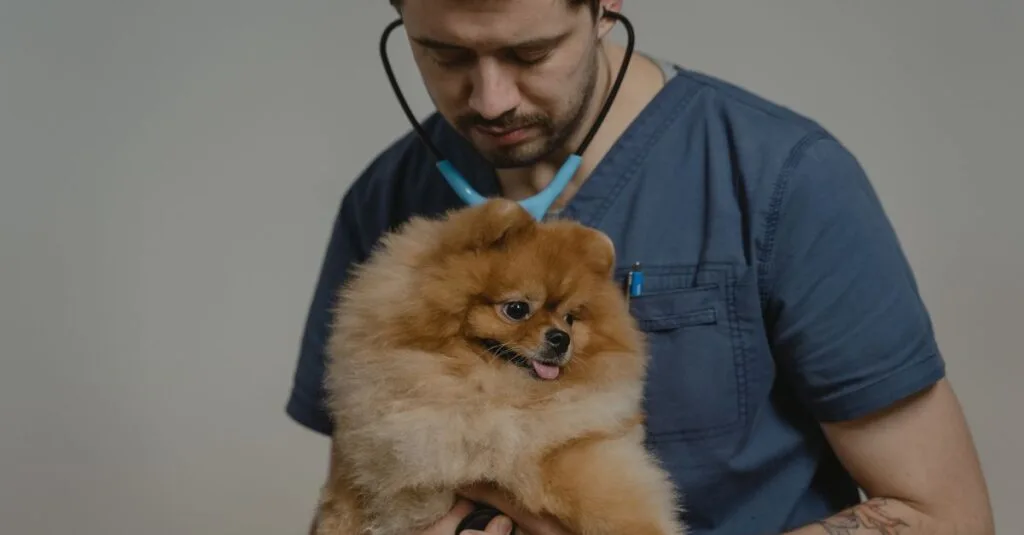
THE TIMING: within the first few days of homecoming — even a healthy-looking puppy — because early exams catch congenital issues while breeder health guarantees and rescue return windows are still live, because parasites are near-universal in puppies and treatable in one visit, and because the vaccine schedule has real dates that shouldn’t slip; the eight-week-old usually arrives with round one done, and YOUR vet maps the rest.
Also Read
-
Why Is My Cat Not Using the Litter Box? Medical First, Then the Box Audit

-
How to Give a Cat a Pill: The Escalation Ladder, the Chaser Rule, and the Exits

-
How to Brush Your Cat’s Teeth: The Three-Week Ladder and the Paste Law

-
How to Remove a Tick From a Dog: The Grip, the Folklore Ban, and the Watch Window
CHOOSING THE CLINIC, briefly and honestly: proximity matters more than people admit (the emergency at 11 p.m. is a geography problem), ask about after-hours arrangements (who do they refer to?), fear-free-adjacent handling styles are worth seeking for the impression project below, and the waiting-room audit on your visit tells you plenty — separate cat area, calm staff, treats at the desk.
THE BRING-LIST, taped to the door the night before: every paper the breeder or rescue gave you (vaccine dates, deworming history, microchip info), a FRESH stool sample in a clean bag (hours-old is fine; ask when booking), your written question list (the blank-stare tax is real — visit one is short and dense), the leash-and-collar or the carrier for the tiny tier, and high-value treats in your pocket — yours will out-rank the clinic’s.
The video above follows a real puppy’s first visit start to finish — the exam, the handling, the questions — and it’s worth ten minutes precisely because the visit you can predict is the visit that doesn’t rattle anyone, puppy included.
The Exam, Step by Step (What the Vet Is Actually Checking)
THE NOSE-TO-TAIL SCRIPT: eyes (discharge, structure), ears (mites, infection — common in rescues), the MOUTH (bite alignment, baby-teeth schedule — the teething calendar gets its official start date here), heart and lungs on the stethoscope (murmurs in puppies range from innocent-and-outgrown to significant — finding them early is the point), belly palpation (organs, hernias at the navel and groin), joints and gait (hips and kneecaps in the at-risk breeds), skin and coat (fleas, ringworm, the general nutrition report), and weight — the first data point on a growth curve every later visit references.
THE FECAL TEST does the invisible half: roundworms, hookworms, whipworms, giardia and coccidia — most puppies carry something (it’s unremarkable, arriving via mom or environment), the treatment is routine dewormers, and the household note is worth hearing once: some puppy parasites are zoonotic, which is why the vet will mention hand-washing and yard-poop discipline in the same breath.
THE MICROCHIP MOMENT: if the puppy isn’t chipped, this visit or the spay/neuter is the natural slot; if it IS chipped, the registration transfer to YOUR name and number happens this week — the shelter-scan-dead-end problem is entirely a registration problem, and visit one is when it gets solved.
Vaccines in Plain Language (And the Socialization Paradox)
THE CORE SERIES: the combination vaccine (distemper, parvovirus, adenovirus, parainfluenza — the “DHPP” family) runs in rounds a few weeks apart from ~6–8 weeks until ~16 weeks — the rounds exist because maternal antibodies fade on an unpredictable schedule and the series guarantees coverage past the fade — plus RABIES per your local law’s timing, and the LIFESTYLE tier (bordetella for daycare-and-boarding lives, leptospirosis and Lyme by region and habits) decided in conversation, not by default; your vet’s regional judgment outranks any internet schedule, this site’s included.
THE FINISH-THE-SERIES SENTENCE that earns its own paragraph: a started-but-unfinished series protects far less than owners assume — parvo in particular punishes the “he had his first shots” household — and the calendar risk is boredom, not cost: rounds two and three land after the new-puppy adrenaline fades, which is exactly why they get booked before leaving visit one.
THE SOCIALIZATION PARADOX, resolved honestly: the prime socialization window is closing during the same weeks the vaccine series is still running — waiting for full vaccination wastes the window, and ignoring disease risk is reckless — so the standard answer is BOTH, carefully: carried exposure everywhere, curated meetings with known-vaccinated dogs on clean ground, puppy classes that verify vaccination, and a hard NO on dog parks and high-traffic dog ground until the series finishes; ask YOUR vet to draw the local lines, then spend the window per the puppy guide’s curriculum.
Parasites, Prevention, and the Money Conversation
THE PREVENTION STARTER KIT: deworming per the fecal results, flea-tick prevention sized to actual weight (puppy doses change fast — weight checks matter), and the HEARTWORM start — monthly prevention typically begins by ~8 weeks and simply never stops, because prevention is cheap and treatment is brutal; the products are vet-guided on purpose, and the counterfeit warning this site keeps repeating applies to parasite products above all.
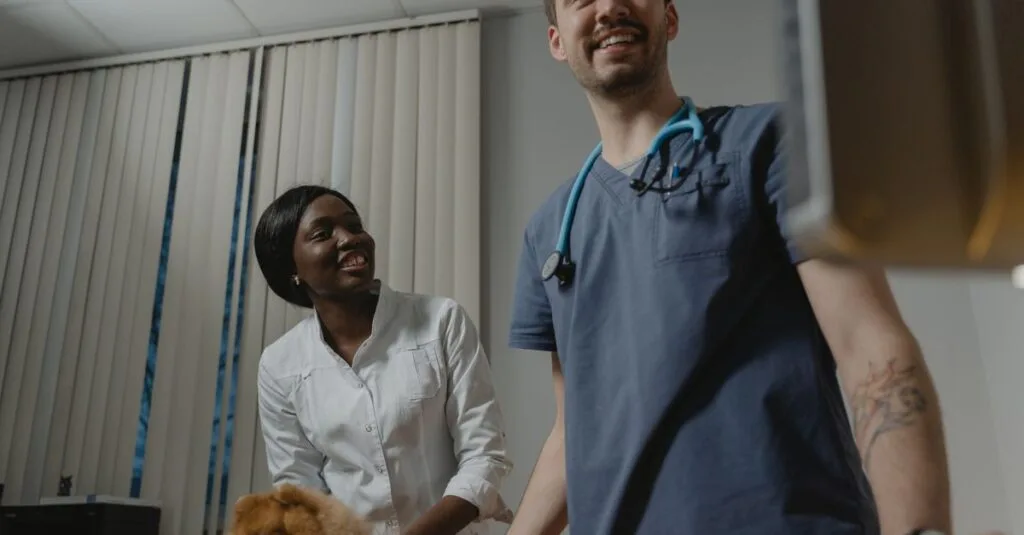
THE COST CONVERSATION, had like an adult: visit one commonly runs a knowable range (exam, fecal, vaccines, first preventives — ask for the estimate when booking; clinics expect the question), WELLNESS PLANS bundle the puppy year’s dense visit schedule into monthly payments and suit exactly this year, and INSURANCE has one honest rule this site will keep repeating: the best time to enroll is while the puppy has no pre-existing conditions — every condition found later is excluded forever after, which makes week-one the cheapest week of the dog’s life to decide; the insurance guide carries the comparison work.
THE QUESTION LIST to bring, ready-made: current food and portion check (bring the bag’s label photo), treat budget, the spay/neuter timing conversation (increasingly breed-and-size dependent — large breeds often wait longer; take your vet’s number over the internet’s), nail-trim demonstration (ask them to SHOW you — techs love teaching it), teething expectations, and “what would make you want to see this puppy again before the next scheduled visit?” — the discharge-desk question that teaches you the red-flag list for free.
Engineering the Happy Visit (The Fifteen-Year Investment)
THE IMPRESSION PROJECT: treats flow the entire visit (yours, high-value, deployed in the lobby, on the scale, on the table), the carrier or car ride was rehearsed in advance per the containment-training playbook, you stay boring-calm (your anxiety travels down the leash), and the goal is a puppy who leaves the building having had a genuinely fine time — fear-free handling from staff plus food-from-you covers most of it at this age, when the impression is still wet cement.
THE HOME REHEARSALS that make exam day trivial: the daily thirty-second body-audit from the socialization canon (paws, ears, lip-lift, tail, belly — treats flowing) is literally exam-handling practice, the scale rehearsal is standing on a flat object on cue, and the “happy visit” trick — dropping by the clinic some quiet afternoon for a treat from the desk staff and leaving — is the single cheapest behavior investment in veterinary medicine.
THE POST-VISIT WATCH, stated plainly: mild sleepiness and a tender injection site for a day are normal; facial swelling, hives, vomiting, or collapse in the hours after vaccines are NOT — they’re a call-the-clinic-now event (reactions are uncommon and very manageable, and clinics want the call); and the routine wisdom is scheduling shots for mornings, so the watch window runs while the clinic is open.

The Kitten Variant (Same Script, Feline Dials)
THE PARALLEL SCRIPT: same timing (first few days home), same nose-to-tail exam and fecal, with the feline core series (the respiratory-panleukopenia combination — “FVRCP” — on a similar rounds-to-16-weeks logic) plus rabies, and one kitten-specific test worth saying yes to: the FeLV/FIV screen that establishes viral status before a kitten joins resident cats — the multi-cat household’s single most consequential checkbox.
THE FELINE DIALS: the carrier arrives as furniture (fed-in and neutral, never dragged-from-under-the-bed — the whole protocol lives in the routine guide), the exam room favors towel-and-patience handling, and the questions list swaps in litter setup, indoor-outdoor policy, and the kitten socialization window — which runs even earlier than the puppy’s and rewards the same carried-and-curated exposure logic.
THE SHARED ENDING for both species: before leaving, the next visit is BOOKED (the series has dates), the prevention products are in the bag, the microchip registration is on tonight’s to-do list, and the treat pouch is empty — which was the plan all along.
Frequently Asked Questions
When should a puppy have its first vet visit?
Within the first few days of coming home, even if everything looks perfect — the exam exists to find what new owners can’t see (murmurs, hernias, parasites), breeder and rescue health-guarantee windows are ticking, and the vaccine schedule has real dates to map.
What should I bring to my puppy’s first vet appointment?
Four things: all breeder or rescue paperwork (vaccines, deworming, microchip), a fresh stool sample in a clean bag, your written question list, and a leash or carrier — plus high-value treats in your pocket to run the happy-visit project from the lobby onward.
What happens at a puppy’s first vet visit?
A nose-to-tail exam (eyes, ears, mouth, heart and lungs, belly, joints, skin, weight), a fecal test for the parasites most puppies carry, vaccines mapped onto the existing records, parasite-prevention starts, and the question window — ending with the next round booked.
How much does a first vet visit cost?
Ask for an estimate when booking — clinics expect the question; the visit typically bundles exam, fecal, vaccines, and first preventives. Puppy wellness plans spread the dense first year into monthly payments, and insurance is cheapest to start now, before anything becomes pre-existing.
Can I take my puppy outside before it’s fully vaccinated?
Carefully, yes — the socialization window can’t wait for the last shot. Carried exposure, curated meetings with known-vaccinated dogs on clean ground, and vaccine-verified puppy classes are the standard middle path; dog parks and high-traffic dog ground wait until the series finishes. Ask your vet to draw the local lines.
What are normal side effects after puppy vaccines?
Mild sleepiness and a tender injection site for a day. Facial swelling, hives, repeated vomiting, or collapse in the following hours are NOT normal — call the clinic immediately. Booking morning appointments keeps the watch window inside clinic hours.
The Bottom Line
Book inside the first week, arrive with records, a stool sample, questions, and treats, let the exam and fecal do their invisible work, leave with the series scheduled and prevention started, run the socialization window in parallel with your vet’s local lines, have the insurance conversation while it’s cheap, and spend the whole visit making the clinic the best field trip of the puppy’s week.
Visit one sets two schedules: the medical one on the calendar, and the emotional one in the puppy — and the second one is the one you’ll still be cashing in at visit fifty.

Hello! I'm Khan Hisham, a dedicated student with a profound passion for enhancing the lives of pets through comprehensive care. At Pawspera, our mission—"Prospering Pets, Every Day"—drives everything we do. We are committed to providing the latest insights, tips, and products that ensure your pet's health and happiness. Join us at Pawspera as we explore innovative ways to care for our furry friends with love and dedication.