
A cat who stops using the litter box is not being spiteful — cats don’t do revenge; they do REPORTS — and the report reads in a fixed order: MEDICAL first (urinary tract disease, crystals and blockages, kidney trouble, arthritis that makes the box wall a hurdle — and the male-cat emergency below is the paragraph this post exists for), then the BOX ITSELF (dirty, hooded, too small, ambush-placed, too few for the household), then the LITTER (the scented switch nobody consulted the cat about), and only then STRESS (new pet, new baby, moved furniture, a neighborhood cat patrolling the windows). The triage rule that protects both carpet and cat: any SUDDEN change in a reliably-boxed cat is a vet call within days, not a Pinterest-board project — and a male cat straining in the box producing nothing is an EMERGENCY tonight, because a blocked urethra kills in days and is fully treatable caught early.
This is the complete diagnostic: the medical checklist and what the vet visit looks like, the box audit (count, size, hood, height, placement) with the fixes ranked by how often they work, the litter variables, the stress map and the multi-cat resource math, the cleanup that prevents the re-marking loop, the peeing-versus-spraying distinction that changes the whole diagnosis, and the retraining protocol for the cat who needs a formal reintroduction to the box.
Key Takeaways
- Medical first, always: sudden litter-box changes are health reports until a vet says otherwise.
- EMERGENCY: a male cat straining and producing nothing needs a vet TONIGHT — blockage kills in days.
- The box audit fixes most non-medical cases: boxes-plus-one, big and uncovered, scooped daily, escape-route placement.
- Litter changes trigger avoidance — unscented, fine-grained, two-to-three inches, switched gradually.
- Peeing on the floor and spraying on walls are different problems with different fixes — look at the surface.
- Clean every accident with enzyme cleaner, never punish — punishment teaches hiding, not box use.

Medical First (The Checklist and the Emergency Lane)
THE CONDITIONS THAT SPEAK THROUGH THE BOX: urinary tract infections and cystitis (pain gets associated with the BOX, so the cat tries the bathmat — softer, and not yet linked to hurting), bladder crystals and stones, kidney disease and diabetes (volume overwhelming habit — the thirst connection the water guide maps), arthritis in seniors (the high-walled box becomes a hurdle; the location downstairs becomes a hike), and cognitive decline in the oldest tier — every one of them treatable, none of them behavioral, all of them wasted weeks if the household starts with discipline.
Also Read
-
How to Give a Cat a Pill: The Escalation Ladder, the Chaser Rule, and the Exits

-
How to Brush Your Cat’s Teeth: The Three-Week Ladder and the Paste Law

-
How to Remove a Tick From a Dog: The Grip, the Folklore Ban, and the Watch Window

-
Why Does My Cat Drink So Much Water? The Benign List, the Big Three, and the Measure

THE EMERGENCY LANE, in its own paragraph on purpose: a male cat making repeated box trips, straining, crying, producing drops or nothing, licking the area, hiding — that is a suspected urethral BLOCKAGE, it is tonight’s emergency vet, not tomorrow’s appointment, and it is the single most important sentence in feline litter-box literature; females block far more rarely, but the same signs earn the same urgency.
WHAT THE VET VISIT LOOKS LIKE (so it feels bookable): history, exam, urinalysis (bring a fresh sample if you can collect one — ask about non-absorbent litter for exactly this), maybe bloodwork or imaging — and the three-days-of-notes upgrade: box trips per day, clump count and size, where the accidents land, what changed at home in the last month; the notebook shortens the diagnostic road better than any product in this post.
The video above is Jackson Galaxy — the cat-behavior standard this site leans on — on why cats leave the box, and his ordering matches this guide’s: rule out the body, then fix the box, then read the territory.
The Box Audit (Most Non-Medical Cases Die Here)
THE COUNT LAW: boxes equal cats PLUS ONE, spread across the home — not three boxes in one basement corner (that’s one box with extra cleaning), because multi-cat politics can make a single location guarded territory; the introduction guide’s resource math applies to boxes hardest of all.
THE HARDWARE SPECS, ranked by fix-rate: SCOOPED DAILY (the number-one fix in the genre — cats refuse dirty boxes at standards stricter than yours), UNCOVERED (hoods trap odor at nose height and delete escape routes — Jackson’s oldest hill, and this site already died on it in the litter guide), BIG (a box should be one-and-a-half cat-lengths; most boxes sold are too small — a clear storage tote with an entry cut costs less and works better), and LOW-ENTRY for seniors (one low side converts a hurdle back into a toilet).
THE PLACEMENT RULES: quiet but not cornered (sightlines and two exits — the laundry-room box beside a banging furnace writes its own avoidance story), never beside food and water, one box per floor in multi-story homes, and the ambush check in multi-cat households — a box whose only approach is a hallway one cat controls is a box the other cat has already stopped using.
The Litter Variables (And the Switch That Started It)
THE USUAL SUSPECT: the brand-new litter — scented, coarser, or just DIFFERENT — introduced overnight; cats imprint on substrate, fragrance sits at nose height in the box, and the fix is the transition mix (25% new stepped up over a week-plus) or simply returning to the litter the cat already elected; the full five-type breakdown lives in the litter guide, and its two laws (unscented, fine-grained) prevent most litter-side avoidance outright.
THE DEPTH AND TEXTURE NOTES: two-to-three inches (too shallow welds clumps to the pan and defeats digging; too deep unsteadies seniors), declawed and tender-pawed cats need the softest substrate available — paw pain is a common hidden driver — and liners and plastic grass mats INSIDE boxes annoy more cats than they help.
THE EXPERIMENT PROTOCOL when litter is the suspect: the litter-box cafeteria — two boxes side by side, current litter versus candidate, and the cat votes with traffic in three days; it’s the same evidence-over-assumption move as everything in the product framework, and it ends debates no human opinion can.
The Stress Map (When the Body and Box Both Check Out)
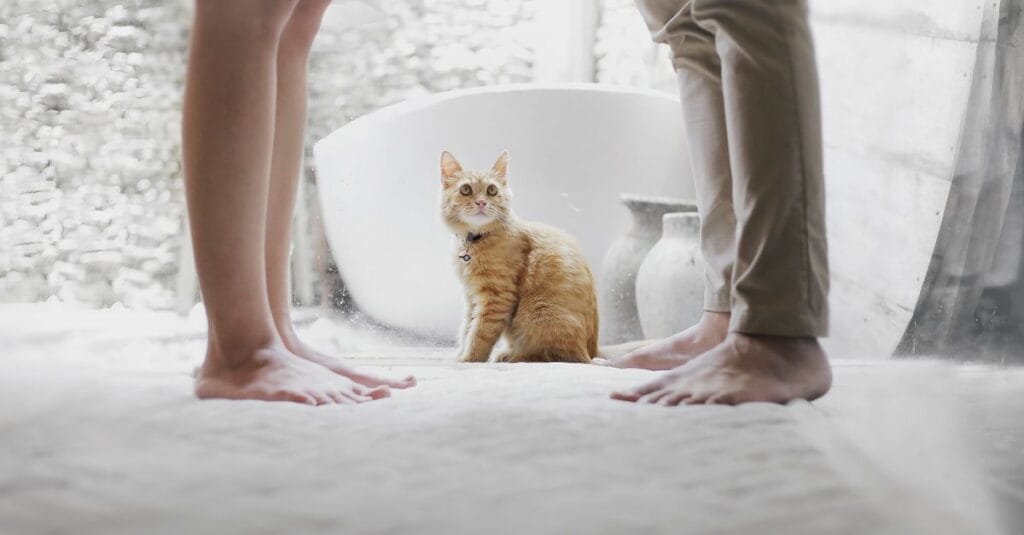
THE CHANGE INVENTORY: new pet, new person, new baby, a move, renovation noise, a changed work schedule, the rearranged room where the box’s old sightlines died — cats are territory animals, and territory disruption speaks through territorial behaviors; the timeline question (“what changed the week this started?”) usually answers itself once actually asked.
THE OUTSIDE-CAT PROBLEM, chronically under-diagnosed: a neighborhood cat patrolling the yard turns windows into borders under siege — indoor cats respond with marking near doors and windows — and the fixes are environmental (block the sightline at cat height with temporary window film, motion-sprinkler the patrol route, move indoor food away from contested glass).
THE MULTI-CAT TENSION LAYER: bullying at the box is quiet (one cat simply always present near the litter room), the victim goes elsewhere, and the fix is resources-plus-geometry — more boxes in more rooms, vertical territory, separate feeding stations — the whole territorial toolkit, with the box count as its first move.
Peeing vs. Spraying (Read the Surface)
THE DISTINCTION that redirects the whole diagnosis: PUDDLES on horizontal surfaces are elimination — the medical-then-box-then-stress ladder above; SPRAY on vertical surfaces (walls, door frames, curtains, speaker corners — small volumes, standing posture, quivering tail) is territorial MESSAGING, a different behavior with different drivers — intact hormones, outside-cat pressure, multi-cat friction, or big territory disruptions.
THE SPRAY PLAYBOOK: neuter/spay if not done (the single biggest spray reducer, best done before the habit installs), treat the territorial pressure source (the outside-cat fixes above, the multi-cat resource work), clean every mark enzymatically (below — spray re-marks harder than anything), and know that persistent spraying despite all of it is a legitimate vet-behaviorist conversation, sometimes with medication support — a treatment discussion, not a failure.
THE HONESTY NOTE: a small share of cats — especially with long-standing habits — need professional behavior help, and the sooner it’s engaged the better the odds; “we tried everything” households usually tried everything for two weeks each, and behavior change in cats runs on months.
Cleanup, Retraining, and the Never-Punish Rule
THE CLEANUP LAW: every accident site gets a true ENZYME treatment (not vinegar, never ammonia — which smells like rival urine and invites overwriting), saturated past the visible edge and given hours to work, because incomplete odor removal is a standing invitation to return; the blacklight audit finds the sites you don’t know about, and the full protocol lives in the stain-remover guide.
THE RETRAINING PROTOCOL for entrenched cases: shrink the world — one room, pristine box, the cat’s food and bed at the room’s far side, a week-plus of rebuilt habit, then gradual re-expansion room by room with a box added ahead of the frontier; it’s the kitten litter-training playbook re-run for an adult, and it works because it removes every competing option while the habit re-installs.
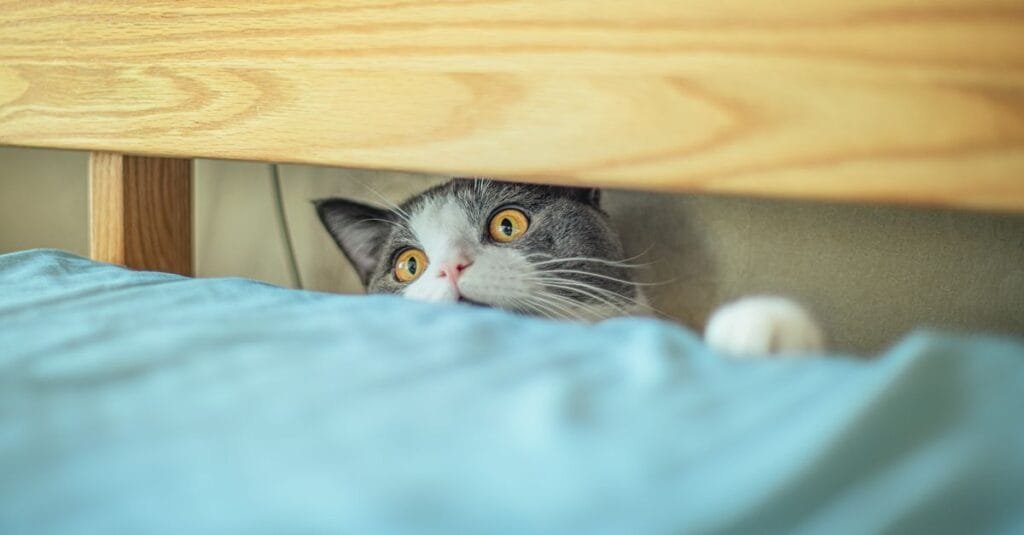
THE NEVER-PUNISH PARAGRAPH: rubbing noses in accidents, yelling, squirt bottles — all of it teaches exactly one lesson (“eliminating near the human is dangerous”), which produces the cat who goes BEHIND the couch instead of on the bathmat; the accident is the report, the reporter is not the problem, and every escalation of punishment makes the diagnosis harder and the cat sicker-scared.
Frequently Asked Questions
Why is my cat suddenly not using the litter box?
Sudden change in a reliably-boxed cat is medical until proven otherwise — urinary disease, crystals, kidney trouble, or arthritis — so the vet call comes first. After a clean bill: audit the box (dirty, hooded, too small, badly placed, too few), then the litter, then household stress.
When is a litter box problem an emergency?
A male cat making repeated trips, straining, crying, and producing little or nothing may have a urethral blockage — that is a same-night emergency vet visit, because blockage is fatal within days and very treatable caught early. Females show it rarer, but the same signs earn the same urgency.
How many litter boxes should I have?
Cats plus one, spread through the home — three boxes in one corner count as one box. Big (1.5 cat-lengths), uncovered, scooped daily, low-entry for seniors, placed quiet-but-not-cornered with escape routes, never beside food, one per floor.
Why is my cat peeing on the wall instead of the floor?
Vertical marks with small volumes are SPRAYING — territorial messaging, not failed elimination. Drivers are intact hormones, outside-cat pressure at windows, and multi-cat friction; the fixes are neutering, blocking the patrol sightlines, resource math, and enzyme-cleaning every mark.
Does changing litter cause litter box avoidance?
It’s the classic trigger — cats imprint on substrate, and a sudden scented or coarser switch reads as a different toilet. Return to the old litter or run a 25% transition mix over a week-plus; unscented, fine-grained, two-to-three inches deep is the standing spec.
Should I punish my cat for accidents outside the box?
Never — punishment teaches the cat to eliminate in hidden places and to fear you, which buries the diagnostic signal. Clean enzymatically, work the medical-box-litter-stress ladder in order, and use the one-room retraining protocol for entrenched habits.
The Senior-Cat Chapter (When the Box Got Farther Away)
THE ARTHRITIS ARITHMETIC: the box didn’t move — the JOINTS did; a senior who stops climbing basement stairs or stepping over high walls isn’t avoiding the box, it’s avoiding the obstacle course around it, and the fixes are furniture-grade: a low-entry box (one wall cut down to two inches, edges taped smooth), one box per floor becoming non-negotiable, and a night-light at the box — aging eyes rate lighting more than anyone budgets for.
THE COGNITIVE NOTE, gently: the oldest tier sometimes simply forgets — disorientation, night yowling, and box misses travel together — and that cluster is a vet conversation with real management options, not a housekeeping failure; more boxes, closer boxes, and predictable routine do genuine work here.
THE SENIOR SCREEN PITCH this post quietly makes: cats past ten with any box change earn the bloodwork-and-urinalysis visit even when everything else looks fine — kidney disease, diabetes, and hyperthyroidism all speak through the box years before they speak through anything else, and the box is the cheapest early-warning system a cat owns.
The Bottom Line
Call the vet first for any sudden change (and treat the straining male cat as tonight’s emergency), then fix the box before the cat — count, size, hood, scooping, placement — then the litter with a gradual switch, then the stress map with resources and sightlines, cleaning every site enzymatically and punishing nothing along the way.
The cat never stopped wanting a toilet. Something made the box the worse option — and now you have the full checklist for finding what, in the order that finds it fastest.

Hello! I'm Khan Hisham, a dedicated student with a profound passion for enhancing the lives of pets through comprehensive care. At Pawspera, our mission—"Prospering Pets, Every Day"—drives everything we do. We are committed to providing the latest insights, tips, and products that ensure your pet's health and happiness. Join us at Pawspera as we explore innovative ways to care for our furry friends with love and dedication.