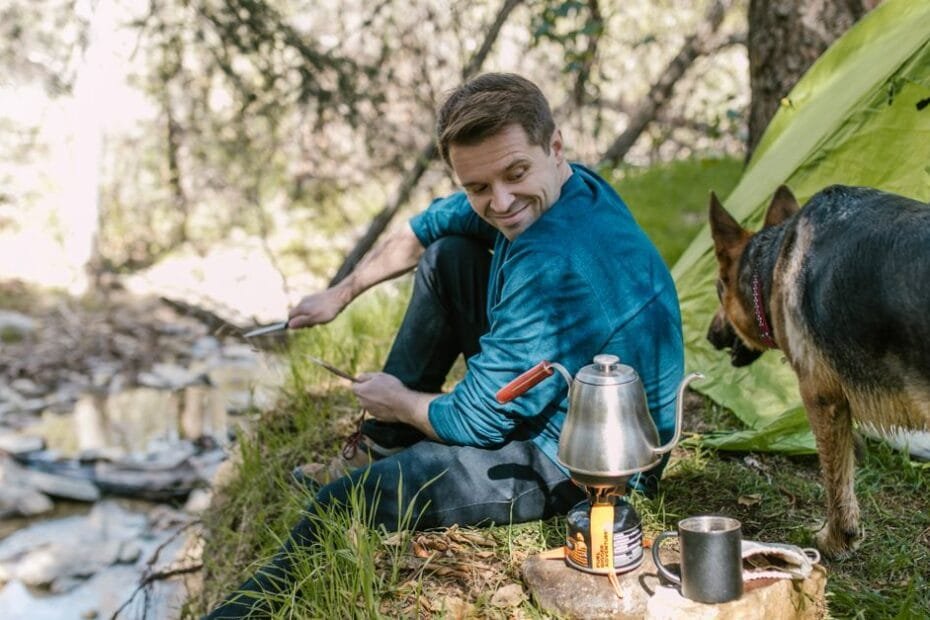
Dog camping gear is the home kit re-specced for weather and distance, bought in four layers: the SLEEP system (a folding elevated cot or closed-cell pad — the ground is colder, wetter, and busier than it looks — plus the unwashed-blanket scent anchor), the WATER-AND-FOOD logistics (measured meals in a dry bag, more water capacity than feels reasonable, and the collapsible bowls that live in the pack), the SAFETY layer (the lit-and-visible tier for camp darkness, the long-line that converts any site into a legal yard, ID redundancy, and the first-aid additions trails demand), and the WEATHER kit your season writes (shade and cooling in August, insulation in October). The framework’s job-first rule governs hardest out here — every ounce gets carried and every gadget competes with water for pack space — and the honest pre-trip test is one backyard overnight, where gear fails cheaply and the dog rehearses the tent question before the wilderness asks it.
This is the complete dog-camping kit: the four layers item by item, the tent etiquette and sleep setup, the campsite systems (the tie-out done safely, the camp “place”, food storage where wildlife votes), the trail-day add-ons, the weather kits by season, the pre-trip checklist including the vet-and-vaccine audit, and the leave-no-trace responsibilities the dog can’t sign for.
Key Takeaways
- Four layers: sleep, water-and-food, safety, and weather — every item carried earns its ounces.
- The backyard overnight is the real gear review: tents, cots, and nerves all test cheaply at home.
- Water capacity beats every gadget: dogs drink more on trail days than any calculator suggests.
- The long-line converts campsites into legal yards; the tie-out follows the swivel-and-shade rules or not at all.
- Camp darkness demands the lit tier: a collar light and reflective gear are cheap insurance at 2 a.m.
- Food stores like YOUR food stores: sealed, hung or boxed where bears and raccoons vote.
The Sleep System (The Ground Is Not Neutral)
THE COT-OR-PAD DECISION: the folding elevated cot is the car-camping champion (off cold damp ground, off the crawling layer, hoseable after), while backpacking weight budgets drop to the closed-cell foam pad tier (ounces, not pounds, and un-puncturable by claws where inflatables die in one night) — either way the dog sleeps OFF the ground, because overnight ground-chill drains warm-blooded sleepers of exactly the recovery the trail day spent.
Also Read
-
Best Kitten Toys: The Four Jobs, the Hands-Are-Never-Toys Law, and the Hunt Sequence

-
Best Cat Tunnels: Portholes, the Crinkle Question, and Ambush Geometry That Gets Used

-
Best Elevated Dog Beds: Airflow Physics, the Three Specs, and the “Place” Bonus

-
Best Dog Crates for 2026: 10 Top Picks for Every Dog
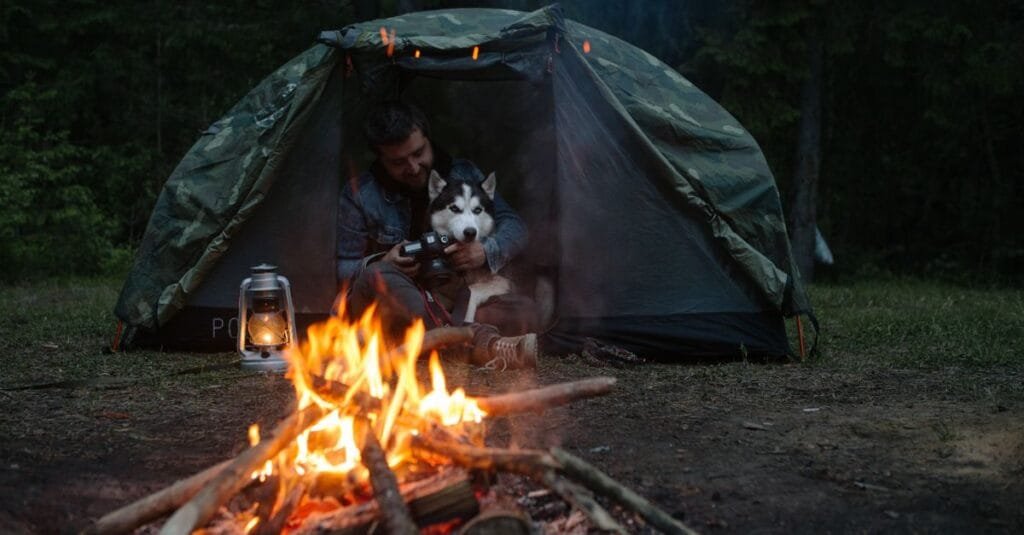
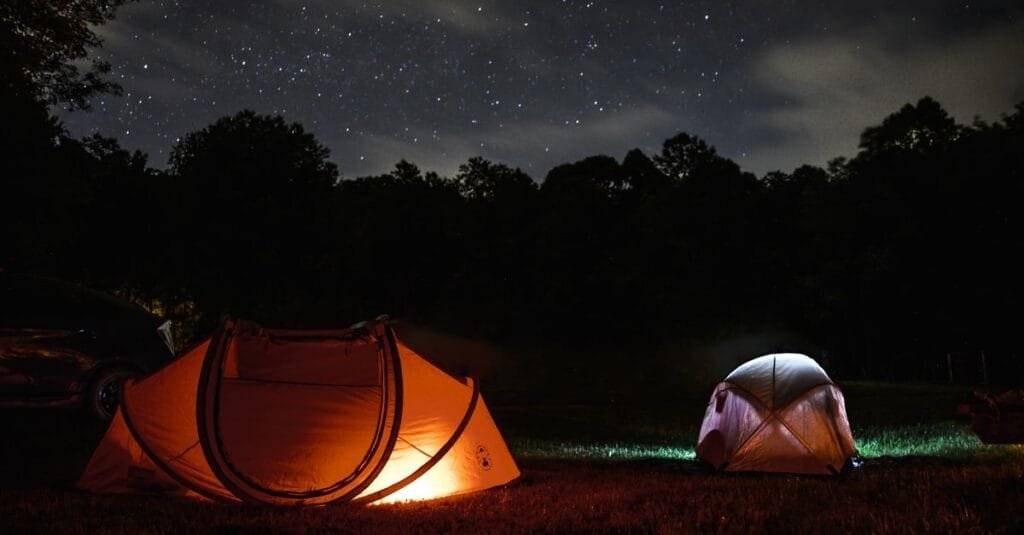
THE TENT QUESTION: most dogs sleep IN the tent (warmth, security, and the practical truth that the tethered-outside dog barks at the forest all night), which means the tent sizes up one capacity rating per medium dog, the claw-vs-floor insurance is a cheap footprint plus an interior mat, and the vestibule earns its keep as the mud-room where wet dogs stage before bedding down — the towel that lives in the camp kit does its best work at this doorway.
THE SCENT ANCHOR, cheap and effective: the unwashed blanket from home converts a strange tent into a known bedroom (the same trick the travel-crate doctrine runs), and the first-night restlessness most camp dogs show resolves a full night earlier with something that smells like the living room.
The camping-with-dogs rundown above covers the preparation arc this kit serves — note how much of it is systems and rehearsal rather than shopping, which is the correct ratio.
Water, Food, and the Wildlife Vote
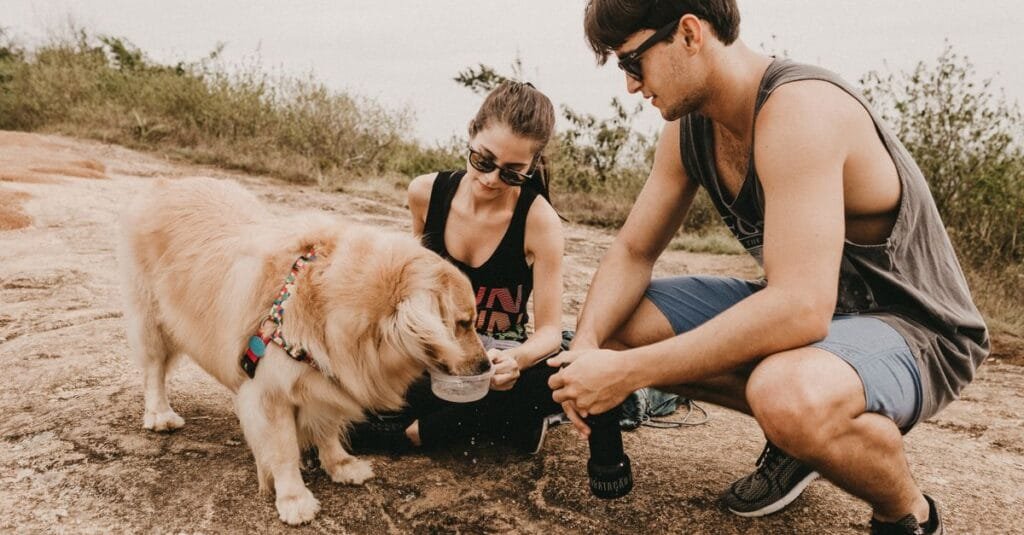
THE WATER MATH: trail dogs drink dramatically more than house dogs — plan roughly an ounce per pound per day as the FLOOR and carry margin, filter-or-treat natural sources exactly as you would your own (giardia doesn’t check species), and run the fifteen-minute offer rhythm from the heat playbook on every hiking day; the standing-water skip list (scum, algae blooms, stagnant pools) is non-negotiable, and the collapsible bowl clipped to the pack means never rationalizing a puddle.
THE FOOD LOGISTICS: meals pre-measured into zip bags (the trip’s feeding card packed per the travel protocol — camping is not the week to experiment with diet), a day of surplus for the delayed-exit contingency, and the high-value treat stash for recalls that matter more out here than anywhere.
THE WILDLIFE RULE that surprises first-timers: dog food is bear-and-raccoon food — it stores sealed IN the same protocol as yours (the hang, the canister, the vehicle where permitted), bowls empty and clean between meals, and the dog’s presence changes nothing about the site’s food discipline except adding one more eater to plan for.
The Safety Layer (Camp Dark, Long Lines, and First Aid)
THE VISIBILITY KIT: a clip-on collar LIGHT for camp darkness (the 2 a.m. bathroom trip with an invisible black dog writes this line), reflective harness or vest per the standing gear doctrine, and the headlamp-checks-the-tie-out habit before every lights-out.
THE CONTAINMENT SYSTEM: the long-line converts any site into a legal yard (most campgrounds require restraint — check the rules before booking, not after arriving), the TIE-OUT done right or not at all: swivel-anchored, in shade with water reachable, clear of wrap-hazards and the fire ring, NEVER unattended — and the portable-pen tier as the car-camping upgrade that gives small dogs real freedom inside real boundaries.
THE FIRST-AID ADDITIONS trails demand, stacked onto the standing kit: the tick tool (this week’s removal guide is the companion read), paw-repair supplies (the booties-in-the-pack rule — one torn pad ends a trip that one packed boot finishes), tweezers and saline for the foxtail-and-thorn tier, vet-wrap that sticks to itself, and the REGIONAL sheet: nearest emergency vet’s address written on paper, because the trailhead has no bars.
Trail-Day Add-Ons and the Camp “Place”
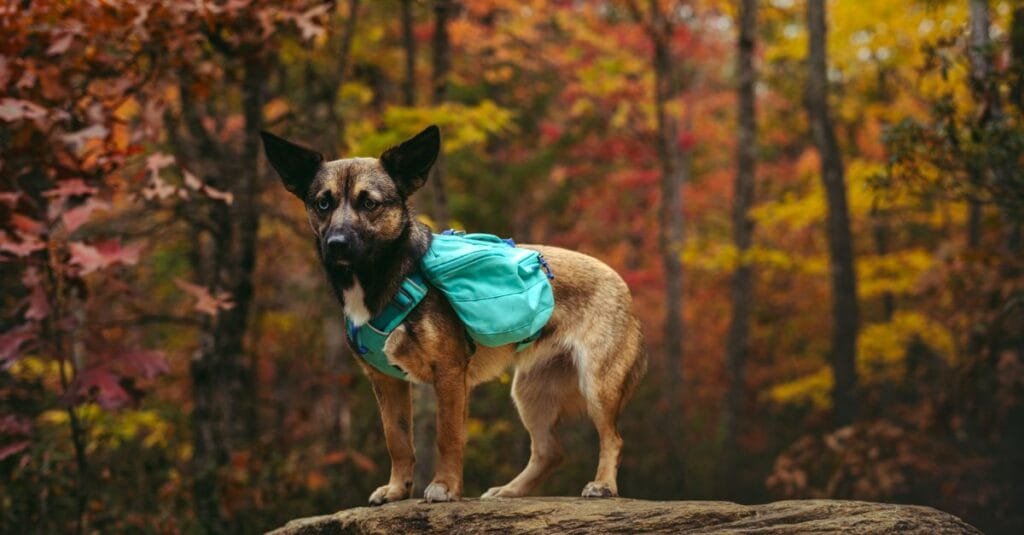
THE PACK QUESTION: the dog backpack earns its slot for conditioned adult dogs at honest loads (the vet-cleared percentage of body weight, balanced side-to-side, empty for the first trips) — puppies and seniors carry nothing but themselves, per the growth-plate and joint doctrines.
THE WATER-ADJACENT KIT: the life vest for boats, rivers, and the lake-adjacent site (the handle is the retrieval feature; swimming ability is not drowning-proofing), and the post-swim ear-dry protocol traveling with it.
THE CAMP “PLACE” SYSTEM that makes the whole trip calmer: the cot or mat as the trained settle target (the place-training bonus deployed in the wild) gives the dog a job during camp chores and fireside hours — the dog with a station relaxes; the dog without one patrols — and the five-minute daily session that built it back home is the cheapest piece of gear on this list.
Weather Kits, the Pre-Trip Audit, and Trail Manners
THE SEASONAL SPLITS: AUGUST runs the cooling playbook (shade structure over the tie-out, the dawn-dusk hiking windows, the cooling vest that works when wet), and the surface rules follow onto sun-baked rock; SHOULDER SEASONS add the insulated sleeping layer and the coat tier for thin-coated dogs, and the wet-forecast kit (the extra towel, the dry-bag bedding) earns its space the first drizzly night.
THE PRE-TRIP AUDIT, one week out: vaccines current and the parasite prevention on schedule (tick country doubly), ID tags legible plus the microchip registry checked, the campground’s pet rules read (leash lengths, breed clauses, and the quiet-hours reality that a barking dog is the site’s loudest violation), and the backyard-overnight shakedown run where every failure is a driveway walk from the fix.
THE TRAIL MANNERS clause the whole community depends on: waste packed out (the bag rule doesn’t expire at the trailhead), the leash on where required regardless of your recall’s reputation, wildlife left unchased, and the yield-with-space courtesy to horses, hikers, and dog-nervous humans — the camping dog is an ambassador whether anyone briefed it or not, and the handler holds the portfolio.
Frequently Asked Questions
What gear does a dog need for camping?
Four layers: a sleep system (folding cot or closed-cell pad plus a home-scented blanket), water-and-food logistics (collapsible bowls, measured meals, more water than feels reasonable), the safety kit (collar light, long-line, tick tool, paw boot, first-aid additions), and the season’s weather layer.
Should my dog sleep in the tent?
Usually yes — warmth, security, and the practical truth that tethered-outside dogs bark at the forest all night. Size the tent up one rating, protect the floor with a footprint and mat, stage wet dogs in the vestibule, and bring the unwashed blanket that smells like home.
How much water should I bring for my dog?
Roughly an ounce per pound per day as the floor, with margin — trail dogs drink far more than house dogs. Filter or treat natural sources like your own, skip stagnant and scummy water absolutely, and offer every fifteen-to-twenty minutes on active days.
How do you secure a dog at a campsite?
The long-line as the legal yard, or a swivel-anchored tie-out in shade with water reachable and no wrap hazards — never unattended — and the portable pen for car-camping small dogs. Check the campground’s leash rules before booking; most require restraint.
Can puppies go camping?
With adjustments: vaccine series complete per your vet, no pack-carrying (growth plates), short trail days on the five-minutes-per-month rule, and the backyard overnight rehearsal first. The camping puppy is a socialization goldmine at the cost of an adult’s convenience.
What’s the most-forgotten dog camping item?
The paper list: the nearest emergency vet’s address written down (no bars at the trailhead), the tick tool, one paw boot, and the towel — four small items that end more trips well than any big purchase, plus the backyard shakedown that catches everything else.
Camp Formats by Ambition (Car, Canoe, and Backcountry)
CAR CAMPING is the dog format with training wheels: weight doesn’t matter, so the full cot, the pen, the gallon jugs, and the comfort tier all ride — the right first trip for every dog, and the format most households happily stay in. CANOE-AND-KAYAK camping adds the vest-always rule, the dry-bag doubling for dog gear, and the dock-and-launch rehearsal at home water first.
BACKCOUNTRY backpacking is the graduate tier: every dog item weighs against your shoulders (the pad replaces the cot, meals go dehydrated where the vet approves, the pack earns its keep), water planning goes from convenience to survival math, and the honest gate: the backcountry dog needs the bomber recall, the leave-it that works on wildlife, and the conditioning ramp — the ten-percent rule applied to trail miles — before the permit gets booked.
THE PARKS-AND-RULES layer that picks your destination: national parks mostly restrict dogs to roads and campgrounds (check before dreaming), national forests and BLM run friendlier, state parks vary wildly, and the reservation platforms’ pet filters are the trip’s actual first gear purchase — free, and more trip-determining than anything in the duffel.
The Shared-Site Courtesy Kit
The neighbor-relations layer that keeps dogs welcome at campgrounds: the quiet-hours bark plan (the settle mat and the chew project deploy at dusk, not after the first complaint), the greeting protocol for the site-to-site foot traffic (leashed, four-on-the-floor, and never assumed welcome), and the morning patrol that polices your radius before the neighbors’ coffee — every campground that bans dogs is quoting somebody’s last visit, and the courtesy kit is how yours never makes the minutes.
The First-Trip Length Rule
One night, close to home — the maiden voyage runs a single overnight within an hour of the house, because every lesson the trip teaches (the tent verdict, the tie-out radius, the 6 a.m. campground wake-up call) teaches cheaper with an escape hatch; the three-day wilderness debut is how promising camping dogs acquire complicated histories, and the one-nighter is how they acquire the habit instead.
The Bottom Line
Pack the four layers, rehearse in the backyard, carry more water than pride suggests, light the dog for camp darkness, store food like the wildlife is watching (it is), and bring the trained “place” that turns a campsite into a home base — the dog was always going to love it; the kit is what lets you relax enough to notice.
The mistakes audit that saves first trips: THE UNTESTED TENT introduction at 9 p.m. in the woods (the backyard rehearsal exists), THE SINGLE WATER BOTTLE for a two-dog August hike, THE RETRACTABLE at the campsite (the gear pillar’s verdict travels), THE FIRE-RING TIE-OUT radius nobody measured until the tail found the coals, THE FOOD BAG in the tent vestibule (the raccoon’s favorite chapter), and THE SKIPPED RULES CALL — the campground that turns away your breed or your leash length at the gate after a four-hour drive. Every one of them is a ten-minute fix at home and a ruined weekend in the field — which is the whole economics of preparation, and the reason this kit reads like a checklist on purpose.
The best camping gear your dog owns is a human who rehearsed. Everything else fits in one duffel.

Hello! I'm Khan Hisham, a dedicated student with a profound passion for enhancing the lives of pets through comprehensive care. At Pawspera, our mission—"Prospering Pets, Every Day"—drives everything we do. We are committed to providing the latest insights, tips, and products that ensure your pet's health and happiness. Join us at Pawspera as we explore innovative ways to care for our furry friends with love and dedication.