
The best elevated dog beds are TAUT-MESH COTS on powder-coated steel frames — the airflow under and through the fabric is the entire product, dropping the sleeping surface meaningfully below body heat in summer — bought by three specs the listings bury: fabric TENSION that stays drum-tight (sagging mesh is a hammock, and hammocks sleep hot and hurt hips), a weight rating with the same 1.5× margin every support product deserves, and CORNER construction (the bolted or slotted corners outlive the snap-together tier by years). The elevated cot earns its slot three ways: the summer cooling bed indoors and out, the outdoor-and-camping bed that keeps dogs off hot patios and cold ground alike, and the training world’s favorite “place” platform — a defined boundary dogs learn to settle on — which is why trainers buy them by the stack.
This is the complete elevated-bed guide: how the airflow physics actually work (and when a cot beats foam), the three specs decoded, the chew-proof truth, sizing by sprawl, the indoor-outdoor-and-camping placements, the “place” training bonus, the mesh-versus-fabric care rules, and the seniors-and-joints honesty about when the orthopedic tier wins instead.
Key Takeaways
- Airflow is the product: taut mesh drops the sleeping surface below body heat — sag defeats the physics.
- Buy on tension, weight margin, and corners — the three specs that separate a three-year cot from a one-summer one.
- “Chew-proof” means chew-resistant: the frame survives; unattended mesh eventually doesn’t — manage the chewer.
- Size to the full sprawl: dogs stretch flat on cooling beds — the curl measurement under-buys.
- The cot is the trainer’s “place” platform — a defined edge dogs learn to settle on, which doubles its value.
- Seniors with joint disease often need foam UNDER them, not air — know when the orthopedic tier wins.

The Airflow Physics (When a Cot Beats Foam)
THE MECHANISM: a dog on foam sleeps in its own trapped heat — the bed warms to body temperature and holds it — while a raised mesh cot lets air move under and THROUGH the sleeping surface, shedding heat continuously; in summer rooms and shaded yards the difference is visible in where the dog chooses to sleep, and the double-coated and heat-vulnerable breeds from the cooling guide’s risk tiers vote for the cot hardest.
Also Read
-
Best Kitten Toys: The Four Jobs, the Hands-Are-Never-Toys Law, and the Hunt Sequence

-
Best Dog Camping Gear: The Four Layers, the Backyard Test, and the Camp “Place”

-
Best Cat Tunnels: Portholes, the Crinkle Question, and Ambush Geometry That Gets Used

-
Best Dog Crates for 2026: 10 Top Picks for Every Dog

THE HEIGHT-AND-SURFACE note: eight-or-so inches of clearance is the standard that works (enough airflow, easy boarding for most dogs), the cot on a breezy porch outperforms the same cot in a dead-air corner (placement is half the physics — the fan at dog height from the cooling guide compounds it), and the off-the-ground benefit runs year-round: off hot patio stone in July, off cold damp ground in October, off the crawling-things layer at every campsite.
THE HONEST LIMITS: a cot is a firm sleeping surface — the pressure-relief tier for bony seniors and joint-disease dogs is FOAM’s job (below), the burrow-and-nest sleepers (the blanket-cave tier) may reject open mesh entirely, and the indoor winter cot wants a topper blanket the summer version deliberately skips; the main bed guide covers the foam-and-bolster tiers this guide hands off to.
The behavior-expert review above evaluates a cot in real training use — note how much of the verdict is frame stability and mesh tension, which is exactly where the category’s three specs live.
The Three Specs (Tension, Margin, Corners)
TENSION: the mesh should read drum-tight new and STAY tight — lacing or slot-tensioned designs re-tighten; heat-welded fixed panels sag permanently once they stretch — and the sag test at purchase is a press in the center: more than an inch of give under hand pressure is a hammock in training, and hammock geometry concentrates weight exactly where airflow and hips both lose.
WEIGHT MARGIN: the 1.5× rule from every support product — the seventy-pound rating for the fifty-pound dog — because dogs board cots at a trot and flop with intent, and the multi-dog pile rates for the pile; frame material follows the margin: powder-coated steel for the standard tier, aluminum where the cot travels (camping’s weight budget), and the PVC-pipe tier honestly labeled as the light-duty small-dog lane.
CORNERS: the failure point of the whole category — bolted or slot-locked corners survive years of boarding leaps; friction-fit snap corners loosen into wobble, and wobble teaches bed-avoidance faster than any comfort spec can win it back; the replacement-mesh availability check closes the spec sheet, because a good frame outlives two or three covers and the brands that sell replacement mesh are self-identifying as the durable tier.
Chew-Proof Truth and Sizing by Sprawl
THE CHEW HONESTY: “chew-proof” marketing means chew-RESISTANT — steel frames genuinely defeat teeth, but any mesh yields to a committed unattended chewer eventually — so the destroyer tier buys the ballistic-fabric versions WITH warranties (the warranty-as-materials-signal rule), manages the habit per the chew-outlet doctrine, and treats the cot’s early weeks as supervised like every new product’s first 48 hours.
SIZING BY SPRAWL: cooling sleepers stretch FLAT — measure the dog fully extended (nose-to-tail-base plus paw room) rather than curled, size up between choices, and the too-small cot is self-defeating: the dog whose legs hang off returns to the cool floor and the purchase becomes patio furniture. Multi-dog homes run one cot per dog plus the pile-rated large per the standing per-animal rule.
THE BOARD-AND-WOBBLE INTRO for the hesitant: treats on the mesh, the cot against a wall for stability during the first boardings (the wobble that startles a first approach writes off the bed for weeks), and the same discovery-not-placement patience every new furniture item gets — most dogs need exactly one hot afternoon to convert.
Placements: Indoor, Outdoor, Camping, and the Yard
INDOORS: the summer bedroom (beside the human bed where the foam bed sat in winter — the seasonal swap doctrine), the breeze-path living-room spot, and the tile-room placement that stacks cool floor under moving air — the cot plus the fan is the budget air-conditioned dog bed.
OUTDOORS: the shaded porch and patio tier (off the hot stone per the surface-heat physics — a cot in the sun is a griddle with legs; SHADE is non-negotiable), the weather note (mesh drains rain and dries fast — the cot lives outside honorably where cushion beds mildew), and the UV honesty: sun bleaches and weakens mesh over seasons — the shaded placement protects dog and fabric alike.
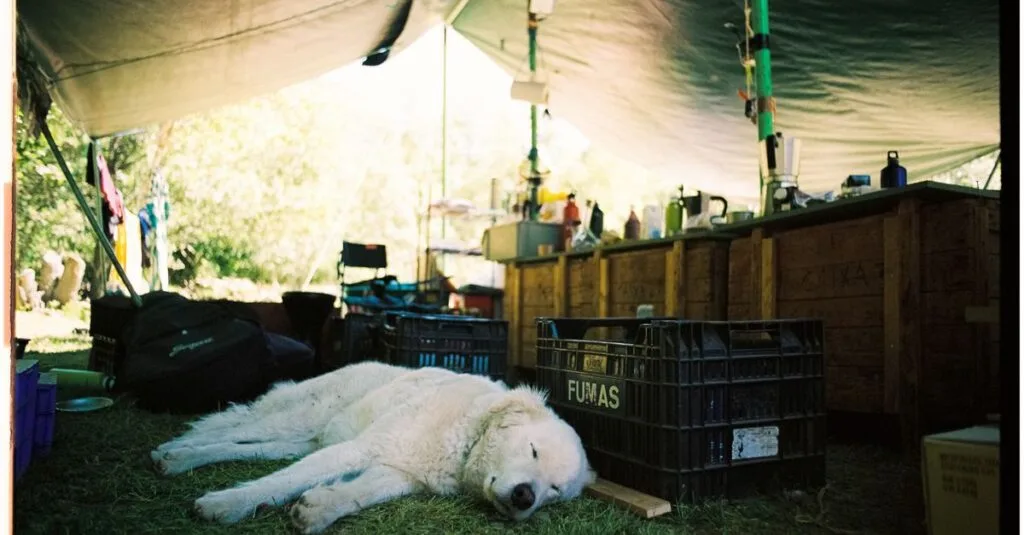
CAMPING AND TRAVEL: the folding-cot tier packs flat, keeps dogs off cold, damp, or crawling ground at the site, gives the trail dog a defined home base at camp (the “place” behavior below, deployed in the wild), and joins the adventure kit with the same job-first logic as everything in it.
The “Place” Bonus and the Care-and-Seniors Chapter
THE TRAINING PLATFORM: the cot’s defined edge makes it the trainer’s favorite “place” target — go-to-your-cot, settle, stay-until-released — the mat-settling behavior from the training pillar upgraded with unambiguous geography; the doorbell protocol, the dinner-hour settle, and the camp-site boundary all run on it, and the five-minute daily sessions convert the cooling bed into behavior infrastructure at no extra cost.
THE CARE LOOP: mesh hoses or wipes clean (the whole-bed wash the fabric tier can’t offer), the frame’s monthly bolt-check joins the gear audit, hair sweeps off taut mesh with a rubber mitt, and the replacement-mesh order at first fray beats the whole-bed rebuy — the fleet economics of the gear pillar in one product.
THE SENIORS-AND-JOINTS HONESTY: arthritic and bony dogs often need pressure RELIEF more than airflow — the memory-foam orthopedic tier wins for them, with the cooling problem solved by placement and fans instead — and the boarding-height note for stiff hips: the low-profile cot or a step beats the leap, and the dog who stops using a beloved cot is filing the mobility report the health system wants forwarded to the vet.

Frequently Asked Questions
Do elevated dog beds really keep dogs cooler?
Genuinely — taut mesh lets air move under and through the sleeping surface, shedding body heat that foam traps. The physics need tension (sagging mesh hammocks and sleeps hot), clearance, and smart placement: shade outdoors, the breeze path or a fan indoors.
What should I look for in an elevated dog bed?
Three specs: mesh tension that stays drum-tight (re-tensionable designs beat welded panels), a weight rating 1.5× your dog for boarding forces, and bolted or slot-locked corners — plus replacement-mesh availability, the tell of a durable brand.
Are elevated dog beds chew-proof?
Chew-resistant: steel frames defeat teeth; unattended mesh eventually doesn’t. Destroyers get the ballistic-fabric tier with a replacement warranty, supervised first weeks, and a managed chew outlet — the habit is trained, not purchased away.
What size elevated bed does my dog need?
Measure the full sprawl — cooling sleepers stretch flat, so nose-to-tail-base plus paw room, sized up between options. The cot a dog’s legs hang off gets abandoned for the cool floor, and multi-dog homes run one per dog.
Can elevated beds be used for “place” training?
They’re the trainer’s standard: the defined edge makes go-to-your-cot, settle, and stay-until-released unambiguous — the doorbell protocol and dinner-hour settle both run on it, and the camping version gives the trail dog a home base at the site.
Are elevated beds good for senior dogs?
Often not — arthritic and bony seniors usually need foam’s pressure relief more than airflow, with cooling solved by placement and fans. Stiff hips also prefer low-profile boarding; and the senior who abandons a beloved cot is filing a mobility report for the vet.
Cot Extras and the Accessory Honesty
THE CANOPY tier: the bolt-on shade canopies convert the yard cot into a legitimate summer station — useful where tree shade isn’t, checked for frame wobble like everything else — while the COT-TOPPER pads split the difference for the in-between dogs (airflow below, cushion above, washable per the standing cover law), and the winter conversion runs the same frame with a fleece topper where the summer ran bare mesh.
THE ACCESSORY SKIP LIST: the bolt-on bowls (tip hazards at cot height), the built-in toy anchors (chew concentrators aimed at the mesh), and the wheels tier (a rolling bed teaches bed-distrust in one skid) — the cot’s virtue is its simplicity, and most add-ons subtract from it.
THE TWO-SEASON AUDIT: mesh tension re-checked at the season flips (heat loosens, cold stiffens), frame bolts on the monthly loop, feet caps replaced when they walk off (the bare-pipe scrape announces itself on hard floors), and the sun-fade rotation for permanent outdoor cots — a quarter-turn monthly weathers the mesh evenly instead of striping it.
The Kennel-and-Daycare Crossover
One professional endorsement worth its line: boarding facilities and vet clinics run raised cots almost universally — hoseable, dry, off the concrete, and disease-management-friendly — which means the boarded dog often comes home already cot-trained, and the home cot doubles as the familiar bed that travels TO the kennel; ask your facility what they run, and matching it is the cheapest continuity trick in boarding prep.
The Apartment Answer
Small-space households run the folding cot as the convertible tier: deployed by the balcony door for the summer sleep, folded flat behind the couch for hosting nights, and doubling as the travel bed that never needs a second purchase — the one-bed-three-jobs math that makes the cot the small apartment’s best dog-furniture dollar.
The Bottom Line
Buy tension, margin, and corners; size to the sprawl; place it in shade and moving air; train the “place” behavior the edge was begging for; and hand the joint-disease seniors to the foam tier honestly — the elevated cot is the summer sleep system and the camp furniture and the training platform in one hoseable product.
The buying checklist assembled for the checkout tab: tension design (re-tightenable beats welded), the 1.5× weight margin, bolted or slot-locked corners, replacement mesh sold separately, breathable TRUE mesh rather than solid fabric with mesh branding (the airflow is the product — read the material line), rubber feet for hard floors, and the fold-flat hinge if the cot travels. And the two-cot economy most convert households reach: the indoor cot that stays put and the folding camp cot that lives with the travel kit — because the product that has to be retrieved from the garage for every trip is the product that stops traveling, per the station doctrine that runs every kit on this site.
The dog has been choosing the cool floor all July. The cot is the cool floor with a better view — and it travels.

Hello! I'm Khan Hisham, a dedicated student with a profound passion for enhancing the lives of pets through comprehensive care. At Pawspera, our mission—"Prospering Pets, Every Day"—drives everything we do. We are committed to providing the latest insights, tips, and products that ensure your pet's health and happiness. Join us at Pawspera as we explore innovative ways to care for our furry friends with love and dedication.