Pet gear divides into four kits bought in order of stakes: the RESTRAINT kit (collar-with-ID, leash, harness, and the car-safety tier — where failure means traffic, so quality is non-negotiable), the HOME kit (bed, bowls, litter infrastructure, scratching and chewing outlets), the TRAVEL kit (carriers and car rigs — where “crash-tested” is a specific, checkable claim most products can’t make), and the TECH kit (cameras, GPS, automatic feeders and fountains — graded honestly, because half the category is solutions seeking problems). The buying framework’s five questions govern every purchase, and gear’s special rule is FIT: measured animals, adjusted straps, and the two-finger check — because the best harness ever crash-tested protects nothing if the dog backs out of it at the curb.
This is Pawspera’s complete gear pillar — the guide behind our carrier, bed, leash, and tech reviews: the four kits item by item, the car-safety chapter with its crash-test honesty, fit and adjustment as the master skill, the tech tier graded use-case by use-case, seasonal and activity gear, the maintenance-and-retirement schedule, and the spending map that says where premium pays and where mid-tier wins.
Key Takeaways
- Buy in stakes order: restraint first, home second, travel third, tech last — and never cheap out where failure means traffic.
- “Crash-tested” is a checkable claim: independent certification (the Center for Pet Safety standard) separates marketing from engineering.
- Fit is the master skill: measure neck, girth, and length; run the two-finger check; re-check after weight changes.
- ID rides on the collar; force rides on the harness — the split that protects tracheas and prevents backouts.
- Tech earns its slot by use case: GPS for escape artists, cameras for separation work, feeders for schedules — not by novelty.
- Gear retires on inspection: frayed stitching, bent hardware, and packed-down beds are replacement notices, not character.

The Restraint Kit (Where Quality Is Non-Negotiable)
THE COLLAR carries IDENTITY, not force: a flat collar with the tag riveted or tight-ringed (the jangling S-hook loses tags — and microchips back up tags, never replace them), fitted to the two-finger standard, checked monthly on growing animals — and the collar-and-leash guide covers the martingale tier for the narrow-headed escape breeds.
Also Read
-
Best Cat Litter: The Five Types, the Unscented Law, and the Cat’s Vote

-
Best Kitten Toys: The Four Jobs, the Hands-Are-Never-Toys Law, and the Hunt Sequence

-
Best Dog Camping Gear: The Four Layers, the Backyard Test, and the Camp “Place”

-
Best Cat Tunnels: Portholes, the Crinkle Question, and Ambush Geometry That Gets Used

THE HARNESS carries FORCE: back-clip for calm walkers, front-clip for the pulling months (management while the training pillar’s loose-leash work installs), dual-clip for flexibility — fitted so it can’t be backed out of (the two-finger check at BOTH straps, and the wiggle-test before the first street walk), with the reflective tier earning its place every winter evening.
THE LEASH: six feet of flat nylon, rope, or biothane with a checked clip is the daily answer; the long line is training equipment; and the RETRACTABLE gets this pillar’s honest paragraph: it teaches pulling by design, fails at its plastic case and thin cord exactly when loads spike, and burns hands that grab the cord — a niche tool for open-field sniff walks on small dogs, not a default; the leash roundup grades the alternatives.
The Car-Safety Chapter (Crash-Test Honesty)
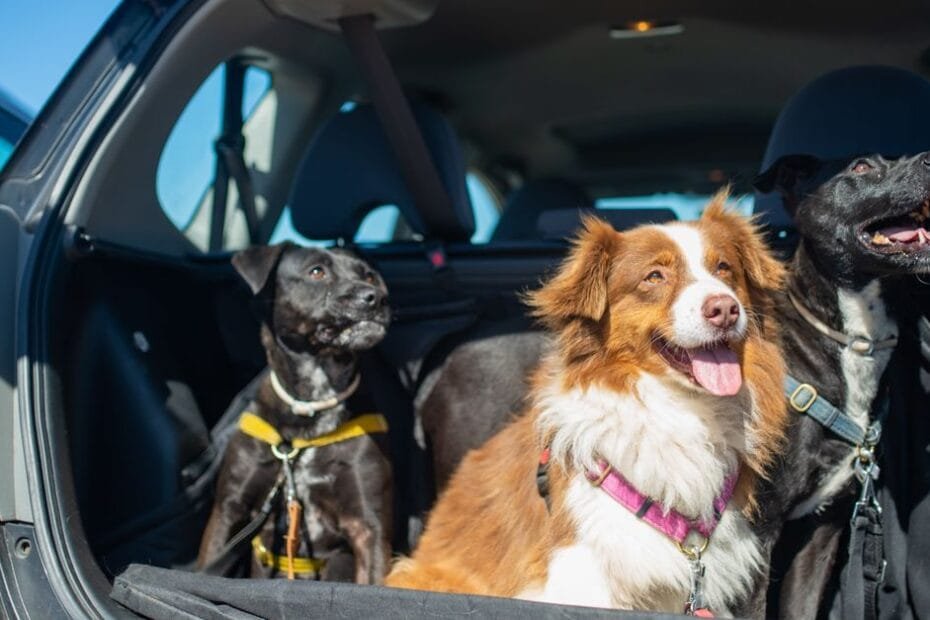
THE PHYSICS, once: an unrestrained dog at city speeds becomes a projectile many times its weight in a sudden stop — dangerous to itself and every human skull in the cabin — and the airbag seat is as wrong for dogs as for toddlers: pets ride in the BACK, restrained, every trip, including the five-minute ones where most accidents live.
THE CERTIFICATION TRUTH the aisle hides: “crash-tested” unqualified often means “we tested it and it failed” or “tested to no standard at all” — independent certification (the Center for Pet Safety’s published crash standards, the video above) is the checkable version, a SHORT list of harnesses and carriers passes it, and the car-harness guide names them; everything else in the category is containment (useful against driver distraction) rather than crash protection — a real but different job, bought knowingly.
THE RIG BY SIZE: small dogs and cats ride in SECURED carriers (seatbelt through the carrier’s designed path, on the floor behind a seat or belted — never loose on a seat), medium dogs in certified harnesses clipped to the belt system, big dogs in anchored crates in the cargo area — and the seat-cover tier plus its hammock variant protects upholstery while the restraint does the safety; the head-out-the-window ride, beloved and photogenic, is debris-in-eyes and door-failure risk — windows up past a crack, restraint on, and the sniffing happens at the destination.
The Center for Pet Safety footage above shows what certified testing actually looks like — and why “crash-tested” without a named standard is a marketing phrase, not a spec.
The Home Kit (Beds, Bowls, and the Species Furniture)
THE BED decision by sleeper type, per the bed guide: sprawlers need flat mats sized to full stretch, curlers take bolsters, seniors and big breeds earn true ORTHOPEDIC foam (the spec that matters: real memory-foam thickness, not polyfill in an orthopedic costume — press it; your hand should not find the floor), and every bed passes the removable-washable-cover law from the buying framework — no exceptions, because the unwashable bed is a smell subscription.
THE BOWLS-AND-WATER station: stainless or ceramic per the materials chapter, washed daily, sized so whiskered faces don’t fold (whisker-stress is debated; easy-access bowls are not), and the fountain tier earning its slot for cats specifically — moving water genuinely increases feline drinking, which the nutrition pillar’s kidney chapter makes a health line, not a gadget line; filter subscriptions are the real cost, priced before purchase.
THE SPECIES FURNITURE dogs and cats are owed: chewing outlets in rotation (dogs), scratching REAL estate vertical and horizontal plus climbing territory (cats — the cat tree is infrastructure, not indulgence; the couch pays for its absence), the litter setup at boxes-plus-one with size honesty (most boxes sell too small — a box should fit the whole cat with room to turn), and the feeder-and-puzzle tier that turns meals into enrichment per the training pillar’s doctrine.

The Travel Kit (Carriers, Flights, and the Adventure Tier)
THE CARRIER SPEC from the carrier guide: hard-sided for car anchoring and chewers, soft-sided for shoulders and cabins, TOP-LOADING doors as the sleeper feature (extracting a reluctant cat through a front door is a two-person regret), sized stand-turn-lie, and conditioned as furniture WEEKS before travel per the cooperative-care playbook — the carrier that only appears on vet day trains its own resistance.
THE FLIGHT TIER: airline-approved means each airline’s own dimensions and rules (checked at booking, not at the gate), in-cabin is the only tier this site endorses without caveats — cargo is a risk conversation with your vet and the airline’s live-animal record — and the backpack tier plus travel accessories and portable pens kit out the road-trip wing, with the feeding-card protocol from the nutrition pillar riding along.
THE ADVENTURE TIER, activity by activity: the hiking pack (loaded light, dog conditioned to it, weight per your vet), the life vest whose handle is the actual feature (boat dogs and pool households — swimming ability is not drowning-proofing), the paw cleaner for mud season, and winter’s booties-and-coat tier for the thin-coated and the salted-sidewalk cities — gear that follows the activity, never precedes it, per the framework’s job-first rule.
The Tech Tier (Graded by Use Case, Not Novelty)
EARNS ITS SLOT: the GPS tracker for escape artists, off-leash adventurers, and door-dashing cats (subscription priced in — the hardware is the cheap half), the camera when it answers a real question (separation-anxiety monitoring for the training plan, the what-does-he-do-all-day audit — treat-tossing is a toy, not a feature), and the automatic feeder for schedule-critical cats and shift-working households — with the battery-backup spec non-negotiable, because the feeder that dies silently starves quietly.
THE HONEST-GRADE tier: water fountains (yes, above), smart doors (real for security-minded households, priced like appliances), litter robots (genuine labor savings, cleaned-and-monitored not forgotten, at a price that buys years of scooping) — and the SKIP tier: gadgets that gamify the pet itself (the laser that frustrates without catharsis — end laser play on a physical toy always), wearables that measure nothing actionable, and anything whose app is the product while the hardware is the excuse.
THE TECH RULE that keeps the drawer honest: every device answers “what decision does this data change?” before purchase — the tracker changes search decisions, the camera changes training decisions, the step-counter changes conversation — and the eco tier closes the kit with the buying framework’s named-materials rule doing its checkable-claims work.

Fit, Maintenance, and Retirement (The Ownership Half)
THE FIT PROTOCOL, the master skill restated: MEASURE (neck, chest girth at the widest, back length — in the phone note the framework prescribed), ADJUST on the animal (two fingers under every strap — snug enough to hold, loose enough to breathe), WIGGLE-TEST before the first real outing (the backyard backout costs nothing; the curb backout costs everything), and RE-CHECK at every weight change, coat blow, and growth month — fit drifts, and drifted fit is how “he slipped his harness” stories start.
THE MAINTENANCE CALENDAR: weekly bowl-and-fountain scrubs (biofilm is the invisible tenant), monthly gear audit hands-on (stitching, clips, buckles, elastic — the two minutes from the health pillar’s body-scan doctrine applied to equipment), bed covers washed on the linen cycle, carriers aired and wiped after every trip, and tech firmware updated on the same audit — the camera that stopped uploading in March helps nobody in June.
THE RETIREMENT CALLS: frayed webbing and bent or sticky hardware retire restraint gear IMMEDIATELY (failure mode: traffic — the stakes rule never relaxes), packed-down beds that no longer rebound retire on the orthopedic logic above, chewed bowls and cracked crates retire on the materials chapter’s bacteria-and-edges logic, and the demotion pipeline (car towels, garage duty, donation for the gently-used tier) keeps retirement from feeling like waste — while the replacement buys through the January and seasonal clearances the buying calendar mapped.
The Starter Budgets (Three Tiers, Priced Honestly)
THE FOUNDATION TIER (the first hundred-and-change): ID collar and tag, six-foot leash, properly fitted harness, stainless bowls, one washable-cover bed, a conditioned secondhand-or-basic carrier, and the chew-or-scratch starter — the complete safety-and-dignity kit, nothing missing that matters, and the tier every rescue adopter should price before the adoption fee.
THE SETTLED TIER (the first year’s accumulation): the orthopedic bed upgrade once sleep style is known, the certified car restraint, the fountain for the cat household, the walk-gear winter wing, and the first tech purchase IF its use case emerged — bought at the seasonal clearances the buying calendar mapped, funded partly by the foundation tier’s discipline.
THE ENTHUSIAST TIER, honestly labeled: the adventure kit, the camera ecosystem, the litter robot, the luxury materials wing — all legitimate under the framework’s five questions, all optional forever, and the site’s standing promise is to review this tier by the same job-first rules as the foundation, because a $300 purchase deserves more scrutiny than a $30 one, not less.
Small Spaces, Renters, and the Multi-Pet Economy
THE APARTMENT GEAR NOTES: vertical cat territory matters MORE in small footprints (the ceiling is the apartment’s spare room), the crate doubles as furniture with a cover per the small-space doctrine, the gear closet runs one-bin discipline, and the noise tier (automatic feeders’ motors, fountains’ pumps) gets checked in reviews before thin-wall households buy — the spec sheet never mentions decibels; the three-star reviews do.
THE RENTER CLAUSES: damage-prevention gear pays double rent (the scratch-protection tier, the washable everything, the paw-cleaning station at the door), and the deposit math makes the cat tree the cheapest furniture in the apartment.
THE MULTI-PET ECONOMY: restraint and carriers are PER-ANIMAL always (the shared-harness household discovers why during the emergency evacuation), beds and bowls multiply with a spare, toys are communal until guarding says otherwise, and the color-coding trick (each animal’s gear in its color) ends the whose-leash fumble and makes the sitter’s care sheet self-illustrating.
The Escape-Artist Chapter (Gear for the Houdini Tier)
THE THREAT MODEL first, per the framework: door-dashers, fence-jumpers, harness-backers, and the digging tier each defeat different equipment — identify YOUR artist’s method before buying, because the backing-out dog needs the three-strap escape-proof harness geometry while the door-dasher needs the threshold-training and baby-gate tier, and no single product solves both.
THE LAYERED DEFENSE that actually works: the fitted gear (the two-finger checks, again), the ID redundancy (tag PLUS microchip with current registry details PLUS the GPS tier for the repeat offender), the household protocols (the airlock habit at doors, the leash-on-before-the-door-opens rule), and the training layer the training pillar runs — gear buys seconds and traceability; the recall and the door manners buy the actual safety.
THE RECOVERY KIT nobody stocks until the bad night: the recent photo set (side profile and face, updated after grooms), the flyer template with the microchip number located, the humane trap knowledge for cats (shelters lend them), and the first-24-hours playbook — lost pets mostly travel short and hide close; the kit converts panic hours into search hours.
The Gear Mistakes Audit
THE CLASSICS, collected from every category review: the RETRACTABLE as default (covered — but it leads the audit for a reason), the unmeasured harness bought by breed guess, the “chew-proof” bed for the dog who reads that as a challenge (management first, materials second), the carrier that only appears on vet day (conditioning is the feature), the un-anchored crate in the cargo area (a loose crate is a bigger projectile), the tech subscription forgotten until the annual statement, and the everything-at-once new-owner haul the framework’s wait-and-see list exists to prevent — every one of them cheaper to read about here than to donate later.

Frequently Asked Questions
What pet gear do you actually need?
Four kits in stakes order: restraint (ID collar, six-foot leash, fitted harness, car restraint), home (washable-cover bed, stainless bowls, litter-plus-scratching for cats, chew rotation for dogs), travel (a conditioned carrier), and tech only where a real use case exists. Everything else follows the job, not the aisle.
Are crash-tested dog harnesses real?
The claim is checkable: independent certification to a published standard (the Center for Pet Safety’s) is real engineering, and a short list of harnesses and carriers passes. Unqualified “crash-tested” often means tested-and-failed or tested-to-nothing — the rest of the category is distraction containment, a different job.
Should my dog wear a collar or a harness?
Both, split by job: the collar carries ID (riveted tag, two-finger fit, microchip backup), the harness carries leash force — back-clip for calm walkers, front-clip for pullers in training. Retractables teach pulling by design and fail under spike loads; they’re a niche tool, not a default.
How should pets ride in the car?
In the back, restrained, every trip: cats and small dogs in secured carriers (belted or floor-wedged behind a seat), medium dogs in certified harnesses on the belt system, large dogs in anchored cargo crates. Windows stay up past a crack — the head-out ride risks eyes and worse.
Is pet tech worth buying?
By use case: GPS for escape artists (price the subscription), cameras when they answer a training question, automatic feeders for schedule-critical cats — with battery backup. Skip anything whose data changes no decision; the fountain, meanwhile, is a genuine feline-health purchase.
When should pet gear be replaced?
On inspection: restraint gear at ANY fray or hardware damage (immediately — stakes rule), beds when the fill no longer rebounds, bowls when plastic scratches, carriers at cracks and zipper failures. Run the monthly hands-on audit; demote the retired tier to garage duty and buy replacements at the seasonal clearances.
The Two-Minute Fit Refresher
Bookmark-worthy recap, since fit drifts faster than memory: two fingers under every strap, the wiggle-and-backout test in the yard before the street, tags riveted not S-hooked, and a re-measure after every grooming appointment, weight change, and coat blow — the harness that fit in March is the escape story of July, and the check costs less than a minute per month.
The Bottom Line
Buy the four kits in stakes order, demand named standards where crashes are the failure mode, fit everything to the measured animal and re-check as bodies change, grade tech by the decisions its data changes, and audit monthly with retirement honesty — gear is the equipment layer of the animal’s safety, and the framework prices it exactly right.
The storage-and-station footnote that keeps the kits usable: gear lives at its point of use — the walk kit on hooks AT the door (leash, waste bags, the treat pouch charged), the grooming caddy under one sink, the travel kit packed as a unit on a closet shelf (the carrier stores OPEN as furniture, per conditioning), and the seasonal wing (coats, boots, cooling mats) rotating through one labeled bin on the same clearance-clock calendar as the rest of the household — because the harness you can’t find at walk time trains the impatient no-harness shortcut, and the shortcut is how fitted gear stops mattering.
And the gift note, since pet gear is a giving category: gear gifts follow the framework’s rules on someone else’s behalf — consumables and toys travel safely, fitted items (harnesses, beds) gift better as the measured-together shopping trip or the gift card with the offer to fit it — the pet-parent friend will thank you for respecting the two-finger check you now both know about.
The leash is cheap until the clip fails at the curb. Buy the restraint kit like the physics are real — because they are.

Hello! I'm Khan Hisham, a dedicated student with a profound passion for enhancing the lives of pets through comprehensive care. At Pawspera, our mission—"Prospering Pets, Every Day"—drives everything we do. We are committed to providing the latest insights, tips, and products that ensure your pet's health and happiness. Join us at Pawspera as we explore innovative ways to care for our furry friends with love and dedication.