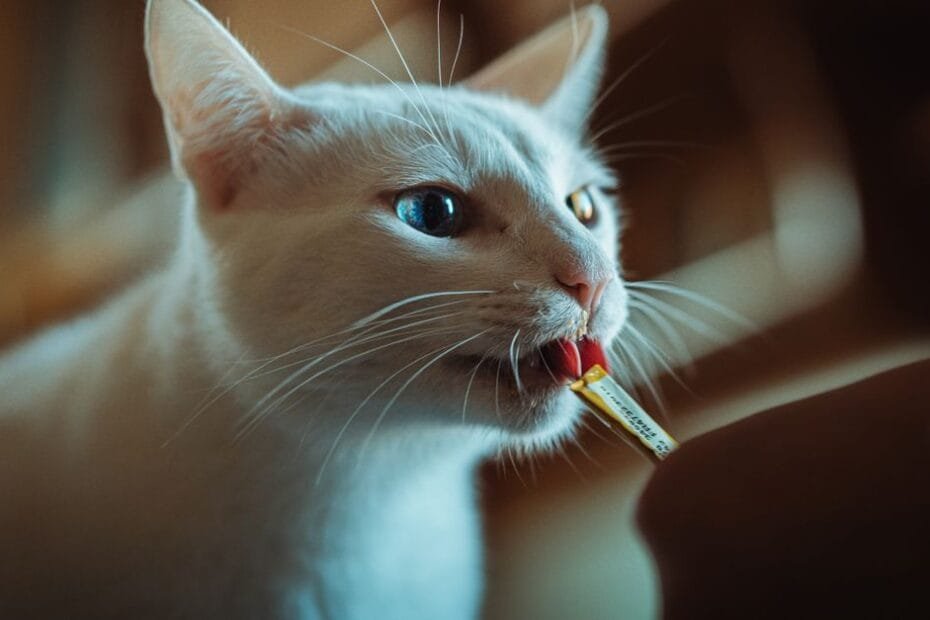
You brush a cat’s teeth by climbing a THREE-WEEK desensitization ladder, not by ambushing a carnivore with a toothbrush: week one buys the right gear (a CAT toothpaste — enzymatic, poultry-flavored, and NEVER human paste, whose fluoride and sweeteners are genuinely toxic to a swallowing cat — plus a finger brush or micro-head cat brush) and simply lets the cat lick paste off your finger; week two adds the lip-lift and a one-second gum touch; week three graduates to actual strokes on the OUTSIDE surfaces of the back teeth — ten seconds a side, cheek teeth first, done before anyone files a complaint. The payoff is enormous and under-sold: most cats past age three already carry dental disease, the mouth is the most neglected organ in feline care, and thirty seconds a day is the cheapest health intervention in this site’s entire catalog — but the ladder is the method, because the cat who gets pinned on day one files that memory permanently.
This is the complete guide: why cat dental disease is the silent epidemic (and the resorption problem unique to cats), the gear that works and the paste that’s dangerous, the three-week ladder step by step, the technique for the cat who cooperates and the exit ramps for the cat who won’t (gels, additives, dental diets — ranked honestly), the VOHC seal that separates real dental products from marketing, the anesthesia-cleaning truth, and the mouth red flags that skip the brush and go straight to the vet.
Key Takeaways
- Never use human toothpaste — fluoride and sweeteners are toxic to cats, who swallow everything. Cat enzymatic paste only.
- The three-week ladder (lick → lip-lift → strokes) beats every ambush — the pinned cat never consents again.
- Outside surfaces of the back teeth are the whole job; the tongue side largely self-cleans.
- Most cats over three already have dental disease — the annual vet mouth check is non-negotiable.
- Can’t brush? The fallback ladder (VOHC-sealed gels, additives, dental diets) is honest second place — not equal.
- Drooling, dropped food, one-sided chewing, or sudden breath changes are vet calls, not brushing projects.
Why Bother? (The Silent Epidemic)
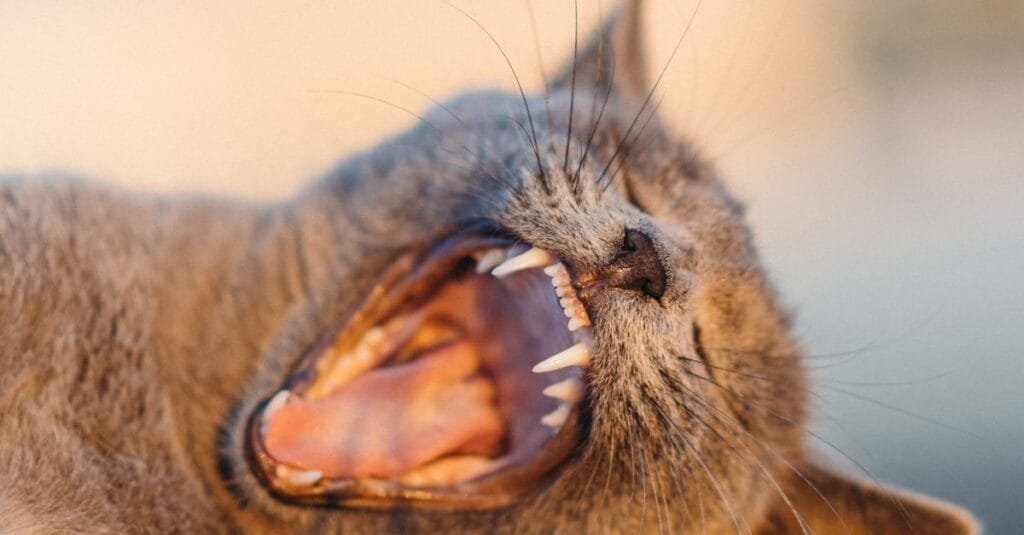
THE PREVALENCE FACT that reframes the chore: the large majority of cats past age three carry some grade of dental disease — gingivitis marching toward periodontal disease, tartar you can see and bone loss you can’t — and because cats hide pain professionally (the survival wiring this site keeps meeting), the mouth hurts silently for years while the food bowl still empties.
Also Read
-
How to Remove a Tick From a Dog: The Grip, the Folklore Ban, and the Watch Window
-
Why Does My Cat Drink So Much Water? The Benign List, the Big Three, and the Measure

-
How to Protect Dog Paws From Hot Pavement: The Seven-Second Test and Three Substitutions

-
How to Keep Dogs Cool in Summer: The Schedule, the Risk Tiers, and the Emergency Protocol
THE CAT-SPECIFIC CRUELTY: tooth RESORPTION — a feline-particular condition where the tooth structure dissolves from within, invisible without dental X-rays, genuinely painful, and common enough that veterinary dentists treat it as routine — which is why the home brush NEVER replaces the vet mouth exam; brushing slows the plaque story, but the X-ray finds the chapter brushing can’t reach.
THE DOWNSTREAM BILL: periodontal disease doesn’t stay in the mouth — chronic oral inflammation and bacteremia keep bad company with kidney and heart trouble in the veterinary literature, and the practical math is blunter still: a lifetime of thirty-second brushes costs less than one extraction-heavy dental under anesthesia, per the same prevention economics as the care loops.
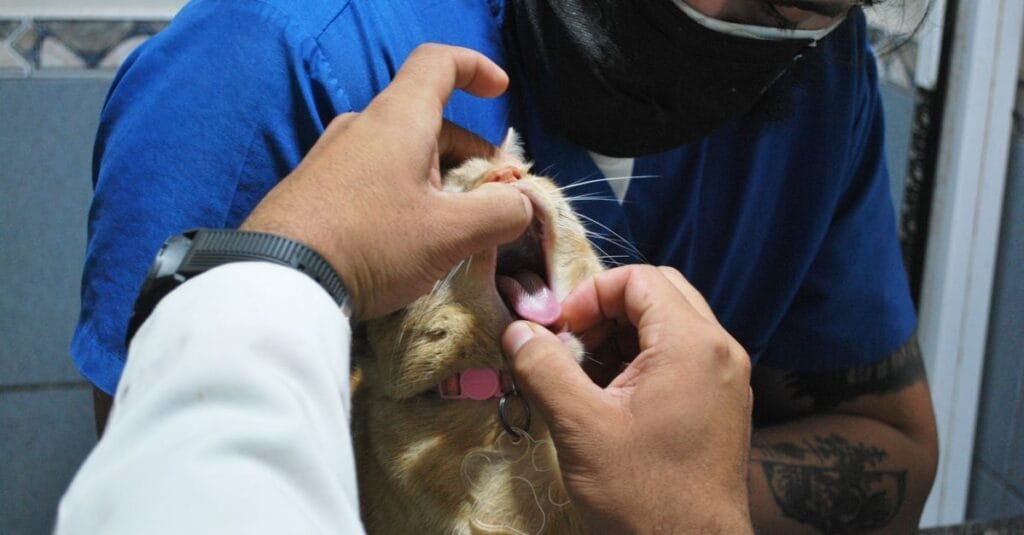
The demonstration above is Dr. Uri Burstyn — the Helpful Vancouver Vet — working an actual cat’s mouth on camera: hand position, cat position, and the calm pacing the ladder below trains toward.
The Gear (And the Toothpaste Law)
THE PASTE LAW first, because it’s the safety line: human toothpaste is OFF the table — fluoride is toxic to a cat who swallows it (and the cat swallows all of it; nobody teaches a cat to spit), foaming agents cause stomach upset, and xylitol-sweetened pastes are dangerous outright — while CAT enzymatic pastes are designed to be swallowed, do chemical cleaning work even where your brushing is sloppy, and come in poultry and seafood flavors that convert the whole project from assault to treat.
THE BRUSH TIER: the silicone FINGER BRUSH is the beginner’s tool (control, gentleness, and you can feel the teeth through it), the micro-head CAT TOOTHBRUSH is the graduate’s (better plaque mechanics at the gumline), gauze wrapped on a finger is the improvised standby — and the child’s soft toothbrush works in a pinch but runs large for a cat’s cheek pocket; whichever tool, it gets replaced on the same worn-bristle schedule as your own.
THE SHOPPING FILTER that outranks brands: the VOHC seal — the Veterinary Oral Health Council’s accepted-products list — is the honest signal in a dental aisle thick with claims, per the exact evaluation habit the product framework teaches; paste, treats, additives, and diets carrying the seal earned it with plaque-and-tartar data, and the ones without it are asking for faith.
The Three-Week Ladder (The Actual Method)
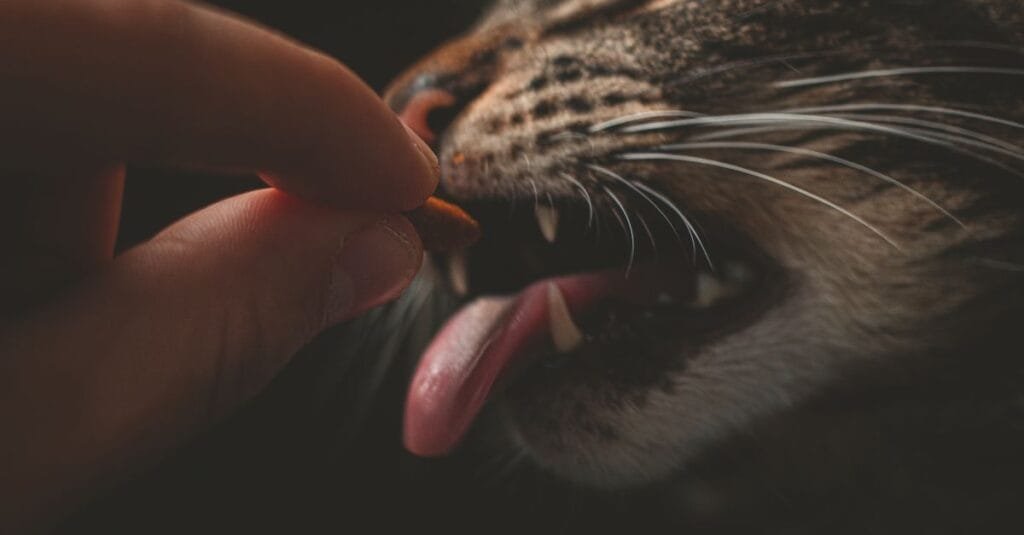
WEEK ONE — PASTE AS TREAT: once a day, same time (post-meal calm, per routine logic), a pea of cat paste licked off your finger, zero mouth-touching — the week’s only goal is the association “paste = good,” and the cat who won’t lick auditions flavors before anything escalates; end every session with a real treat and a wins-column exit.
WEEK TWO — THE LIP LIFT: paste on finger, and while the cat licks, the other hand’s finger lifts the lip at the cheek and touches gum for ONE second — building daily toward a gentle finger-run along the outer teeth; the cat’s posture is the meter (loose is proceed, tail-lash is done for today), and three steps forward with one back is the ladder working, not failing.
WEEK THREE — STROKES: finger brush loaded with paste, lip lifted, three-to-five gentle strokes on the outside of the upper back teeth (the premolars and molars — where tartar actually accrues), then the canines, then the other side — ten seconds a side is a complete session, the INSIDE surfaces are officially skippable (the tongue polices them), and the finished session pays out the treat like every training contract on this site.
Position, Frequency, and the Two-Person Option
THE POSITION that works: cat facing AWAY from you — on your lap, on a counter against your body, or loaf-parked on a table — because the face-on approach reads as confrontation and gives the cat a reverse gear straight backward out of the project; approach the mouth from behind and beside, one hand cradling the head like the video demonstrates, and skip the scruffing entirely.
THE FREQUENCY TRUTH: daily is the gold standard the plaque cycle actually respects (plaque mineralizes to tartar within days, and brushing only removes plaque — tartar is the vet’s job), several-times-weekly still earns real benefit, and weekly is a gesture — better than zero, but the honest label is maintenance theater; pick the cadence you’ll actually keep, because the streak beats the intensity.
THE TWO-PERSON VARIANT for the wiggler: one human as the furniture (cat cradled, calm voice), the other as the dentist — and the towel-wrap tier below it for the cat who needs gentle containment; both are legitimate, but both are also signals to double the ladder’s patience, because the cat who needs restraint at week three usually got rushed at week one.
The Can’t-Brush Fallback Ladder (Ranked Honestly)
Some cats veto the brush permanently — seniors with set opinions, ferals with handling limits, the orally sensitive — and the fallback tier deserves honest ranking rather than marketing equivalence: DENTAL GELS (applied to the gumline by finger, enzymatic action without brushing mechanics) sit closest to brushing; WATER ADDITIVES rank next (VOHC-sealed ones have data; they’re also compatible with the water-monitoring habit — introduce them gradually so they don’t suppress drinking); DENTAL DIETS and VOHC treats do modest mechanical work per kibble geometry.
THE RANKING’S FINE PRINT: every fallback is a fraction of brushing’s effect, stacking two fallbacks beats one, and NONE of them reach under the gumline where periodontal disease actually lives — which promotes the annual vet dental check from advisable to essential in the no-brush household; the fallback ladder buys time and slows the story, and pretending otherwise is how year-five extractions surprise people.
THE ANESTHESIA TRUTH worth one straight paragraph: real dental cleaning happens under anesthesia — scaling below the gumline, dental X-rays, extractions where resorption demands them — and “anesthesia-free dental cleaning” storefronts scrape the visible crown for cosmetic effect while the disease continues below the gumline untouched; modern veterinary anesthesia with pre-op bloodwork is dramatically safer than the fear of it, and your vet will stage the risk conversation honestly for the senior tier.
Red Flags That Skip the Brush (Vet, Now)
THE MOUTH SIGNALS that convert this from grooming to medicine: sudden BREATH change (the fishy-to-foul spectrum — some cat breath is normal; a step-change isn’t), DROOLING in a species that doesn’t casually drool, DROPPED FOOD or one-sided chewing (pain management you can watch), the CHATTERING jaw (nearly pathognomonic for resorptive pain), pawing at the mouth, red or bleeding gumlines, and the appetite drop that pretends to be pickiness.
THE RULE: any of those flags suspends the brushing project (brushing a painful mouth teaches the cat that your hands bring pain — the exact opposite of the ladder’s contract) and books the vet exam instead — resume the ladder after treatment, from week one, with the paste-as-treat courtship rebuilt from scratch.
THE KITTEN HEAD-START, because timing is everything in cats: kittens accept mouth-handling the way they accept nail trims and carriers — as normal, if it starts early — so the eight-week-old gets daily thirty-second mouth-touch sessions (no paste needed until the adult teeth land around six months), and the adult cat that kitten becomes treats brushing as furniture; it’s the single cheapest gift on the whole socialization checklist.
Frequently Asked Questions
How do you brush a cat’s teeth for the first time?
You don’t — not literally. Week one is only cat-safe enzymatic paste licked off your finger; week two adds the lip-lift and a one-second gum touch; week three graduates to strokes on the outer back teeth. The ambush approach fails permanently.
Can I use human toothpaste on my cat?
No — ever. Cats swallow everything, and human paste’s fluoride, foaming agents, and sometimes xylitol are toxic when swallowed. Use only cat enzymatic toothpaste, which is designed to be swallowed and flavored to be wanted.
How often should I brush my cat’s teeth?
Daily is the standard the plaque cycle respects — plaque hardens into tartar within days, and only the vet removes tartar. Several times weekly still earns real benefit. Ten seconds per side on the outer back teeth is a complete session.
What if my cat refuses tooth brushing entirely?
Run the fallback ladder honestly: dental gels, then VOHC-sealed water additives, dental diets, and dental treats — stacked, they slow the disease but don’t match brushing and never reach below the gumline. The annual vet dental check becomes essential.
Are anesthesia-free dental cleanings worth it?
No — they scrape the visible crown for cosmetic effect while periodontal disease continues below the gumline, where only an anesthetized cleaning with X-rays can work. Modern veterinary anesthesia with pre-op bloodwork is far safer than its reputation.
What are the signs of dental disease in cats?
Step-change bad breath, drooling, dropped food or one-sided chewing, jaw chattering, pawing at the mouth, red or bleeding gums, and appetite drops disguised as pickiness — any of these suspends home brushing and books a vet exam instead.
The Multi-Cat Brushing Order
Brush the TOLERANT cat first, in view of the skeptic — cats read demonstrations, and the sight of a housemate collecting paste and praise reframes the whole apparatus — then run separate sessions (never assembly-line the same brush head between mouths; finger brushes are per-cat equipment, labeled like toothbrushes in any shared bathroom), audition flavors per cat rather than assuming the household palate, and stagger the ladder starts a week apart so no session ever needs more hands than you have.
The Bottom Line
Buy cat paste and a finger brush, spend three weeks buying consent one lick and one lip-lift at a time, brush the outer back teeth ten seconds a side as many days as you’ll honestly sustain, run the VOHC-sealed fallbacks where the brush is vetoed, keep the annual vet mouth exam sacred, and treat drooling, dropped food, and chattering as the medical flags they are.
Most cats over three have dental disease. Yours doesn’t have to be most cats — and the whole intervention costs thirty seconds and a chicken-flavored lie.

Hello! I'm Khan Hisham, a dedicated student with a profound passion for enhancing the lives of pets through comprehensive care. At Pawspera, our mission—"Prospering Pets, Every Day"—drives everything we do. We are committed to providing the latest insights, tips, and products that ensure your pet's health and happiness. Join us at Pawspera as we explore innovative ways to care for our furry friends with love and dedication.