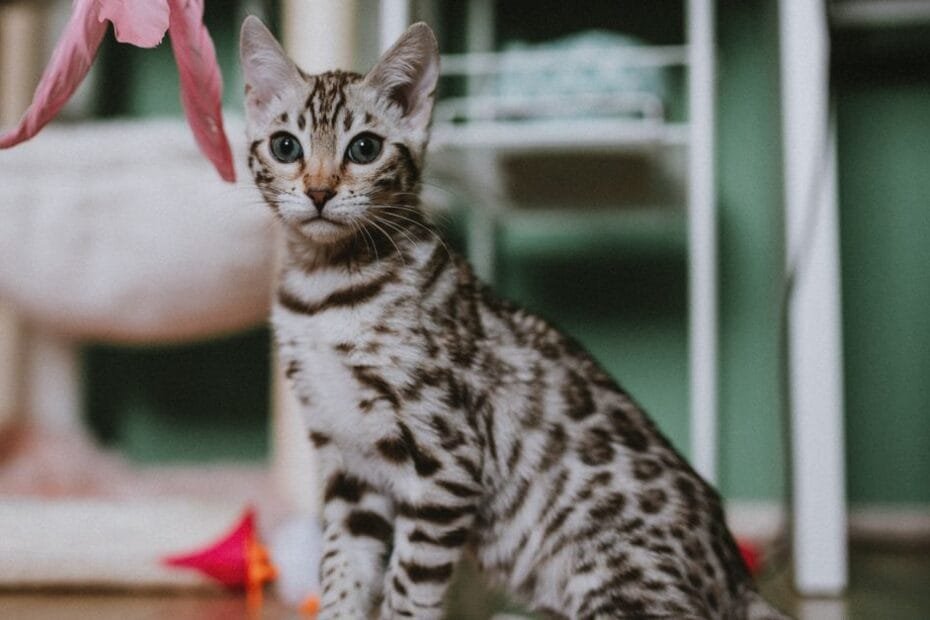
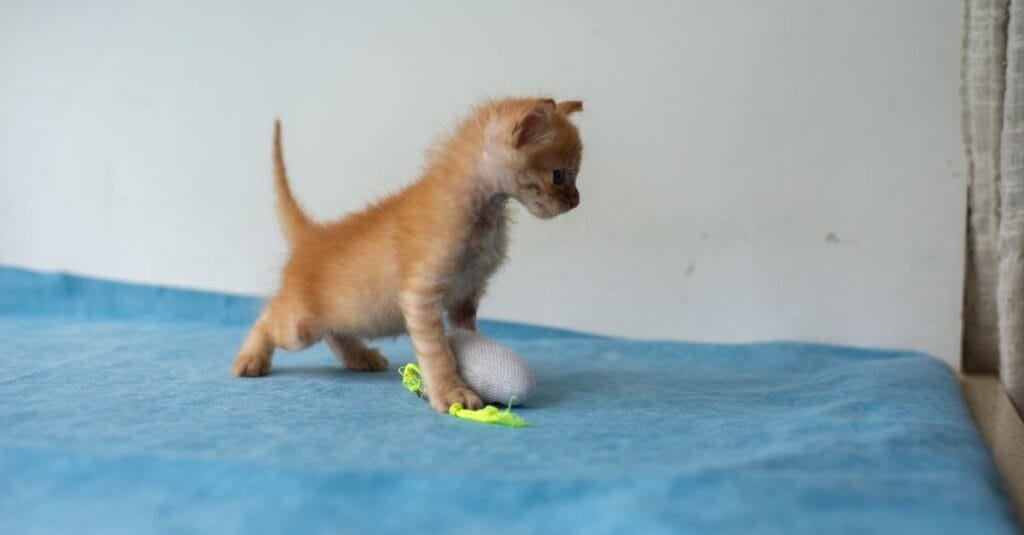
The best kitten toys map to the four jobs of kitten play: the WAND toy for interactive hunts (the single most important purchase — it builds the human bond AND teaches bite-inhibition by keeping teeth off hands), the SOLO tier of crinkle balls, springs, and felt mice for the hours between sessions, the KICKER toy that absorbs the grab-and-bunny-kick instinct a stuffed body was born for, and the PUZZLE tier that starts food-work young. The safety filter runs stricter at kitten scale — everything goes in the mouth, so no strings unattended (the linear-foreign-body rule applies doubly to yarn and ribbon), no glued-on parts smaller than a swallow, and the laser pointer used ONLY with the physical-catch ending — and the golden rule that outranks every purchase: hands are never toys, from day one, because the kitten who wrestles fingers becomes the cat who draws blood at two.
This is the complete kitten-toy guide: the four jobs and their picks, the hands-are-never-toys law and the wand’s role in it, the play-session architecture (hunt-catch-treat, before meals, twice daily), the safety filter item by item, the laser-pointer rules, the DIY tier that outperforms half the aisle, the rotation system that keeps a small box feeling infinite, and the growth ladder from eight-week fluff to adolescent athlete.
Key Takeaways
- Four jobs: the wand (interactive), the solo smalls, the kicker, and the puzzle — one good pick per job beats a toy bin of duplicates.
- Hands are never toys — the wand exists so teeth chase feathers, and the finger-wrestled kitten becomes the biting adult.
- Sessions run hunt-catch-treat before meals, twice daily — ending on a caught toy completes the sequence.
- Strings, yarn, and ribbon are supervised-only: the swallowed strand is a surgical emergency at any age.
- The laser ends on a physical catch, always — light that’s never caught builds frustration, not fitness.
- Rotate the box weekly: novelty is free enrichment, and a rested toy returns as a new one.
The Four Jobs (One Good Pick Each)
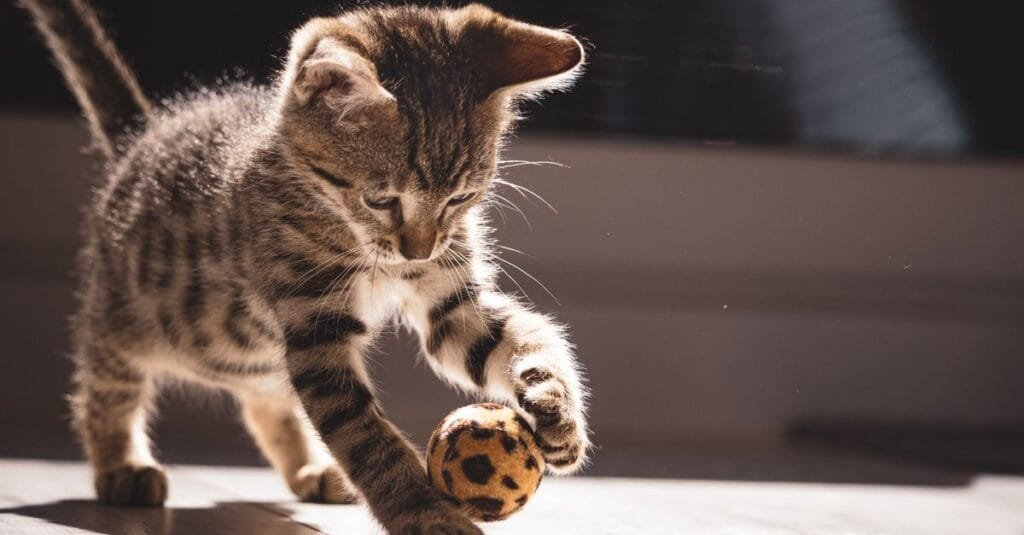
THE WAND, the flagship: a flexible rod, a cord, and a feather-or-fabric lure — it puts the prey a body-length from the hands (the bite-inhibition architecture), animates like actual prey (drag, hide, flutter; never hover in the face — prey flees, it doesn’t attack), and folds into the training engine as the reward that pays sits and recalls in cat currency; stored OUT of reach between sessions, both for safety and because scarcity is what keeps it magic.
Also Read




THE SOLO SMALLS: crinkle balls (light enough to bat across rooms), the spiral springs that ricochet unpredictably, felt-and-sisal mice, and the ping-pong-in-the-bathtub classic — scattered afresh each morning per the rotation system, and audited by the swallow test: nothing smaller than a golf ball unsupervised for the tiny tier, glued eyes and tails checked weekly.
THE KICKER: the body-length stuffed toy the kitten grabs, hugs, and disembowels with the back legs — the bunny-kick instinct needs a legal target (the alternative is your forearm), catnip-optional at kitten age (the response gene switches on around three-to-six months — the unimpressed eight-week-old is normal), and sized to grow into. THE PUZZLE: the treat ball and beginner food-puzzle tier starts the work-for-food habit that pays for a decade — the meal-as-enrichment doctrine installed while the habits are wet cement.
Kitten Lady’s toy walkthrough above demonstrates the four tiers in actual kitten hands — her lure-animation technique (drag and hide, never hover) is the wand masterclass in ninety seconds.
The Session Architecture (Hunt, Catch, Treat)
THE SEQUENCE: stalking, chasing, pouncing, CATCHING (the wand lands and stays “caught” — light-only play never completes), a treat or the meal that follows — the full predatory loop that leaves a kitten satisfied instead of wound tighter; run twice daily minimum before meals (hungry hunters hunt best), ten-to-fifteen minutes or until the flop, whichever the kitten declares first.
THE TIMING DIVIDEND: the pre-bed session is the household’s sleep insurance — the 3 a.m. zoomie kitten is reporting an unspent budget, and the evening hunt-catch-treat-then-dinner sequence mimics the wild rhythm (hunt, feast, groom, sleep) that ends with a kitten unconscious by eleven; the introduction protocol also runs on this: a play-drained kitten is a diplomatic kitten.
THE MULTI-KITTEN NOTE: littermates and pairs burn most of the budget on each other (the wrestling economy), but the WAND session per kitten stays individual where possible — the human-bond half of play doesn’t delegate, and the shy sibling who never wins the shared toy gets its own game.
The Safety Filter (Everything Goes in the Mouth)
THE STRING LAW: wand cords, yarn, ribbon, hair ties, and tinsel-adjacent anything are SUPERVISED-ONLY — the swallowed strand becomes a linear foreign body (the under-tongue anchor and sawing gut that make it a surgical emergency), and the wand’s put-away rule exists precisely because the cord is the toy’s one hazard; hair ties deserve their own sentence, because they are the most-swallowed object in feline emergency medicine and every bathroom counter feeds the habit.
THE PARTS AUDIT: glued eyes, beaded tails, feather clumps, and bell compartments checked weekly and retired at loosening (the framework’s toddler test applies verbatim), foam and sponge toys skipped for the chewers, and the plastic-bag-and-blind-cord audit of the wider kitten-proofed room riding along — the toy box is safe when the room is.
THE LASER RULES: legitimate exercise WITH the ending — the dot lands on a physical toy or treat that gets caught, closing the loop light alone can’t — never eyes, short sessions, and the automatic tier graded by the same rule: fine as a supplement, frustrating as the whole diet.
The DIY Tier and the Rotation System
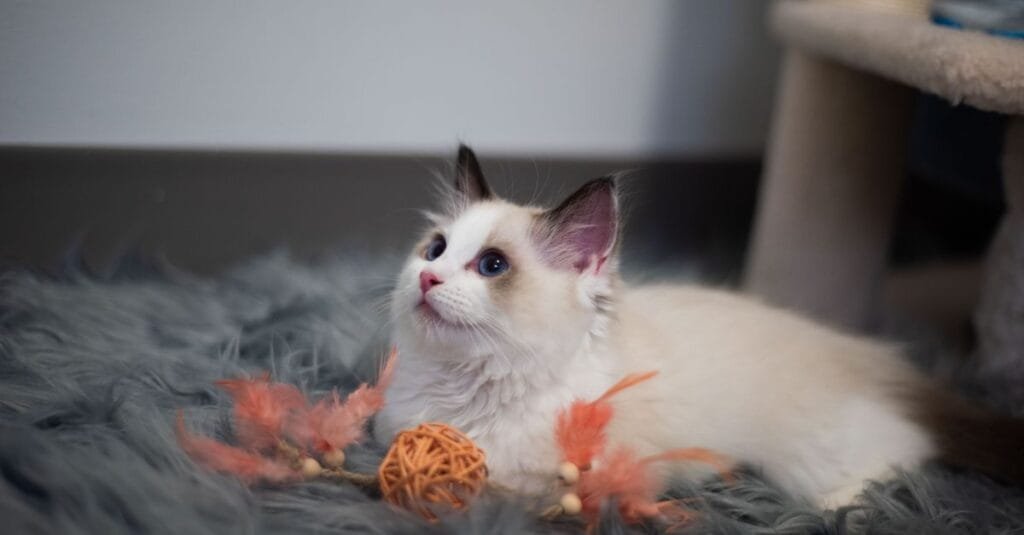
THE FREE CHAMPIONS: the cardboard box (the undefeated heavyweight — cut portholes and it’s a tunnel-adjacent hideout), the paper bag with handles removed, the crumpled-paper ball, the toilet-roll tube batted down hallways, and the sock-and-catnip kicker sewn in five minutes — kittens grade movement and texture, not receipts, and the DIY tier is also the tester that reveals preferences before the aisle spends real money.
THE ROTATION SYSTEM: the toy population splits into the ACTIVE five-or-six and the RESTING box in a closet, swapped weekly — the rested toy returns as a new one, the novelty economy runs on zero dollars, and the wand stays permanently exempt (scarce by design, per its section).
THE PREFERENCE READ that makes year two cheaper: by six months the kitten has voted — ground-prey chasers (mice, balls) versus air-prey hunters (feathers, flyers) versus wrestlers (kickers) — and the adult toy budget follows the votes instead of the catalog; the kitten guide’s development arc explains the play-style crystallization this read is tracking.
The Growth Ladder (Eight Weeks to Adolescent)
EIGHT-TO-TWELVE WEEKS: everything is practice — short wobbly sessions, the lightest toys, litter-mate wrestling doing most of the curriculum, and the hands-law installed NOW while redirection is easy; TWELVE WEEKS TO SIX MONTHS: the athletic explosion — sessions lengthen, vertical play arrives (the tree and the flying-lure games), the teething months chew everything (the rubbery teether tier earns its slot), and the catnip switch flips for most around the end of this window.
SIX-TO-TWELVE MONTHS, the adolescent tier: adult-strength play drive in a nearly-adult body — the budget PEAKS here (this is the furniture-scratching, curtain-climbing, ankle-ambushing age, and every one of those complaints is an unspent-play invoice), the puzzle tier graduates to real food-work, and the session count holds even as the kitten looks grown, because the inside is six months behind the outside.
THE LIFETIME NOTE: play never retires — it tapers into the adult two-a-day hunts and the senior’s gentler versions — and the kitten whose play was structured (sessions, sequence, catch endings) becomes the adult who plays politely for fifteen years, which is the quiet return on every feather in this guide.
Frequently Asked Questions
What toys do kittens actually need?
One good pick per job: a wand toy for interactive hunts (the flagship), a handful of solo smalls (crinkle balls, springs, felt mice), a kicker toy for the bunny-kick instinct, and a beginner puzzle feeder — plus the free tier: boxes, bags, and crumpled paper outperform half the aisle.
How often should I play with my kitten?
Two structured wand sessions daily minimum, before meals, ten-to-fifteen minutes or until the flop — running the full hunt-catch-treat sequence. The pre-bed session is sleep insurance: the 3 a.m. zoomies are an unspent-budget invoice.
Why shouldn’t I play with my kitten using my hands?
The finger-wrestled kitten becomes the adult who bites at two — teeth and claws imprint on whatever they’re allowed to hunt. The wand exists to put prey a body-length from your skin; redirect every hand-pounce to a toy from day one.
Are laser pointers bad for kittens?
Fine with the ending: the dot lands on a physical toy or treat that gets caught, completing the loop light alone can’t — frustration builds when the prey is never catchable. Short sessions, never at eyes, and automatic lasers as a supplement rather than the diet.
What kitten toys are dangerous?
Strings unattended — yarn, ribbon, wand cords, and especially hair ties (feline emergency medicine’s most-swallowed object): the swallowed strand is a surgical emergency. Plus loose glued parts, foam for chewers, and anything smaller than a golf ball for unsupervised tiny kittens.
Why does my kitten ignore catnip toys?
The catnip response is genetic and switches on around three-to-six months — the unimpressed eight-week-old is normal, and a third of adults never respond at all. Silvervine and valerian toys catch most of the non-responders, and movement outranks every herb anyway.
Play Problems, Solved (The Troubleshooting Tier)
THE KITTEN WHO WON’T PLAY: usually a technique problem before a temperament one — the lure hovering instead of fleeing (prey runs AWAY), sessions attempted post-meal (hunt before food, always), or an environment too loud for a shy starter (the quiet-room session finds the hunter the living room hides); genuine play-apathy in a kitten — especially with lethargy — reads medically per the four dials, and the vet call beats the toy upgrade.
THE KITTEN WHO PLAYS TOO ROUGH: the hands-law enforced retroactively — every skin-pounce ends the game instantly (the fun stops, which is the lesson), redirection to the kicker mid-lunge, and the arousal management of shorter, more frequent sessions; the single-kitten households see this most (no littermate taught bite calibration), which is the two-kitten argument arriving one adoption too late — and the play-biting explainer in the behavior hub carries the full protocol.
THE MIDNIGHT ATHLETE: the 3 a.m. sprinter is unspent budget plus the crepuscular wiring — the fix is the pre-bed hunt-catch-FEED sequence (the feast triggers the groom-and-sleep cascade), daytime solo enrichment so the day isn’t one long nap, and two weeks of consistency before declaring it failed; locking the kitten out of the bedroom teaches door-scratching, not sleep schedules.
The Foster-and-Shelter Donation Note
The toy overflow’s best exit: shelters and kitten fosters run through wand lures and solo smalls at industrial rates — the outgrown or unloved (but intact) tier donates gladly, the DIY sock-kickers sew in batches for exactly this, and the kitten-season timing of this post is not an accident: foster networks are at capacity right now, and a five-dollar toy pack does more enrichment-per-dollar in a shelter room than anywhere else it could go.
The Session Log Trick
One week of thirty-second notes — which toy, how long, who quit first — writes the kitten’s actual preference profile faster than any purchase strategy, and doubles as the baseline the four dials read against later: the kitten whose play stamina drops is filing a health report, and the log is what makes the drop visible in days instead of weeks.
The Bottom Line
Buy the four jobs once, run the hunt-catch-treat sessions twice a day, keep hands off the menu and strings off the floor, end every laser on something catchable, and rotate the box weekly — kitten play is the cheapest curriculum in pet keeping, and it graduates a polite, exercised adult who still brings you the feather at twelve.
The buying checklist at the register: one wand with a replaceable lure (lures die weekly in kitten hands — the replaceable-head models amortize), the solo smalls in a variety pack that reveals preferences cheaply, one kicker sized to grow into, one beginner puzzle, and the audit habits packed alongside — the weekly parts check, the string put-away, the golf-ball rule for the unsupervised tier. Total spend runs under thirty dollars for the whole four-job kit, the free tier extends it indefinitely, and the one purchase that genuinely earns a premium is the wand — the toy the human holds is the toy that trains the household’s next fifteen years of play manners.
The kitten was always going to hunt something. The toy box just decides whether it’s the feather or your ankles.

Hello! I'm Khan Hisham, a dedicated student with a profound passion for enhancing the lives of pets through comprehensive care. At Pawspera, our mission—"Prospering Pets, Every Day"—drives everything we do. We are committed to providing the latest insights, tips, and products that ensure your pet's health and happiness. Join us at Pawspera as we explore innovative ways to care for our furry friends with love and dedication.