
Few dog behaviors trigger more horror than watching your best friend cheerfully snack from the yard’s worst buffet. Take a breath: poop eating — the clinical term is coprophagia — is one of the most common behaviors dog owners ask vets about, and in most cases it is not a sign of illness or a broken dog. It’s usually instinct, opportunity, or attention economics — and it responds well to a management plan.
This guide decodes why dogs do it, when it does signal a medical problem, and the step-by-step playbook that actually reduces it — without punishment, gagging gimmicks, or shame (yours or the dog’s).
Key Takeaways
- Coprophagia is common and usually behavioral — instinct, boredom, taste, or learned attention-seeking.
- Mother dogs and young puppies do it naturally — it’s den-cleaning instinct, and most puppies outgrow it.
- Sudden poop eating in an adult dog warrants a vet visit — parasites, malabsorption, enzyme issues, and increased appetite from medical causes all belong on the rule-out list.
- Management beats correction: instant cleanup, leash supervision, a rock-solid “leave it,” and more enrichment outperform any punishment.
- Never punish after the fact — the dog connects your anger to your arrival, not the snack, and learns to eat the evidence faster.
What Is Coprophagia?
Coprophagia simply means eating feces — a dog’s own, another dog’s, or (very commonly, to every cat owner’s despair) the cat’s. Surveys of dog owners suggest a large minority of dogs have done it at least once, and a smaller group are dedicated repeat customers.
Also Read
-
Puppy Teething: The Timeline, the Frozen Tier, and the Ten Thousand Trades

-
How to Socialize a Kitten: The Window, the Food Rule, and the Checklist
-
How to Stop a Cat Scratching Furniture: The Reroute, the Placement Law, and the Specs
-
How to Crate Train a Dog: The Four Stages, the Whining Tree, and the Physiology Table
Disgust is a human invention. To a dog’s nose, feces is information and — depending on the producer’s diet — sometimes genuinely food-adjacent. Your dog is not being defiant; they are being extremely, unfortunately, a dog.
Why Do Dogs Eat Poop? The Main Reasons
Instinct: The Den-Cleaning Program
Nursing mothers eat their puppies’ waste for the first weeks of life — it keeps the den clean and, in the wild, removes scent trails that could attract predators. Puppies watch, and some copy. This is the most natural version of the behavior, and most puppies simply age out of it with gentle management.
Scavenger Ancestry
Dogs descended from opportunistic scavengers that thrived near human settlements partly by eating what we discarded — including waste. A little of that programming still runs. To that ancient code, calorie-bearing material on the ground is not garbage; it’s a find.
Taste and Texture (Sorry)
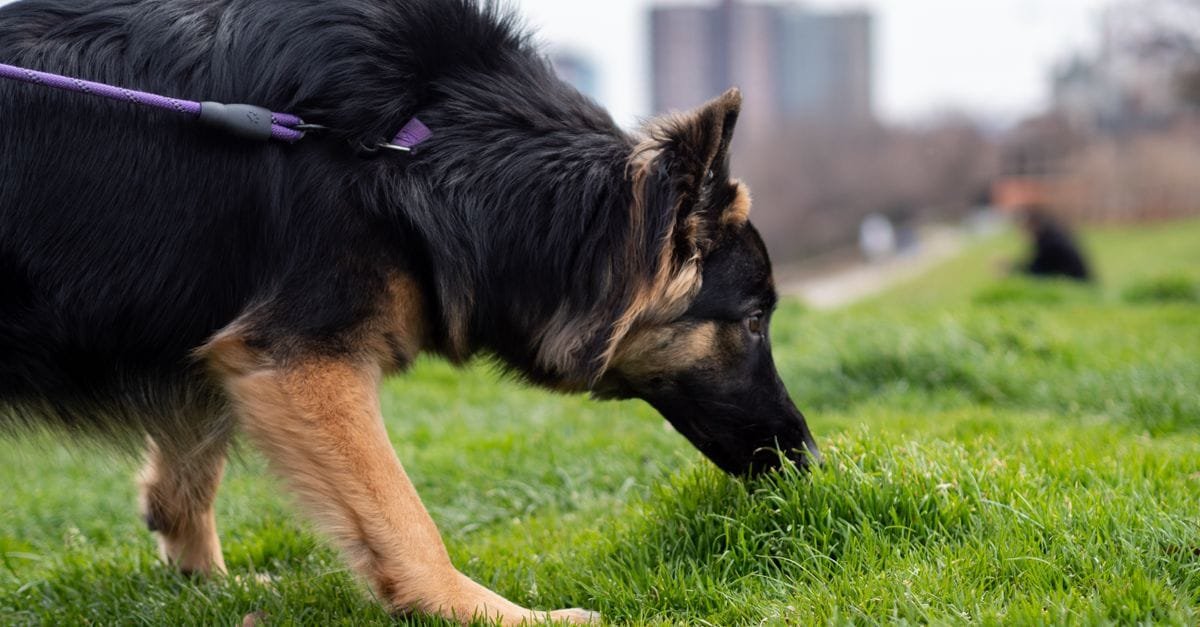
Cat poop deserves its own line: feline diets are richer in protein and fat, which makes litter box contents genuinely appealing to dogs. If your dog raids the box, you have a normal dog and an access problem, not a disorder.
Boredom and Under-Stimulation
A dog alone in a yard with nothing to do will invent a hobby, and the options are limited: digging, barking, fence-running — or recycling. Poop eating that happens mostly when the dog is unsupervised and under-exercised is usually an enrichment gap wearing a gross costume.
Attention Economics
The first time it happened, you probably shrieked, sprinted, and delivered a full drama performance. To an attention-hungry dog, that’s a jackpot. Some dogs learn that touching poop summons the owner instantly — and use it exactly like a remote control.
Anxiety and Stress
Dogs punished harshly during house-training sometimes eat their own stool to “hide the evidence” — a heartbreaking but logical adaptation. Newly adopted dogs, dogs from crowded shelters or puppy mills, and dogs in stressful households show higher rates too.
When Is Poop Eating a Medical Red Flag?
Most coprophagia is behavioral — but your vet should hear about it when the pattern changes or travels with other symptoms. The medical rule-out list includes:
Intestinal parasites (stealing nutrients and driving hunger), malabsorption conditions like exocrine pancreatic insufficiency (food passes through poorly digested, making stool smell like dinner), diabetes, thyroid issues, or Cushing’s (all can ramp appetite), and certain medications such as steroids that increase hunger.
See the vet promptly if: an adult dog suddenly starts after years of not doing it; the behavior comes with weight loss, diarrhea, vomiting, dull coat, or ravenous appetite; or your dog eats the stool of unknown dogs on walks (parasite roulette). Our guide to the most common signs of illness in pets covers the broader checklist.
Is Eating Poop Dangerous for My Dog?
The behavior itself is more disgusting than deadly, but there are real risks: intestinal parasites (roundworms, hookworms, whipworms, giardia) transmit efficiently through feces; another animal’s stool can carry bacteria like salmonella; and medicated animals’ waste can pass drug residues. Cat litter adds a clumping-litter ingestion concern in large amounts.
Practical translation: keep parasite prevention current, deworm on your vet’s schedule, and treat unknown-dog stool as the highest-risk item on the menu.
Can I Get Sick From My Dog’s Habit?
Some parasites and bacteria in feces are zoonotic — transmissible to humans — which matters most for the post-snack face lick. Keep the habit in perspective (millions of coprophagic dogs live with healthy families), but wash hands after cleanup, keep the dog’s parasite prevention current, and maybe decline kisses for an hour or two after yard patrol.
How Do I Stop My Dog From Eating Poop? The Playbook
Step 1: Remove the Inventory
The single most effective intervention is boring: instant cleanup. A dog cannot eat what isn’t there. Pick up the yard immediately after every elimination for several weeks — you are breaking a habit loop, and habit loops starve without repetitions. Keep poop bags staged at every door so the round trip takes thirty seconds.
Step 2: Supervise Like It’s House-Training Again
For the committed recycler, treat bathroom breaks as leashed, supervised events for a few weeks. The leash isn’t punishment — it’s management that guarantees the habit gets zero successful repetitions while you retrain.
Step 3: Teach a Bulletproof “Leave It”
“Leave it” is the emergency brake. Train it away from poop first: reward turning away from a boring treat, then a better treat, then items on the ground on walks. The rule that makes it stick: leaving it always pays better than taking it — the trade is chicken, not praise. Then deploy it in the yard the instant your dog orients toward a deposit, and pay generously.
Step 4: Reward the Walk-Away, Ignore the Approach
Flip the attention economy. The dog that sniffs a pile and moves on gets warm, quiet praise and a treat; the dog that grabs one gets a calm interruption and zero drama. No yelling, no chasing — remember, the performance is the paycheck.
Step 5: Feed the Brain
Bored dogs recycle; busy dogs don’t need to. Add a slow-feeder bowl or puzzle feeder for meals, rotate chew toys, and upgrade one daily walk into a sniff-walk — ten minutes of dedicated nose work drains more mental energy than a mile of marching.
Step 6: Guard the Litter Box
For cat-box raiders, management wins outright: move the box behind a baby gate with a cat-sized gap, use a top-entry box, or place it somewhere elevated the dog can’t reach. No training program beats a physical barrier for this one.
Do Those Anti-Poop-Eating Powders and Additives Work?
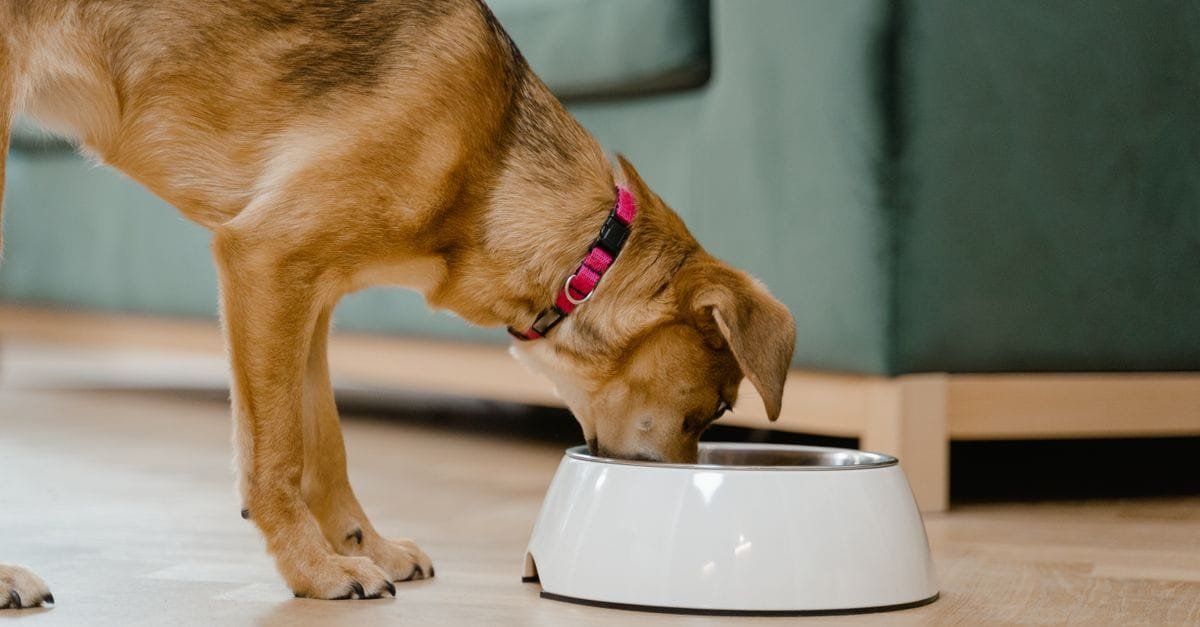
Honestly: results are mixed. Food additives (and the pineapple, pumpkin, or meat-tenderizer folk remedies) aim to make the dog’s own stool taste worse. Reported success rates are modest, they do nothing about other animals’ stool — which is most of what dogs encounter — and studies of committed coprophagics show high relapse.
They’re safe to try alongside the playbook above (ask your vet first, especially with sensitive stomachs), but treat them as a garnish, not the meal. Cleanup, supervision, and training do the heavy lifting.
What About Punishment? (Don’t.)
Scolding after the fact teaches nothing useful — dogs connect consequences to the current moment, so a dog punished over an old pile learns only that your arrival near poop is dangerous. That produces two outcomes, both bad: eating the evidence faster, and hiding to eliminate (which wrecks house-training).
Electronic collars and yelling add stress — and stress is one of the drivers of the behavior. You cannot punish a dog out of an anxiety-linked habit; you can only make the anxiety worse.
Why Does My Puppy Eat Poop — and Will They Outgrow It?
Puppies explore the entire world by mouth, and poop is simply on the syllabus, right next to shoes and gravel. Combined with the den-cleaning instinct they watched their mother perform, puppy coprophagia is developmentally normal.
Most puppies outgrow it by adulthood if it stays unrewarding: clean up instantly, redirect calmly, keep parasite prevention current (puppies are dewormed on a schedule precisely because parasites are so common), and never make it a chase game. Persistent, intense poop eating past a year old graduates to the adult playbook above.
Why Does My Dog Eat Cat Poop Specifically?
Because cat food is richer than dog food, and what comes out the other end retains enough of that appeal to register as a delicacy. This is the most stubborn variant to train away because the payoff is so high — which is why the barrier strategy (gate, top-entry box, elevation) is the honest answer. Manage the environment and the “problem” disappears without a single training session.
Why Does My Dog Eat Other Dogs’ Poop on Walks?
Opportunity plus scavenger code. This one carries the highest parasite risk, so it gets the strictest protocol: shorter leash through known minefields, “leave it” paid at premium rates, and genuine vigilance in dog-heavy parks. Some owners teach a “watch me” as they pass temptation — eye contact is incompatible with scavenging.
Does Diet Cause Poop Eating?
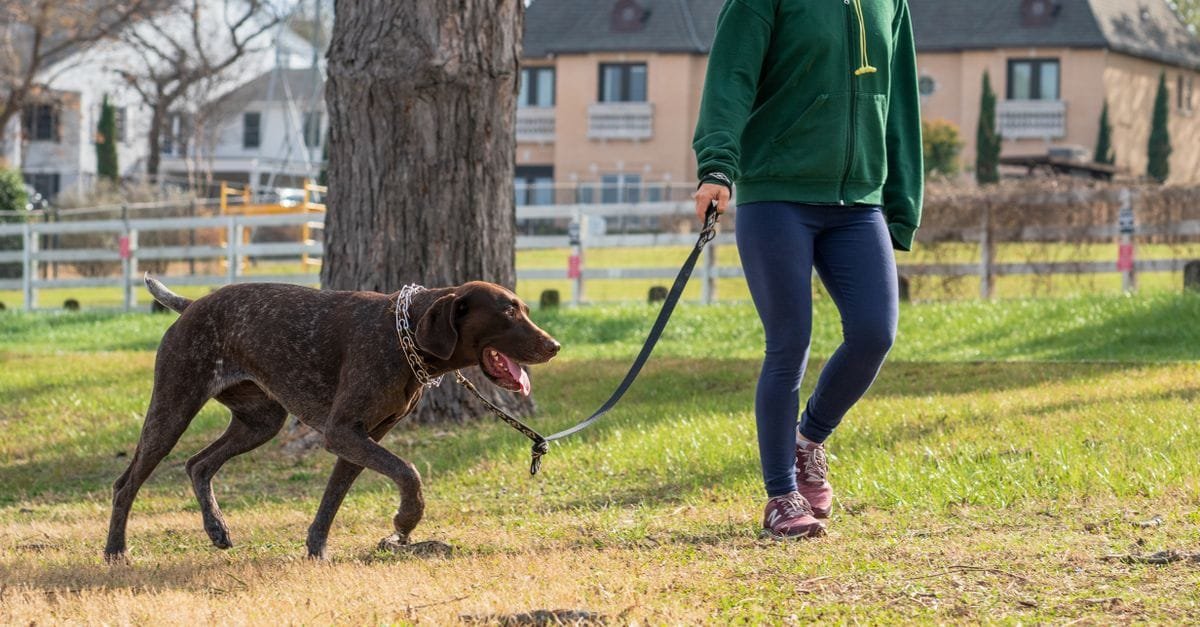
Sometimes, in two ways. A dog on a poorly digestible diet may produce stool with enough undigested nutrients to smell like food — theirs or a housemate’s. And a dog who is genuinely hungry (underfed, ultra-restricted, or burning huge energy) will scavenge harder.
Worth checking with your vet: is the food appropriate and digestible, is the portion right for the dog’s size and activity, and would splitting the ration into two or three meals keep hunger flatter across the day? Diet tweaks rarely fix coprophagia alone, but they remove a quiet driver.
The Two-Week Reset: A Day-by-Day Rhythm
Here’s the whole plan compressed into a routine you can actually run:
Every potty break: leash on, treats in pocket. Dog eliminates → warm praise → “leave it” if they turn back → pay the walk-away → you bag it immediately. Daily: one sniff-walk, one puzzle-feeder meal, five minutes of “leave it” practice. Weekly: yard patrol even in corners you think are clean; litter box audit if you have a cat. Throughout: zero drama, zero after-the-fact scolding.
Most dogs show real improvement inside two weeks of airtight management — and if yours doesn’t, that’s useful data for the vet conversation.
When to Call the Vet or a Behaviorist
Book the vet when: the behavior starts suddenly in an adult, appetite or weight changes, stool quality changes, or the dog seems frantic about eating (gulping, guarding, scavenging everything). Ask about a fecal parasite check and whether a diet review makes sense.
Consider a certified trainer or veterinary behaviorist when the habit persists despite two months of honest management, or when it travels with anxiety signs — pacing, shadowing, destruction when alone. Compulsive coprophagia exists, but it’s the rare tail of the curve, and professionals have tools for it.
The Bottom Line
Poop eating is gross, common, and almost always fixable with unglamorous consistency: nothing to eat, nothing rewarded, plenty to do, and a vet check when the pattern smells medical. Your dog isn’t broken — they’re running old code in a modern yard. Manage the environment, pay the good choices, and the habit starves.
A little honest gear helps the plan run smoother:
Honest gear that makes the plan easier to run:
Frequently Asked Questions
Is it normal for dogs to eat poop?
Common, yes — surveys suggest a large minority of dogs have done it, and mother dogs do it naturally while cleaning up after puppies. Normal doesn’t mean ignore it: manage it for parasite safety, and see a vet if it starts suddenly in an adult dog.
Why did my adult dog suddenly start eating poop?
Sudden onset in an adult is the version most worth a vet visit. Parasites, malabsorption, diabetes, thyroid disease, and appetite-boosting medications all belong on the rule-out list before treating it as purely behavioral.
Will eating poop make my dog sick?
It can — feces transmits intestinal parasites and bacteria, especially stool from unknown dogs. Keep parasite prevention current and prioritize stopping the on-walk version of the habit.
Do pineapple or store-bought deterrents stop poop eating?
Results are mixed at best. Taste deterrents only affect the treated dog’s own stool and show high relapse rates in studies. Instant cleanup, supervision, and a strong “leave it” are far more reliable.
How do I stop my dog from eating cat poop?
Physical barriers win: a baby gate with a cat-sized gap, a top-entry litter box, or an elevated box location. The payoff is too tasty to out-train, so remove the access instead.
Do puppies grow out of eating poop?
Most do, by around a year old, if the habit stays unrewarding — instant cleanup, calm redirection, and no chase games. Persistent intense coprophagia past that age deserves the adult management plan and a vet chat.
Should I punish my dog for eating poop?
No. After-the-fact punishment teaches dogs to eat evidence faster and to fear your approach, and stress makes the habit worse. Reward the walk-away instead and make the poop disappear before it’s an option.

Hello! I'm Khan Hisham, a dedicated student with a profound passion for enhancing the lives of pets through comprehensive care. At Pawspera, our mission—"Prospering Pets, Every Day"—drives everything we do. We are committed to providing the latest insights, tips, and products that ensure your pet's health and happiness. Join us at Pawspera as we explore innovative ways to care for our furry friends with love and dedication.