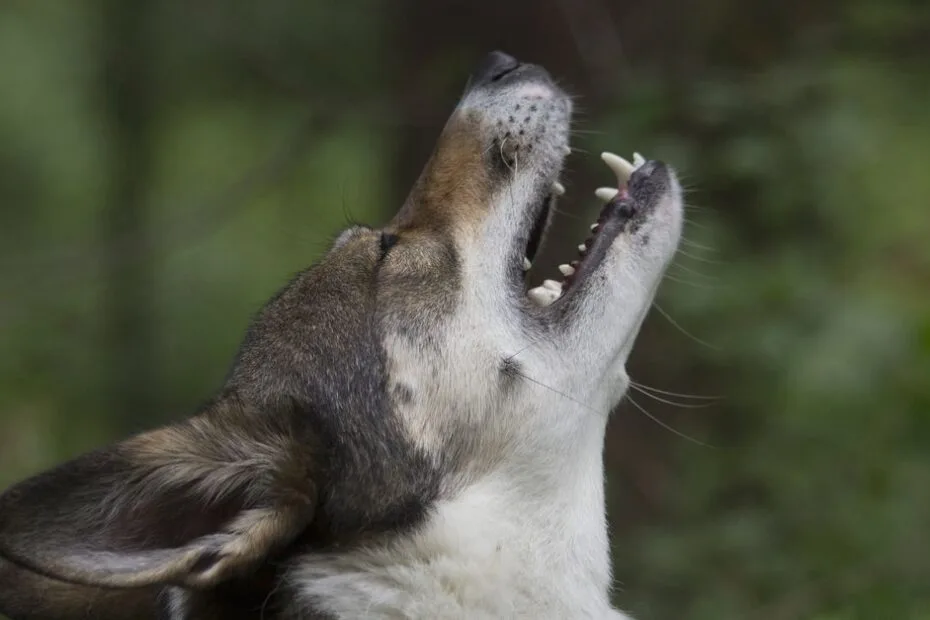
An ambulance passes. Somewhere in your living room, a head tips back, a snout points at the ceiling, and your domesticated couch companion transforms into something ancient — a full, mournful, wolf-grade awoooo.
It’s equal parts hilarious and haunting. And it raises the obvious question: why does a dog with a food bowl, a heated bed, and zero wolves in its social circle still sing the old songs?
Quick answer: Howling is inherited long-distance communication — the wolf’s way of saying “I’m here, where are you?” across miles. Dogs howl to respond to howl-like sounds (sirens are the classic trigger), to announce location and rally their “pack,” to answer other dogs, for attention, and in some breeds because they were bred to be vocal. Most howling is normal and harmless. The versions worth attention: howling paired with separation distress when you leave, sudden howling in a senior dog, or howls that sound like pain.
Also Read
-
Puppy Teething: The Timeline, the Frozen Tier, and the Ten Thousand Trades

-
How to Socialize a Kitten: The Window, the Food Rule, and the Checklist

-
How to Stop a Cat Scratching Furniture: The Reroute, the Placement Law, and the Specs

-
How to Crate Train a Dog: The Four Stages, the Whining Tree, and the Physiology Table

Key Takeaways
- Howling is wolf-inherited long-range communication — location broadcasting and group rallying.
- Sirens trigger howls because they sweep through howl-like frequencies — your dog is answering, not suffering.
- Hounds, huskies, and northern breeds howl most — centuries of breeding selected for the voice.
- Howling when you leave is the separation-distress flavor — the one that needs training help, not scolding.
- Dogs quickly learn howling earns attention — delightful audiences create repeat performers.
- Sudden new howling in a senior, or pained-sounding howls, warrant a vet conversation.

Why Did Wolves Howl in the First Place?
Every domestic howl is a reprint of wolf software, so start there.
Wolves howl because it carries — across valleys and forests, far beyond where barks or body language reach. The howl is the wilderness’s long-distance call, and it serves a handful of jobs:
Location broadcasting: “I’m here” — separated pack members find each other by answering howls.
Rallying the group before a hunt or after scattering.
Territory announcements: a chorus tells neighboring packs this ground is claimed — without anyone risking a fight.
Social bonding: group howls strengthen pack cohesion — the family that sings together, stays together.
Your dog inherited the entire instrument. Modern life just changed the concert schedule.
Why Do Sirens Make Dogs Howl?
The number-one trigger, and the explanation is satisfying: a siren sweeps through the same frequency space as a howl — a long, pitched, rising-falling wail from somewhere far away.
To howl-wired ears, that’s not noise. That’s a very large, very strange dog announcing itself across the territory — and ancient etiquette says you answer: “I’m here too.”
Two comforting notes for worried owners: veterinarians (including Dr. Lindsay Butzer in the video below) generally agree siren-howling isn’t pain — the posture is alert and engaged, not distressed — and most dogs stop the moment the siren fades, having said their piece.
The same reflex explains howling at harmonicas, violins, certain songs, other dogs on TV, and — in one of the internet’s favorite genres — howling humans. You start the chorus; the pack joins. That’s the whole magic.
What Is Your Dog Actually Saying When It Howls?
Beyond siren replies, domestic howls sort into a few dialects — context tells you which:
“Where is everyone?” — the contact call. Common when a dog is alone in the yard or hears family sounds it can’t reach. Brief and occasional: normal. Prolonged and desperate whenever you leave: see the separation section below.
“I hear you!” — answering neighborhood dogs. One starts, the block choir follows — territorial roll call, wolf edition.
“Look at me!” — the learned performance. Howling reliably produces laughing, filming, treat-dispensing humans — dogs are excellent economists (the same market forces behind the head tilt).
“Something is WRONG” — the distress howl: paired with pacing, drooling, destruction, or your departure. Different animal entirely; needs help, not tolerance.
“I am a hound and this is my art” — for some breeds, howling (baying) accompanies excitement, scent trails, and Tuesday. Which brings us to breeds.
Which Breeds Howl the Most?
Genetics loads the microphone. The famous singers:
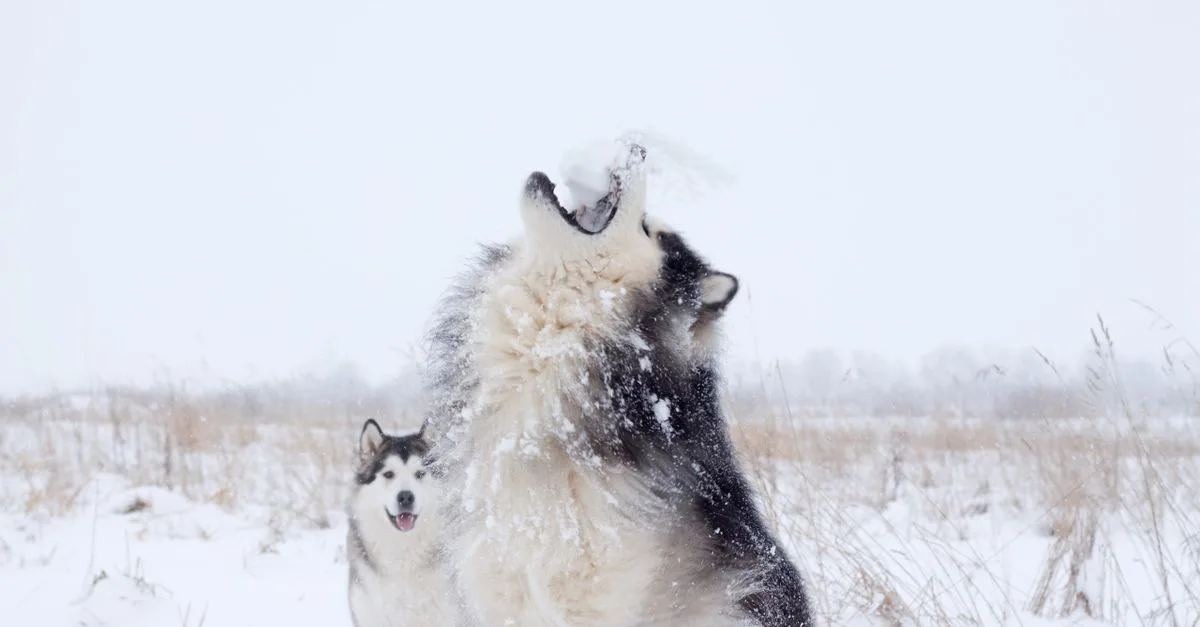
Huskies, Malamutes, and northern breeds — the most wolf-adjacent voices in dogdom. Huskies often barely bark but howl operatically, complete with the talky “woo-woo” conversations the internet adores.
Scent hounds — Beagles, Bassets, Coonhounds, Bloodhounds — were bred for the bay: a howl-bark hybrid that broadcasts “the trail is HERE” to hunters far behind. That voice was the job description for centuries.
Foxhounds and other pack hunters sing in choruses by design.
Meanwhile many breeds — plenty of retrievers, most flat-faced companions — may go a lifetime with barely a howl. A silent dog isn’t broken; a musical one isn’t malfunctioning. It’s mostly the pedigree talking. The AKC’s howling guide and PetMD’s vet-reviewed breakdown both map the same breed patterns.
When Is Howling a Separation Problem?
Here’s the version that deserves real attention — and kindness.
If the howling happens primarily when you leave (neighbors report the solo concerts), and comes packaged with pacing, drooling, door-scratching, destruction near exits, or accidents from a house-trained dog — that’s separation distress, not performance. The howl is a genuine contact call: “Where are you? Come back.”
What helps: building positive alone-time gradually (short absences that always end well), serious exercise and sniff-based enrichment before departures, a food puzzle that makes your exit predict good things, low-drama hellos and goodbyes, and — for established cases — a trainer or veterinary behaviorist, because entrenched separation anxiety rarely trains itself away.
What doesn’t help: punishment (adds fear to fear), anti-bark devices (punish the symptom, inflame the cause), or simply waiting it out. Distress practiced daily gets stronger, not weaker.

How Do You Reduce Unwanted Howling?
For the ordinary (non-distress) varieties, management is straightforward:
Audit the reward. If howls summon attention — even scolding counts — the show goes on. Reward quiet instead: attention and treats arrive when the concert pauses.
Teach “quiet” the fair way: let a howl start, cue “quiet,” mark and reward the first silence, extend the pause gradually. Bonus trick: putting howling on cue (“sing!”) paradoxically makes silence easier to cue too.
Drain the battery. Under-exercised, under-stimulated dogs find hobbies; howling is free and satisfying. More walks, more nose work, more training games — the usual suspects behind every excess-energy behavior.
Manage the triggers you can: white noise or a fan can blunt siren-and-neighbor-dog frequencies for apartment dwellers; closing street-facing windows during ambulance hours helps more than it should.
Neighbors matter: if complaints are brewing, combine the above with honest communication and a plan — and loop in a trainer early. (Chronic barking has its own toolkit — our guide on stopping dog barking covers that cousin behavior.)
Calm-and-enrich favorites — solid Amazon searches:
When Should a Howl Send You to the Vet?
A few versions belong in the medical column:
- Sudden new howling in a senior dog — especially at night, with pacing or confusion — can accompany canine cognitive decline (dog dementia) or sensory loss. Very worth a wellness visit; support options exist.
- Howls that sound like pain — sharp, situational (when touched, when rising), or paired with limping, hiding, or appetite loss. Vocalizing pain is real; investigate promptly.
- Howling plus trembling, clinginess, or panting outside any siren context — anxiety or illness signals riding together (our shaking guide decodes that companion sign).
- Any dramatic change in vocal behavior, either direction — the quiet dog who starts singing daily, or the singer who suddenly stops.
The standing note: this is education, not diagnosis — pattern changes plus physical signs are your veterinarian’s territory, and early beats late every time.

Should You Ever Howl With Your Dog?
The question everyone secretly wants answered: yes — with two caveats.
Joining a happy howler for a brief family chorus is harmless bonding; many dogs visibly delight in the duet, and you’re speaking a genuine piece of their language. The wolf ancestors sang in groups for exactly this cohesion.
Caveat one: you’re also rewarding howling — so if you’re simultaneously trying to reduce 6 a.m. solos, don’t sponsor evening concerts.
Caveat two: read your audience. Most dogs join enthusiastically; a few find human howling confusing or unsettling (whale eye, ears back, retreat). If the duet lands as comedy for you but stress for them, retire the act.
Otherwise — sing, occasionally, together. There are worse hobbies than sharing a hundred-thousand-year-old song with your best friend.
Do Dogs Howl in Their Sleep?
Sometimes — and it’s usually adorable rather than alarming. Dogs dream during REM sleep, and dream-behavior leaks: paddling paws, muffled woofs, and yes, tiny sleep-howls aimed at dream squirrels.
Brief, twitchy vocal episodes that end on their own are normal dreaming. Leave sleeping dogs to their concerts — waking a dog mid-dream can genuinely startle it.
The exception worth noting: prolonged nighttime vocalizing from an awake senior dog — pacing, disoriented, howling at nothing — is the cognitive-decline pattern from the vet section, not a dream. The difference is easy to spot: dreamers are lying down and twitching; sundowning seniors are up and wandering.
When Do Puppies Start Howling?
The equipment ships early: puppies can produce howl-like cries within their first weeks — distress calls that summon mom with impressive reliability.
True adult-style howling usually debuts anywhere from a couple of months to a year old — often triggered the first time the puppy hears a siren, another dog, or a howling human, followed by a visibly surprised face at its own voice.
Some dogs never develop the habit at all, breed and personality depending. If your puppy’s first howl arrives mid-adolescence like a cracking teenage voice — congratulations, the ancient software just finished installing.
Why Do Dogs Howl at Music?
Certain instruments — harmonicas, violins, clarinets, long-held vocal notes — land squarely in howl frequency territory, and musical dogs answer them exactly as they answer sirens.
Interestingly, dogs often pitch their reply differently from the triggering note rather than matching it — consistent with how wolves deliberately vary pitch in a chorus so the group sounds larger. Your living-room duet partner isn’t singing badly; it’s harmonizing on purpose, by ancient convention.
If a particular song reliably launches concerts you don’t want, the fix is simply management: skip the track, or save it for scheduled sing-alongs.
Frequently Asked Questions
Why do dogs howl?
Howling is inherited wolf communication: a long-distance call for announcing location, rallying the group, and answering other howls. Modern dogs howl at sirens and howl-like sounds, to contact their family, to answer neighborhood dogs, for attention — and in vocal breeds, because centuries of breeding selected for the voice.
Why do dogs howl at sirens?
Sirens sweep through howl-like frequencies, so your dog interprets the sound as a distant canine calling — and answers with the ancient reply: “I’m here too.” It’s not pain: posture stays alert rather than distressed, and the howling stops when the siren passes.
Does howling mean my dog is sad or in pain?
Usually neither — most howling is communication or performance. The exceptions worth attention: howling concentrated around your departures (separation distress), howls that sound sharp and pain-linked, and sudden new howling in senior dogs — those patterns deserve training help or a vet visit respectively.
Why does my dog howl when I leave the house?
That’s a contact call — the separation-distress version, especially when neighbors report long solos paired with pacing or destruction. It improves with gradual alone-time training, pre-departure exercise and enrichment, and professional help for entrenched cases; punishment and anti-bark devices make it worse.
Which dog breeds howl the most?
Huskies, Malamutes, and northern breeds (operatic howlers, often more than barkers), plus scent hounds like Beagles, Bassets, and Coonhounds, whose signature bay was literally bred as a hunting broadcast. Many other breeds rarely howl at all — both are normal.
How do I stop my dog from howling?
Identify the flavor first: stop rewarding attention-howls (reward quiet instead), teach a fair “quiet” cue, add exercise and nose-work enrichment, and manage triggers with white noise. Departure-linked howling is separation distress and needs gradual training, not suppression.
Why does my dog howl when I howl?
You started a group howl — the pack-chorus instinct answers pitched, sustained calls, and yours qualifies. It’s harmless bonding for most dogs (watch for the rare dog who finds it stressful), just remember you’re also rewarding the behavior.
The bottom line
Every howl is a hundred-thousand-year-old broadcast still on the air: I’m here — where are you? Answer the fun ones with a smile (or a duet), manage the noisy ones with rewards for quiet, and take the departure-linked and pain-linked versions seriously. The wolf left your living room long ago — but it kindly left the songbook.

Hello! I'm Khan Hisham, a dedicated student with a profound passion for enhancing the lives of pets through comprehensive care. At Pawspera, our mission—"Prospering Pets, Every Day"—drives everything we do. We are committed to providing the latest insights, tips, and products that ensure your pet's health and happiness. Join us at Pawspera as we explore innovative ways to care for our furry friends with love and dedication.