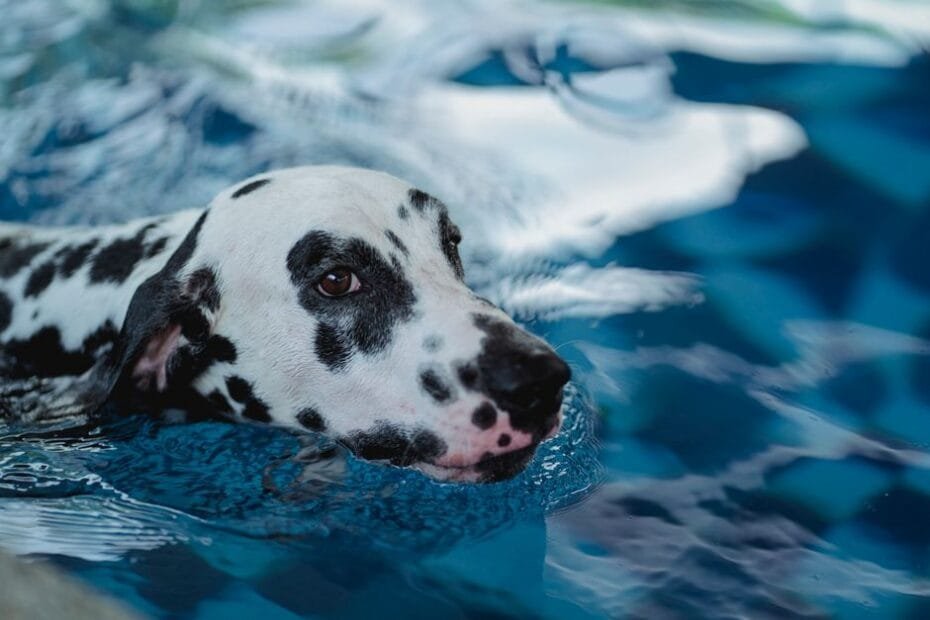
Choose a dog pool by the space your dog needs to turn, the height they can comfortably step over, and how you will drain and store it. A foldable pool can suit limited storage; a rigid pool deserves consideration when you have permanent space. Neither format is automatically safe for every dog or immune to damage.
Research scope: This guide compares documented product features and practical setup requirements. It is not a hands-on durability test or a veterinary assessment. Manufacturer information was checked on November 14, 2026. We do not claim to have tested the products with dogs, measured their cooling performance or established a universal best pool.
Key takeaways
- Measure the dog and the available ground space before choosing a size label such as XL.
- Wall height and water depth are separate choices. Start with a shallow amount appropriate to the individual dog and supervise continuously.
- Plan the drain route before filling. A large pool can contain much more water weight than its empty appearance suggests.
- Choose documented features rather than promises that a pool is indestructible.
- Water play is optional enrichment. Suspected heatstroke requires immediate cooling and veterinary help.
Dog-pool options worth comparing
| Option | Documented distinction | Consider it if | Check before buying |
|---|---|---|---|
| Jasonwell Foldable Dog Pet Bath Pool | Foldable PVC design; several listed sizes; side/bottom drainage | You need to pack the empty pool away | Exact size, wall height and included drain fittings |
| Yaheetech Pet Pool | PVC and PP-board construction; side drain with a listed hose adapter | A planned drainage route is useful in your yard | Selected variant and compatibility of the drain connection |
| One Dog One Bone pools | Paw- and bone-shaped rigid pools; manufacturer lists US production | You have room to keep a rigid pool | Model-specific dimensions, access and shipping arrangements |
Jasonwell: a foldable design to compare by exact size
Jasonwell’s Foldable Dog Pet Bath Pool listing describes a PVC pool that does not need inflation and includes drainage. Its page lists multiple sizes, including a 32 × 8-inch small option and larger variants. Check the selected variant carefully: size names alone are not sufficient.
Also Read
-
Best Cat Litter: The Five Types, the Unscented Law, and the Cat’s Vote

-
Best Kitten Toys: The Four Jobs, the Hands-Are-Never-Toys Law, and the Hunt Sequence

-
Best Dog Camping Gear: The Four Layers, the Backyard Test, and the Camp “Place”

-
Best Cat Tunnels: Portholes, the Crinkle Question, and Ambush Geometry That Gets Used

Practical trade-off: Folding reduces storage bulk, but the material still needs cleaning and drying before packing. A flexible pool is not a proven solution for a dog that bites the walls. We have no independent puncture or lifespan results for this model.
Compare Jasonwell pool listings on Amazon.
Yaheetech: compare the drainage arrangement
The Yaheetech Pet Pool listing describes PVC covering with PP boards, a side drain and a directional adapter for a garden hose; the hose is not included. Listed variants range from approximately 47.5 to 71 inches across, with 12-inch walls. Confirm the measurements for the actual item selected.
Practical trade-off: A drain connection can help direct water, but it does not make every location suitable. Work out where the water will go without flooding a doorway or creating a slippery path. The manufacturer page showed the item as sold out when checked; other sellers may have different stock and variants.
Compare Yaheetech pool listings on Amazon.
One Dog One Bone: a rigid option requiring more planning
One Dog One Bone describes paw- and bone-shaped pools made in the USA. Its statements about UV and chew resistance are manufacturer claims; they are not independent testing by Pawspera. Check the particular model’s dimensions through the manufacturer or its listed retailers.
Practical trade-off: A rigid shape needs a place to live when empty. Before choosing one, measure the route from delivery to the yard and the storage position. Check whether the dog’s entry and exit are comfortable; a durable material does not solve an unsuitable wall height.
Search for One Dog One Bone pool listings on Amazon. Search results can include other brands; confirm the item before ordering.
A measurement worksheet that avoids size-label mistakes
Do the measurements while your dog is relaxed, away from water. You are finding a usable space, not trying to make the dog perform a pose. If your dog has pain, weakness or mobility limitations, ask the veterinarian whether stepping into a pool is appropriate before shopping for adaptations.
- Observe the dog’s comfortable footprint. Note the room they use when standing, turning and lying down. Do not assume a pool’s advertised breed photograph represents its true scale.
- Mark the proposed outline on level ground. Use a tape measure and temporary markers. Check whether there is still room beside it for you to stand and assist.
- Compare wall height with access. A pool can have sufficient floor area but an awkward step. Do not assume an improvised ramp or crate is stable when wet.
- Check the whole setup area. Include the hose, drain route, shade and a dry exit path. Keep the setup away from electrical equipment.
- Measure storage and transport. Check the folded or rigid dimensions, not just the open pool size. Leave room for cleaning and drying.
Write those measurements beside each candidate. If a seller provides only a broad label such as medium or XXL, request actual dimensions. If the dimensions are missing or inconsistent, keep the item off the shortlist until you can resolve them.
Foldable, rigid and splash-pad designs solve different problems
A foldable pool is useful when storage is the main constraint. Its joints and walls still need inspection, and the setup surface matters. A rigid pool avoids folding but creates a larger storage problem. Neither design should be presented as universally puncture-proof or suitable for unsupervised use.
A splash pad is a different activity: the dog interacts with moving water rather than standing in a still pool. Consider whether that encourages unwanted chasing or biting at the water jet. Water-shy dogs may prefer simply staying in a cool indoor area. There is no requirement for a dog to enjoy a pool, and forcing participation is not a useful test of the product.
Estimate water volume before choosing a large pool
For a circular pool with roughly vertical sides, approximate litres as 3.14 × radius in metres × radius in metres × water depth in metres × 1,000. Real pools may taper or have uneven shapes, so this is a planning estimate rather than a fill instruction.
For example, a hypothetical 1.2-metre-diameter circular pool filled to 0.10 metres would contain approximately 113 litres: 3.14 × 0.6 × 0.6 × 0.10 × 1,000. That is roughly 113 kilograms of water before adding the pool or dog. The example depth is for arithmetic only; it is not a recommendation for your pet.
This calculation exposes two practical costs: the time and water needed for each fill, and the load on the supporting surface. Do not assume a balcony or raised deck is suitable. If the structure’s permitted loading is uncertain, obtain qualified advice rather than treating a product’s empty weight as the relevant figure.
Compare two proposed sizes using the same example depth. You may discover that a larger pool creates a draining and storage burden without adding useful room for the particular dog. That is a better reason to choose a size than a promotional claim that bigger is always better.
Set up the empty pool first
Follow the manufacturer’s instructions on a smooth, level surface. Remove debris that could damage the underside and check the pool for sharp edges, damaged seams or loose parts. Identify the drain before filling, and make sure you can operate it without moving a full pool.
Let the dog inspect the empty pool voluntarily. If they are comfortable, introduce a small amount of water while supervising. Keep an easy route out and stop if the dog is distressed. Avoid lifting a reluctant dog into the pool or using a deep fill to encourage swimming.
Shade should cover the usable area during the actual session, not just at the time you set up. Recheck the water and surroundings as conditions change. Keep fresh drinking water nearby; the pool is not a substitute for a clean drinking bowl.
Supervision and heat safety come before product choice
Stay close and attentive throughout use. A shallow pool still creates risks, especially for a dog that is very young, tired, unwell or has difficulty moving. Keep children and other animals from entering an unattended pool. Empty and secure the setup after use rather than relying on a cover as a safety barrier.
If heatstroke is suspected, stop play, begin cooling and seek veterinary help immediately. The Royal Veterinary College advises cooling first, then transport. Its guidance includes applying water cooler than the dog with moving air; cooling choices depend on the dog’s condition. Do not delay care while trying to buy or set up a pool.
The earlier version of this guide overstated pool durability and used broad claims about cooling. This revision separates product specifications from observations we have not made and links directly to veterinary guidance. A leisure-product guide cannot diagnose overheating or replace advice for an individual animal.
Cleaning, drying and storage
Plan for emptying and cleaning after use, following the manufacturer’s care instructions. Remove loose debris, rinse appropriately and let the pool dry before folding or storing. Inspect folds, the floor and the drain fitting as part of that routine. Stop using a damaged pool until the manufacturer confirms whether a repair is suitable.
Do not assume that adding household chemicals makes water safe for the dog. Keep cleaning products inaccessible and follow the product directions, including any required rinsing. Store the empty pool where children and animals cannot become trapped in it, and keep small drain fittings from becoming chewable objects.
What to record during the first few uses
A short observation log is more useful than immediately deciding that a pool is good or bad. Record the model and size, setup surface, whether the dog entered voluntarily, whether they could turn and leave comfortably, and how draining worked. Note defects without deliberately testing the product to destruction.
Photographs of the setup can help explain a problem to the seller, but never leave a dog unattended to stage a picture. Check return and warranty conditions before use. Keep the purchase information and instructions so you can identify the exact variant when asking for support.
Frequently Asked Questions
What is the best dog pool?
There is no independently tested winner in this guide. Compare the documented options against your dog’s access needs, the available space and the drainage plan. Reject a pool that fails those checks even if its rating or product photographs look appealing.
How deep should the water be?
There is no single depth suitable for every dog. Start shallow, follow the product instructions, supervise continuously and ask your veterinarian about any health or mobility limitations. Wall height is not a recommended fill level.
Can I leave water in it overnight?
For this home-use setup, plan to empty and secure the pool after use. A cover should not be treated as protection against a child or animal entering. Follow the manufacturer’s cleaning and storage instructions.
Will a foldable pool survive chewing?
We have not tested that, and a durability description is not a guarantee against damage. Prevent chewing and stop use if the material is damaged. Consider whether a pool is an appropriate activity for that dog rather than searching for an indestructible label.
Are the product images evidence of your testing?
No. Images used to illustrate a topic do not establish hands-on testing. This comparison is based on the linked documentation; any future original tests should identify their method and results explicitly.
Continue planning with our pet-care guide and pet calculators, treating calculator results as estimates rather than prescriptions. Read about Pawspera or report a correction.

Hello! I'm Khan Hisham, a dedicated student with a profound passion for enhancing the lives of pets through comprehensive care. At Pawspera, our mission—"Prospering Pets, Every Day"—drives everything we do. We are committed to providing the latest insights, tips, and products that ensure your pet's health and happiness. Join us at Pawspera as we explore innovative ways to care for our furry friends with love and dedication.