
You teach a dog to come when called by making one word the best-paying cue in its entire vocabulary — and by protecting that word with three laws the failed recalls all broke: NEVER punish the arrival (the dog who comes and gets scolded, bathed, crated, or leashed-and-taken-home just learned that coming ends the fun — the single biggest recall killer in dog ownership), NEVER call when you can’t win (every ignored “come!” teaches that the word is optional — early on you call only when the dog is already inclined, and you go GET the dog otherwise), and PAY LIKE A SLOT MACHINE JACKPOT (recall earns the chicken, the cheese, the tug party — not the dry biscuit; you’re bidding against squirrels). The build runs in stages: CHARGE the cue indoors (word → jackpot, no distance, dozens of reps), add distance and rooms, take it outside on a LONG LINE (the 15–30-foot safety net that makes practicing in real places possible before the recall is real), climb the distraction ladder one rung at a time, and install a separate EMERGENCY word — trained fat and used almost never — for the day the gate is open and the road is close.
This is the complete recall course: the three laws in detail (and the poisoned-cue rescue when “come” is already ruined), charging the cue step by step, the games that do the actual training (catch-me, ping-pong, hide-and-seek — recall is a game or it’s nothing), the long-line stage with the handling technique that saves your hands, the distraction ladder from hallway to dog-adjacent park, the emergency recall built and maintained separately, proofing against the classic failures (the door dash, the “finished playing” deafness, the adolescent regression), and the off-leash ethics of knowing what your dog’s recall can and cannot yet cash.
Key Takeaways
- Never punish the arrival: nothing bad ever happens when the dog reaches you — no scolding, no fun-ending, no exceptions.
- Never call what you can’t win: early recalls happen only when success is likely; otherwise walk and get the dog.
- Pay jackpot-grade: you’re bidding against squirrels — chicken and play parties, not dry biscuits.
- The long line (15–30 ft) is the bridge between hallway recall and real-world recall — freedom without gambling.
- Climb the distraction ladder one rung at a time; a failed rep means the rung was too high, not the dog too stubborn.
- Build a separate emergency word — overtrained, jackpot-only, used almost never — for the open-gate day.

The Three Laws (Why Most Recalls Fail)
LAW ONE — THE ARRIVAL IS SACRED: audit what actually happens when your dog reaches you — if the answer is ever nail trims, scolding for the garbage raid, or the leash that ends the park, the math is broken; the fixes are structural: recall → jackpot → RELEASE back to play (most recalls should end with “go play!” — coming to you becomes an intermission, not a sentence), and the fun-ending recalls get sandwiched (call, pay, clip leash, walk ten more fun steps).
Also Read



LAW TWO — PROTECT THE WORD: a cue is a prediction, and every unanswered “come!” erodes it — so early in training you call only stacked decks (dog already turning toward you, low distraction, hungry dog before dinner), you go retrieve the dog in every other case, and you use the dog’s NAME for attention but the recall word only for the real thing — the name-blur (“Max! Max! MAX!”) is background noise within a week.
LAW THREE — PAY THE MARKET RATE: recall competes with the most interesting things in your dog’s world, and the paycheck has to compete too — the jackpot tier (real meat, the special tug, a flung handful of treats with a party voice) is reserved for recall, the payment continues FOREVER at intermittent-lottery rates after fluency (fading to nothing is how good recalls quietly die by age three), and the treat pouch on the hook by the leash is the habit that makes all of it real.
The video above is Kikopup — Emily Larlham, one of the most respected positive-reinforcement trainers alive — building a reliable recall start to finish; her mechanics (the timing, the pay-and-release rhythm) are the ones this course describes.
Charging the Cue (Week One, Indoors)
THE INSTALLATION: pick the word (“come,” “here,” or anything — but if the old word is poisoned, below, pick fresh) — puppies can start the day they arrive per the puppy curriculum — and charge it — say it once, cheerfully, from three feet away, jackpot when the dog arrives, repeat in five-rep bursts several times a day; within days the word should snap the head around, which is the voltage you’re building.
ADDING THE FIRST DIALS: distance grows across rooms (call from the next room, pay at your feet), the COLLAR TOUCH gets welded in early (touch the collar as you pay, every rep — the dog who arrives but orbits out of reach learned that hands end fun; the collar-touch-then-treat sequence prevents the keep-away game before it exists), and household members take turns so the word belongs to the family, not one voice.
THE POISONED-CUE RESCUE: if “come” already means “bath, scolding, or nothing,” don’t rehabilitate it — replace it: new word, charged from scratch on the protocol above, old word retired entirely; cues are cheap and history is expensive, and the fresh start beats months of trying to out-pay a bad reputation.
The Games (Recall Is a Game or It’s Nothing)
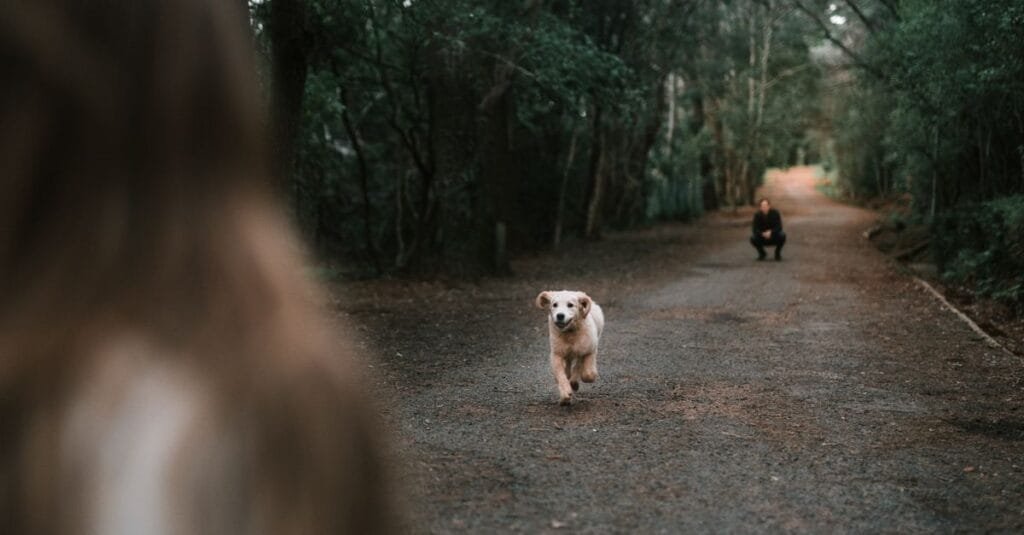
CATCH-ME: say the word and RUN AWAY — flight triggers chase, the dog rockets after you, jackpot on arrival; it exploits the wiring honestly (dogs chase what flees), it’s the fix for the puppy who ignores a stationary caller, and it’s the reason trainers back away clapping instead of marching toward a loose dog.
PING-PONG: two-or-more humans, rooms or yard-lengths apart, calling the dog back and forth with jackpots at each end — reps accumulate fast, arrival mechanics (collar touch, pay, release) drill themselves, and kids make excellent ping-pong stations under supervision, which also teaches the dog that small voices count.
HIDE-AND-SEEK: call from OUT OF SIGHT (behind the door, upstairs, behind a tree) — the dog learns to seek the voice, not the visible human, which is precisely the skill the real world tests (you are rarely in view when it matters), and the finding itself becomes part of the payday; play it indoors first, then in the yard, then on the long line in the park.
The Long-Line Stage (Freedom Without Gambling)
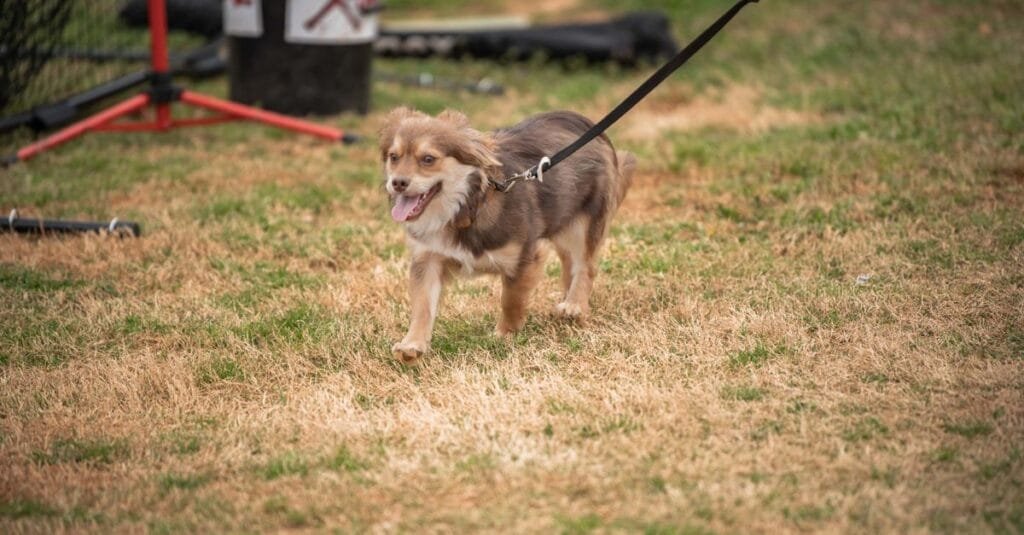
THE TOOL: a 15–30-foot LONG LINE (a real one — biothane or flat webbing on a back-clip harness, never a retractable, which teaches leaning-into-tension and punishes speed with a jolting stop) — the dog drags or trails it while you practice everything from the games chapter in progressively realer places; the line exists so that a failed rep costs a calm walk-down instead of a rehearsed escape, and the long-line guide carries the gear picks.
THE HANDLING CRAFT that saves skin: gloves in cold weather, the line managed in loose coils (never wrapped around a hand or wrist), stepping ON the line to stop a launch rather than grabbing at speed, and the fade schedule — full control early, dragging free in safe fields later, then shorter lines, then the tab, then trust; every step earned by the success rate, not the calendar.
THE PRACTICE MAP: hallway → yard → quiet field → park edge at off-hours → park proper → dog-visible distances — each rung practiced until recall fires at ninety-plus percent before the next, because the ladder IS the training — and your read of the dog’s arousal at each rung comes straight from the body-language scan; the dog who recalls in the kitchen and blows you off at the park isn’t stubborn, he’s under-rehearsed at exactly that rung, and the fix is a rung down, not a louder voice.
The Emergency Recall (Built Separately, Spent Rarely)
THE CONCEPT: a SECOND word (“NOW!”, a whistle, anything distinct) trained like a fire extinguisher — charged with the most legendary payment in the house (the whole cheese stick, the sardine tin), five reps a week forever, NEVER used casually, never used when failure is possible, and therefore near-automatic on the day it’s genuinely needed: the open gate, the slipped collar, the road.
THE MAINTENANCE CONTRACT: the emergency word keeps its magic only if the ratio stays sacred — every use pays legendary, practice stays easy (call it across the kitchen, pay the jackpot, done), and it is never spent on convenience; the household that uses the emergency word to end park trips owns, within a month, two broken words instead of one.
THE WHISTLE FOOTNOTE: a whistle (the shepherd’s tool) carries farther than voices, never sounds angry, and is identical from every family member — worth adopting as the emergency channel for big-yard and hiking households, trained on exactly the same protocol.
Proofing the Classics (Door, Deafness, and Adolescence)
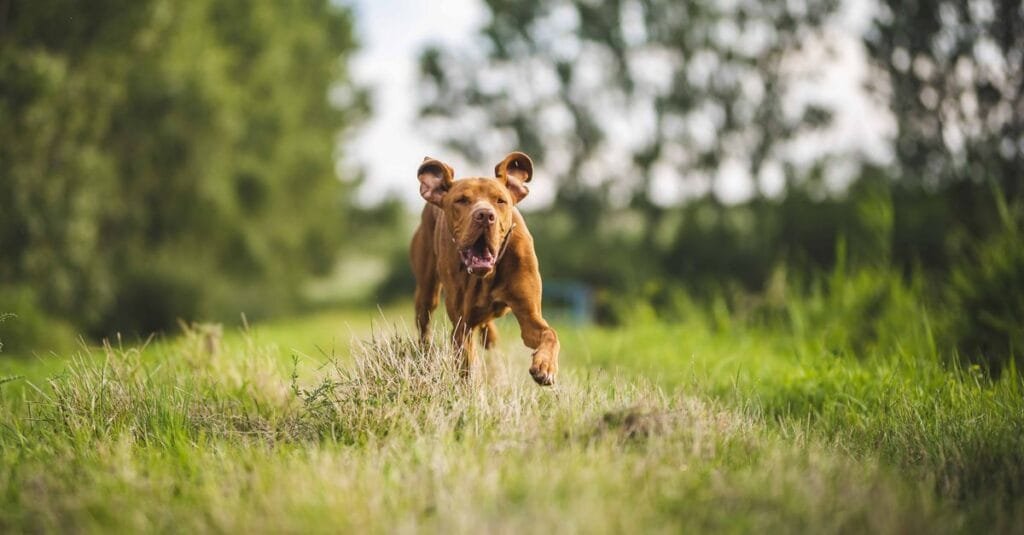
THE DOOR DASH: recall’s hardest exam has its own prevention stack — the sit-wait at doors (taught separately), the airlock habit from the escape-artist canon, and recall practiced AT the open door on the long line, because the door is a context and dogs learn contexts; the day it fails anyway, the emergency word and the catch-me sprint AWAY from the road are the two tools that work at speed.
THE “FINISHED-PLAYING” DEAFNESS: the dog who recalls beautifully until the park’s last ten minutes learned the pattern — so scramble it: recall-and-release five times per outing (come, jackpot, “go play!”), leash-up mid-visit sometimes with a walk-and-release after, and the ending itself sandwiched with the best treat of the day; unpredictable endings keep every recall live.
THE ADOLESCENT REGRESSION, normalized: somewhere between six and eighteen months the flawless puppy recall dissolves into selective hearing — hormones and hierarchy-testing colliding with an under-spent energy budget, not defeat — and the professional response is a rung or two DOWN the ladder (back on the long line, richer paydays, easier reps) for a few weeks rather than escalation; the recall comes back stronger, and the households that punished the regression are the ones still chasing their dogs at four; sudden recall loss in an ADULT dog, per this site’s standing rule, gets the hearing-and-pain vet check before the training diagnosis.
Frequently Asked Questions
How do I train my dog to come when called?
Charge one word indoors (word → jackpot, dozens of easy reps), add distance and rooms, then move to a 15–30-foot long line in progressively realer places, climbing the distraction ladder one rung at a time. Recall is built through games — catch-me, ping-pong, hide-and-seek — and paid like a jackpot forever.
Why does my dog ignore me when I call?
Usually because the word got spent: called when you couldn’t win, paid with dry biscuits against squirrels, or followed by fun-ending consequences. Audit the arrival (nothing bad may ever happen there), stack early reps in your favor, and if the word is truly poisoned, retire it and charge a fresh one.
What is a poisoned recall cue?
A word that predicts bad outcomes — the bath, the scolding, the end of the park — or nothing at all after being shouted unanswered for months. The rescue is replacement: pick a new word, charge it from scratch with jackpots, and never use the old one again. Cues are cheap; reputations are expensive.
Should I use a long line for recall training?
Yes — it’s the bridge between hallway recall and the real world: 15–30 feet of biothane or webbing on a back-clip harness (never a retractable), managed in loose coils and stepped on rather than grabbed. It makes real-place practice possible before the recall is real.
What is an emergency recall?
A separate word or whistle trained like a fire extinguisher: legendary payment every time, five easy reps a week forever, and almost never used — reserved for the open gate and the road. Its power lives in the sacred ratio; spend it on convenience and it breaks like the first word did.
Why did my dog’s recall suddenly get worse?
In adolescents (6–18 months), regression is normal hormones-and-testing — drop a rung or two, go back on the long line, pay richer, and it returns stronger. In an adult with previously solid recall, check hearing and pain with the vet before diagnosing disobedience.
The Bottom Line
Guard the arrival, protect the word, pay like you’re bidding against squirrels — then build it as games, bridge to the world on a long line, climb the ladder rung by honest rung, keep a separate emergency word fat and unspent, and meet the adolescent regression with easier reps instead of a louder voice.
A recall is a bank account you never stop depositing into — and the day the gate stands open, you’ll withdraw everything it holds in one word.

Hello! I'm Khan Hisham, a dedicated student with a profound passion for enhancing the lives of pets through comprehensive care. At Pawspera, our mission—"Prospering Pets, Every Day"—drives everything we do. We are committed to providing the latest insights, tips, and products that ensure your pet's health and happiness. Join us at Pawspera as we explore innovative ways to care for our furry friends with love and dedication.