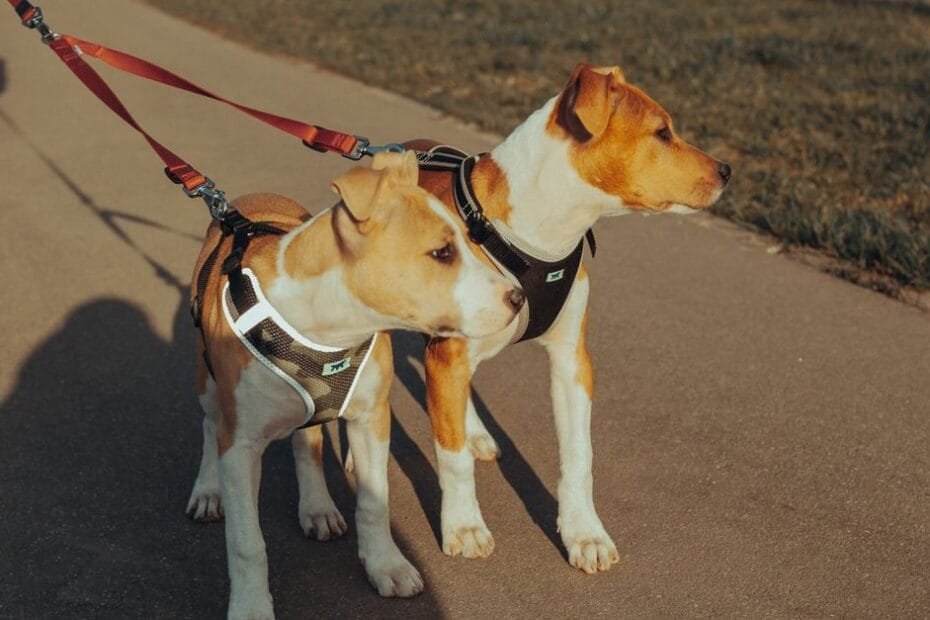
You introduce two dogs by making the first meeting a NON-EVENT: on NEUTRAL territory (a quiet street or park neither dog patrols — never the resident dog’s living room, yard, or favorite trail), moving rather than static (the PARALLEL WALK is the whole method: two handlers, two loose leashes, dogs walking the same direction with a car-width of buffer, distance shrinking only as both bodies stay loose), with the sniff exchange arriving MINUTES into the walk instead of seconds into a face-off — brief, three-second rear-end sniffs, then walking again — because movement bleeds pressure off an encounter the way standing face-to-face pumps it in. The rules that prevent most fights before they’re possible: loose leashes always (tight leashes transmit tension and delete escape options — half of “leash reactivity” is the leash, not the dog), no toys, food, or beds anywhere near early meetings (resources load the room), watch the freeze-stare-stiffen cluster and add distance the moment you see it, and run the whole project on the dogs’ timeline — some pairs merge in an afternoon, some need two weeks of walks, and the slow schedule is cheaper than the fast one’s vet bills.
This is the complete protocol: the pre-work before any meeting (matchmaking honesty, the two-handler setup, location scouting), the parallel walk staged in detail, the sniff-and-move etiquette, reading the meeting through the body-language scan, the home-integration sequence (yard first, house second, resources locked away), the first-weeks management system (crates, gates, rotations, and supervised-only togetherness), the puppy-to-adult and senior-dog calibrations, the trouble signs ranked from “normal negotiation” to “separate and call a pro,” and the long-game truth that some pairs become siblings, most become roommates, and both count as success.
Key Takeaways
- Neutral territory, moving, parallel — the first meeting is a walk, not a face-off.
- Loose leashes always: tension travels down the leash, and tight leads delete the escape option both dogs need.
- Three-second sniffs, then move again — brief and boring beats long and loaded.
- No toys, food, chews, or beds at early meetings — resources load the room before the relationship exists.
- Home integration is staged: yard before house, resources locked away, crates and gates doing the supervision math.
- Freeze, hard stare, stiff slow tail = add distance now. Growl-and-disengage is negotiation; targeting is a pro call.
Before Any Meeting (The Pre-Work)
THE MATCHMAKING HONESTY: energy match matters more than size or breed — the adolescent tornado and the arthritic senior is the hardest common pairing (manageable, but plan for it), opposite-sex pairs statistically merge easiest, and the resident dog’s known opinions (about puppies, about big dogs, about space) are data you already own; if the new dog is still hypothetical, weight them heavily — the puppy pipeline and rescue paths both allow trial meetings, and a failed audition is a cheap success.
Also Read




THE LOGISTICS: two handlers (one per dog, non-negotiable for the first meeting), standard six-foot leashes on flat collars or harnesses (never retractables — no control, terrible feedback), treat pouches on both humans, and a scouted location: quiet, open enough for real distance, low dog-traffic — the empty end of a park at an off-hour, not the dog-park gate at Saturday noon.
THE STATE CHECK: both dogs arrive EXERCISED (a tired-ish dog negotiates better than a loaded spring — the energy math applies), neither arrives hungry or mid-zoomies, and the humans arrive calm — your tension travels down the leash as reliably as any command you ever taught.
The video above is Zak George introducing a new dog to his own — a real first meeting on camera, including the too-rough moment and how he handles it; watch the loose leashes and the constant motion.
The Parallel Walk (The Whole Method, Staged)
STAGE ONE — SAME DIRECTION, BIG BUFFER: both handler-dog pairs walk the same route with a lane of space between (start at whatever distance keeps both dogs loose — that might be across the street), no greeting attempted, treats flowing for calm glances at the other dog; you’re teaching “that dog predicts good things” before the dogs ever touch.
STAGE TWO — SHRINK AND SWAP: close the buffer gradually as bodies stay loose (the five-point scan from the body-language guide is the meter: curvy spines, soft mouths, helicopter-ish tails continue; freezes, hard stares, or stiffening reopen the distance), then SWAP positions so each dog walks in the other’s scent cone — information exchange without contact, the polite letter before the visit.
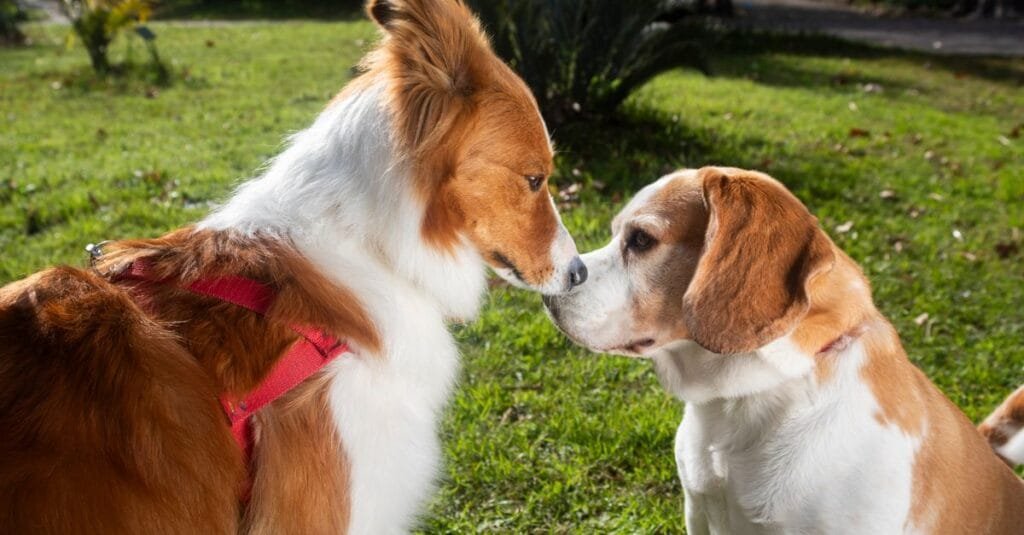
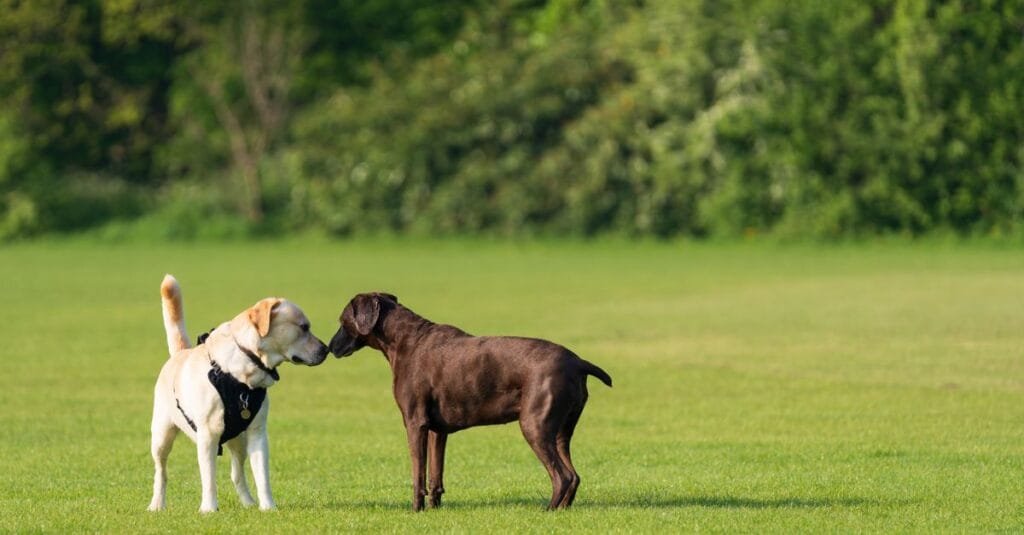
STAGE THREE — THE SNIFF: when both dogs have been loose at close range for several minutes, let them arc in for the rear-end sniff — THREE SECONDS, handlers counting, then a cheerful “let’s go!” and walking again; repeat in short doses, and resist the urge to let a good sniff run long — the encounters that sour usually sour in second eight, and ending early banks a win instead of testing its edges.
Reading the Meeting (Green, Yellow, Red)
GREEN: play bows, role-reversing bounce, self-handicapping from the bigger dog, sniff-and-disengage cycles, shake-offs between rounds — the healthy-play checklist running exactly as the body-language guide describes; let green continue in short supervised doses with breaks you impose before anyone’s arousal peaks.
YELLOW: sustained stillness, the closed mouth that was open, hard staring, slow stiff tails, one dog persistently hiding behind its handler, mounting attempts (arousal-and-status noise, not romance — interrupt casually), and T-posture (one dog’s chin or paws over the other’s shoulders) — yellow means more distance, more movement, shorter doses, and often simply ending on the current win and walking again tomorrow.
RED: freezes that don’t break, escalating growl-snap sequences that ignore the other dog’s retreat, targeting (one dog repeatedly seeking the other after disengagement), or any actual contact fight — separate calmly (leashes and body blocks, never hands between mouths), end the session without drama, and book the professional: a trainer or veterinary behaviorist reads in person what no article can, and one consult early beats months of managed tension.
Coming Home (The Integration Sequence)
THE YARD-FIRST RULE: after one-or-more successful walks, the first shared territory is the YARD (or the most neutral outdoor space you control) — another parallel walk that simply ends there, leashes dragging for interruptability, resident dog entering the space FIRST… then the house, with the NEW dog walked through on-leash while the resident is elsewhere, before both occupy it together.
THE RESOURCE LOCKDOWN, non-negotiable for weeks: all toys, chews, bones, and food bowls picked up from shared spaces (they return gradually, supervised, once the relationship has a track record), FEEDING happens separated — different rooms or crates — from day one and honestly forever (the multi-pet feeding math is settled science on this site), and the resident dog’s favorite bed stays his; the new dog gets new equipment, because inheritance disputes are real.
THE MANAGEMENT SYSTEM doing the real work: crates and baby gates run the rotation (together supervised, apart otherwise — the crate skills pay their biggest dividend here), doorways and hallways get managed (tight spaces manufacture conflicts loose rooms don’t), and the two-week rule holds: no unsupervised togetherness until two weeks of boring supervised success — most integration disasters are day-three overconfidence wearing a “they seemed fine” costume.
Calibrations (Puppies, Seniors, and the Second-Dog Truth)
THE PUPPY-TO-ADULT VERSION: puppies broadcast rude enthusiasm and read adult corrections poorly — protect the ADULT (escape routes, puppy-free zones, your interruption of relentless pestering) as much as the puppy; an adult’s proportionate correction (the freeze-growl-air-snap sequence that ends when the puppy retreats) is legitimate teaching, not aggression — but the adult who has to teach the same lesson hourly is being failed by management, not the puppy.
THE SENIOR CALIBRATION: pain rewrites tolerance — the arthritic senior meeting a bouncy newcomer needs padded landings (literal and social): non-slip floors, elevated escape furniture, enforced rest zones the newcomer cannot enter, and the vet conversation about pain management BEFORE blaming temperament; a senior’s new grumpiness is a medical flag first, per this site’s standing rule.
THE SECOND-DOG TRUTH, told straight: most successfully introduced dogs become comfortable ROOMMATES — parallel lives, occasional play, negotiated furniture — and a minority become genuine wrestle-buddy siblings; both outcomes are wins, the roommate pair is not a failure to fix with forced togetherness, and the households that respect the relationship the dogs actually built are the ones where it quietly deepens over years.
The First Month (What Normal Progress Looks Like)
WEEK ONE runs on structure, not chemistry: parallel existence in managed rotations, meals apart, walks together (the walk remains the relationship’s best room all month), and success measured in BORING — two dogs ignoring each other across a living room is week-one excellence, and the households that demand visible friendship by Friday are the ones that manufacture setbacks.
WEEKS TWO THROUGH FOUR: supervised togetherness lengthens as the yellow-signal count drops, resources return one at a time to shared spaces (lowest-value first — the ratty tennis ball before the bully stick, which may stay separate forever), the first unsupervised MINUTES happen behind a camera after two clean weeks, and the sleeping arrangement graduates last — separate confinement at night remains the cheap insurance long after the days go smoothly.
THE SETBACK PROTOCOL, because most pairs have one: a growl-snap over a dropped chip or a doorway collision doesn’t erase the ledger — separate calmly, audit what resource or pinch-point produced it (it’s nearly always one or the other), manage that trigger harder, and resume a half-step back on the ladder; one incident is data, a pattern is a management redesign, and an escalating pattern is the professional’s phone number you saved in the red section.
Frequently Asked Questions
How do you introduce two dogs for the first time?
On neutral territory, moving: two handlers run a parallel walk with a big buffer, shrink the distance as both dogs stay loose, swap positions so each walks in the other’s scent, then allow a three-second rear sniff and move again. The first meeting should be a boring walk, not a face-off.
Should dogs meet on leash or off leash?
On leash for the first meetings — but LOOSE leash, always: tension travels down a tight lead and deletes the escape option both dogs need. Never use retractables, and graduate to dragging-leash yard time only after walks have gone reliably green.
How long does it take for two dogs to get used to each other?
Anywhere from an afternoon to several weeks of staged walks and managed home time — and the two-week rule holds regardless: no unsupervised togetherness until two weeks of boring supervised success. Most integration disasters are day-three overconfidence.
What are bad signs when introducing dogs?
Freezes that don’t break, hard staring, stiff slow tails, the mouth that snaps shut, persistent hiding, mounting, and T-posturing are yellow — add distance and shorten the session. Targeting after disengagement or an actual fight is red: separate calmly and bring in a professional.
Should I let dogs “work it out” themselves?
No — that advice produces most preventable fights. Dogs negotiate well within a managed structure: brief meetings, imposed breaks, resources removed, and humans interrupting escalation early. A proportionate correction is normal communication; repeated conflict is a management failure.
How do you feed two dogs in the same house?
Separated — different rooms or crates — from day one, and honestly forever: mealtime is the highest-stakes resource moment in a multi-dog home, and separation costs nothing while preventing the most common serious fights. Toys and chews return to shared spaces gradually and supervised.
The Visiting-Dog Variant (Holidays and House Guests)
The temporary version runs the same physics on a compressed clock: the visiting dog and resident meet on the sidewalk OUTSIDE and walk in together (never a doorstep face-off), resources vanish before the doorbell, gates carve a retreat room for whichever dog wants out of the party, and the two-week rule scales down to a simple standing order — supervised together, separated when nobody’s watching, however short the visit; most holiday incidents happen in minute one at the door or over a forgotten chew under the couch, and both are free to prevent.
The Bottom Line
Scout neutral ground, walk parallel with loose leashes and a shrinking buffer, keep sniffs to three seconds and always end early, stage the homecoming yard-then-house with every resource locked away, run crates and gates for two boring supervised weeks, calibrate for puppies and seniors, and let the dogs choose between sibling and roommate — both are wins.
The best first meeting is the one neither dog remembers as an event. Make it a walk — the friendship, if it’s coming, arrives on foot.

Hello! I'm Khan Hisham, a dedicated student with a profound passion for enhancing the lives of pets through comprehensive care. At Pawspera, our mission—"Prospering Pets, Every Day"—drives everything we do. We are committed to providing the latest insights, tips, and products that ensure your pet's health and happiness. Join us at Pawspera as we explore innovative ways to care for our furry friends with love and dedication.