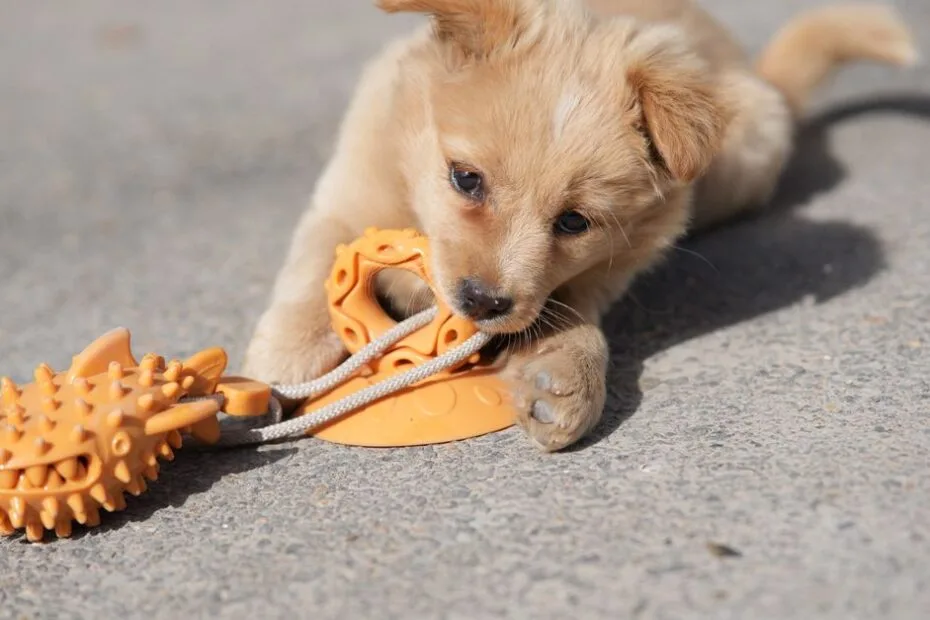
To stop puppy biting, redirect every chomp onto a legal target (a toy, not your hand), make biting end the fun instantly, and burn off the energy and teething discomfort driving it — consistently, from everyone in the house. Puppy biting is normal development, not aggression, and it fades fast with the right response. Here’s the complete, patient-but-effective plan.
Key Takeaways
- Puppy biting is normal — exploration, play and teething, not aggression.
- The formula: redirect to a toy + fun stops when teeth touch skin.
- Teach bite inhibition — a soft mouth is a lifelong safety skill.
- Never punish with hands — it creates fear and worse biting.
- Most puppies outgrow it by 5–6 months with consistent handling.
Why do puppies bite so much?
Because they’re puppies — genuinely, that’s most of the answer.
Puppies explore the world mouth-first (they have no hands), play with siblings using teeth, and chew to relieve the very real ache of teething.
Also Read
-
Puppy Teething: The Timeline, the Frozen Tier, and the Ten Thousand Trades
-
How to Socialize a Kitten: The Window, the Food Rule, and the Checklist

-
How to Stop a Cat Scratching Furniture: The Reroute, the Placement Law, and the Specs
-
How to Crate Train a Dog: The Four Stages, the Whining Tree, and the Physiology Table
Your fingers, ankles and sleeves are simply the most interesting moving objects in their new world. The mission isn’t to stop the mouth — it’s to teach it manners and better targets.
The McCann Dog Training video below is a superb complete walkthrough from professional trainers.
Is my puppy aggressive? (Almost certainly not)
Let’s retire this worry early.
Normal puppy biting comes with play bows, wiggly bodies, and pouncing — even when it’s hard enough to hurt. True aggression in young puppies is rare and looks different: stiff body, frozen posture, deep growl over resources.
Painful play-biting is a training project, not a personality diagnosis.
What is bite inhibition — and why it matters for life
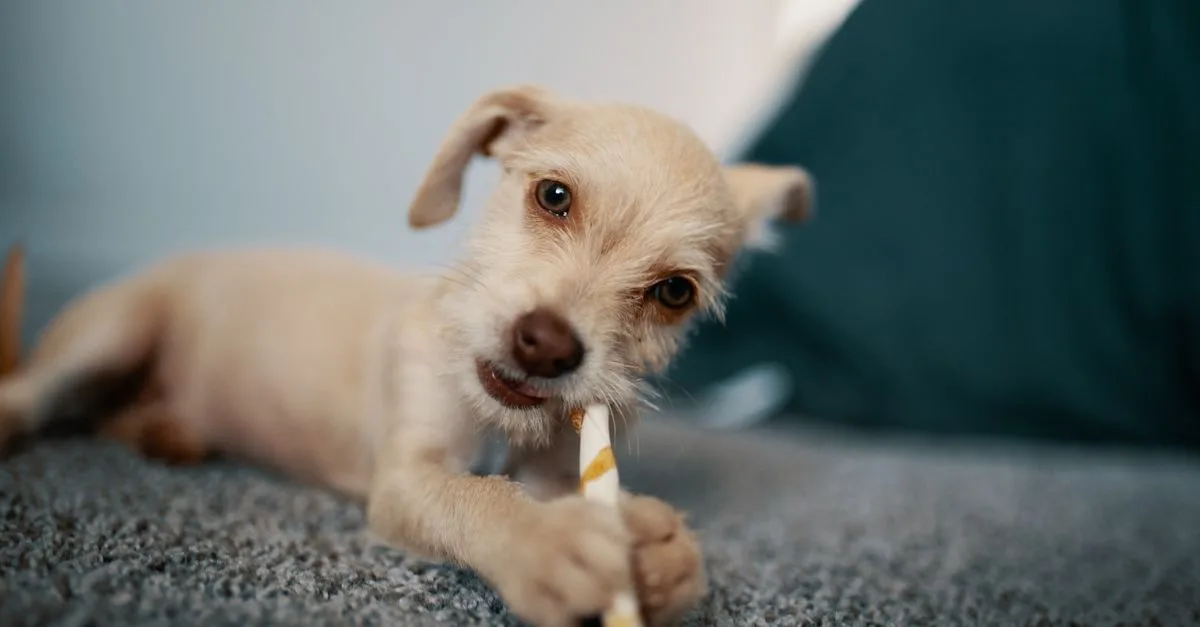
This concept is the heart of the whole topic.
Bite inhibition is a dog’s learned control over jaw pressure. Puppies start learning it in the litter: bite a sibling too hard, the sibling yelps and quits the game.
A dog with good bite inhibition who is ever startled or hurt as an adult delivers a warning touch instead of a damaging bite. Teaching it now is a lifelong safety feature — which is why trainers say: teach gentle FIRST, then teach “no teeth.”
The core method: redirect, every single time
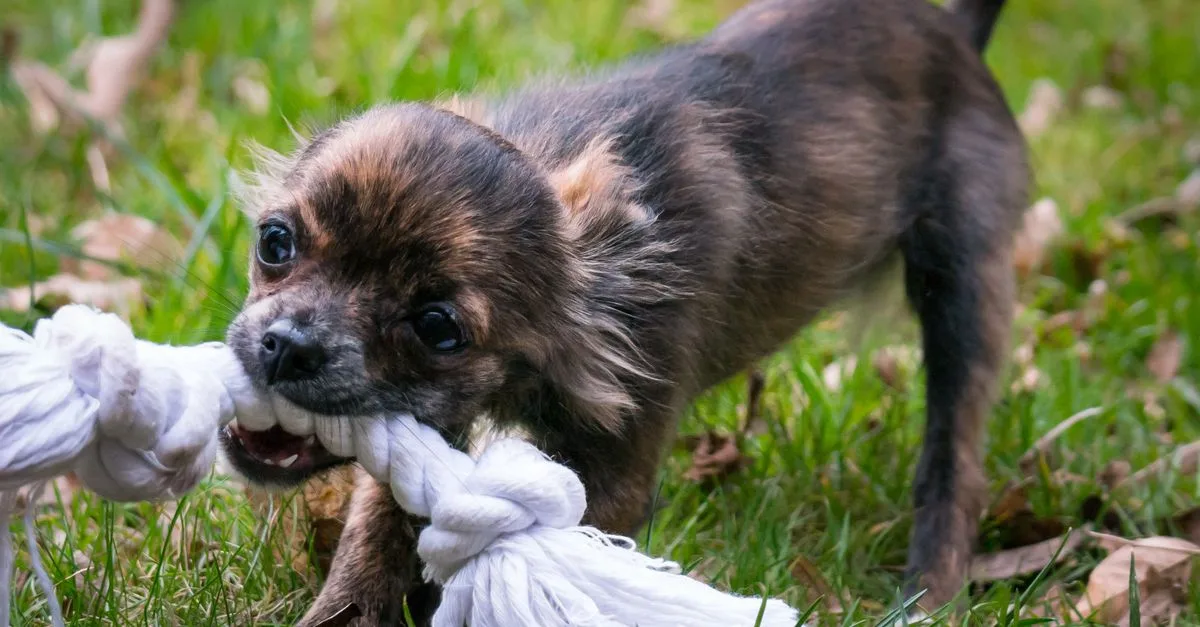
Here’s the engine of the plan.
The moment teeth aim at skin or clothes, a toy appears in their path. Chomp the toy? Praise, play continues. The message, repeated hundreds of times: teeth on toys = great fun; teeth on people = fun ends.
Keep toys stashed in every room — redirection only works when the legal target is closer than your fingers.
The “fun stops” consequence
Redirection’s partner: consistent, boring consequences.
When teeth touch skin: a calm “ouch” or “too bad,” hands still, game over. Stand up, turn away, or step out of the room for 10–30 seconds.
No drama, no yelling — just the immediate, reliable end of everything enjoyable. Puppies are brilliant economists; biting quickly becomes bad business.
Does yelping like a puppy work?
Sometimes — know your dog.
A soft yelp mimics littermate feedback and stops some puppies cold. But for revved-up or terrier-type puppies, squealing reads as an exciting squeaky toy and makes things WORSE.
Try it once or twice: if your puppy pauses, useful tool. If they escalate, switch to the silent stand-and-turn.
Why hands must never be the punishment
The most important “don’t” in puppy raising.
Holding the muzzle, tapping the nose, pinning (“alpha rolls”) or shouting teaches one lesson only: hands approaching = bad things. That creates hand-shyness, fear — and genuinely dangerous defensive biting later.
Hands are for petting, treats and toys, forever. Consequences are boredom, not force.
Teething: the physical half of the problem
From roughly 3 to 6 months, your puppy’s mouth aches.
Baby teeth fall out, adult teeth erupt, and chewing is genuine pain relief — not naughtiness.
Stock the toolkit: rubber teething toys (freeze them for extra relief), a frozen wet washcloth to gnaw, and rotate so novelty stays high. Our picks for training chew toys and best puppy toys cover the arsenal.
The ankle-attack problem
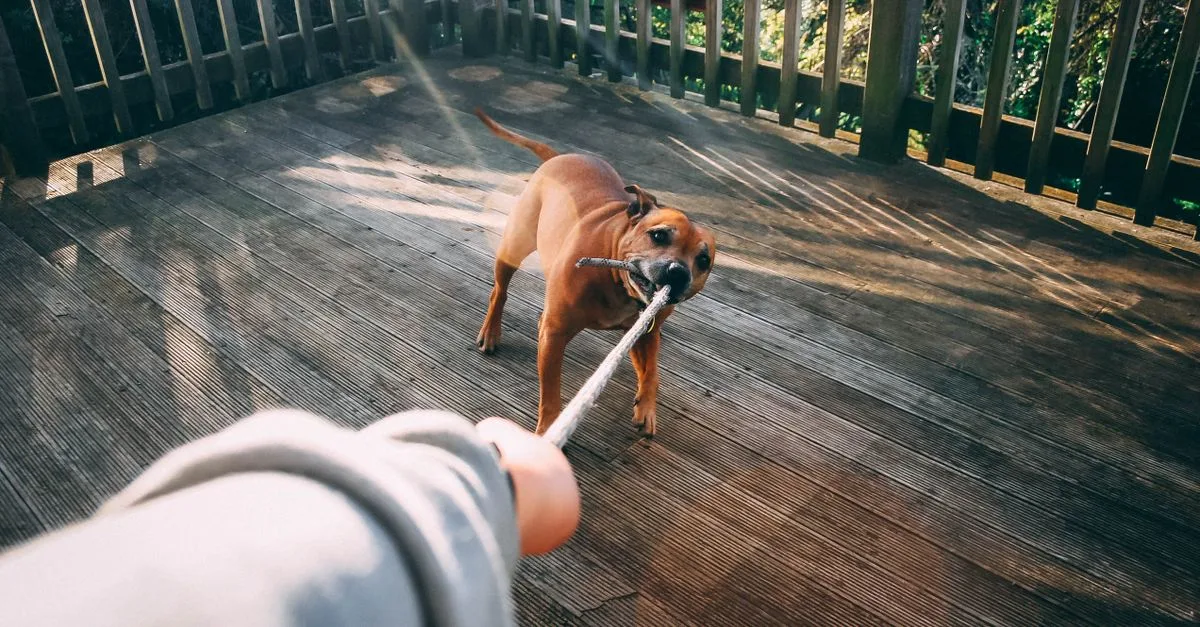
Moving feet are irresistible lures.
When your puppy ambushes ankles: STOP moving (movement is the reward), go boring, then redirect to a dragged toy that moves the way feet do.
Herding breeds are ankle specialists — they need extra outlets for chase instinct: flirt poles and drag toys are purpose-built for exactly this.
The overtired gremlin hour
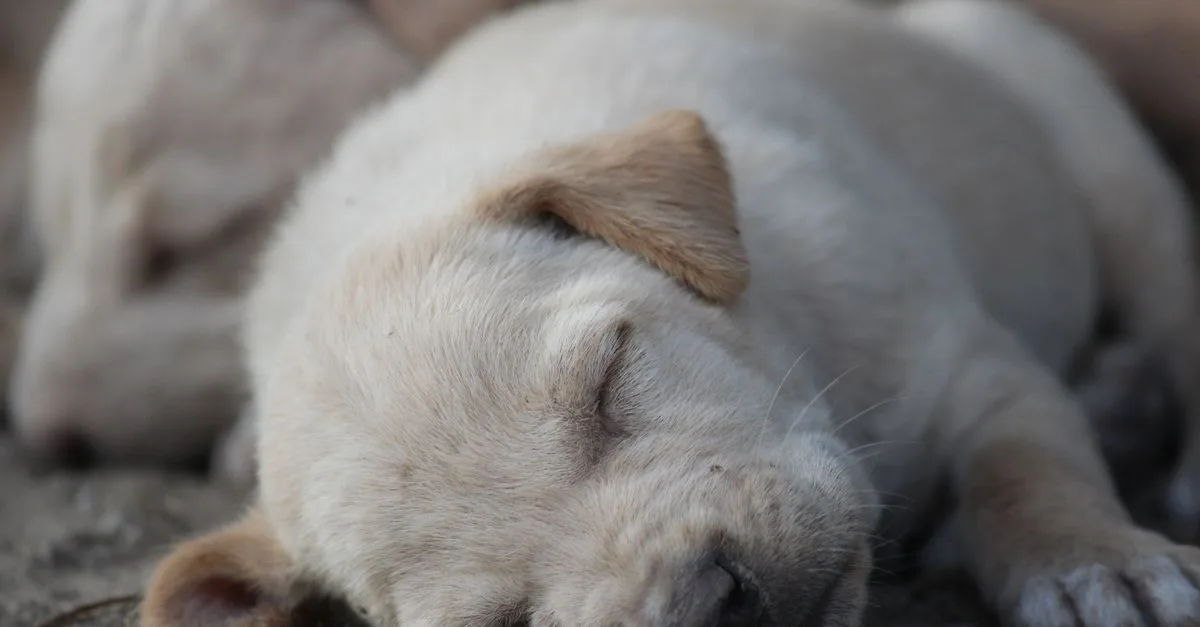
Veteran owners know: the worst biting is often exhaustion.
Like toddlers, overtired puppies get frantic, bitey and unreasonable — typically in a wild evening “witching hour.”
The fix isn’t more correction; it’s a nap. Puppies need 16–20 hours of sleep a day. Frantic biting after a busy stretch = calmly into the crate or pen for rest, and the gremlin transforms back.
Exercise and enrichment: drain the tank
A busy mouth often means an under-worked brain and body.
Age-appropriate play sessions, sniffy walks (when vaccinated), training games and food puzzles burn the energy that otherwise exits through teeth.
Five minutes of training tires a puppy more than fifteen of zoomies — mental work is heavy lifting. Start with our basic obedience guide.
Teach “sit” as the ask-for-everything
Give the mouth a competing job.
A puppy sitting for attention can’t simultaneously be biting for attention. Teach sit early, reward it constantly, and make it the password for food, play, greetings — everything good.
Soon the puppy that wanted to mug your hands offers a sit instead. Keep training treats everywhere in week one.
Kids and puppy biting
The combination needs managing — both directions.
Children move fast, squeal, and wave hands: everything that revs a bitey puppy. Supervise all interactions, teach kids to go “still like a tree” when teeth come out, and let THEM deliver the fun-stops consequence by calmly walking away.
Never leave young children and mouthy puppies to sort it out themselves.
Clothes-biting: sleeves, pants and zoom-grabs
Fabric counts as skin in this game.
Same rules: freeze (tug rewards tugging), boring “too bad,” redirect to a real tug toy where tugging is legal and glorious.
A designated tug toy actually satisfies the exact urge — it’s the ankle-attack outlet, licensed.
Everyone plays by the same rules
Consistency is the multiplier on everything above.
If you redirect but your partner plays rough hand-wrestling, the puppy learns “biting works sometimes” — the most persistent kind of habit.
House meeting: no hand-play, same “ouch” word, same fun-stops response, toys in every room. Boring uniformity is what makes it fast.
The timeline: when does biting stop?
Realistic expectations keep you sane.
With consistent handling, most puppies improve noticeably within 2–4 weeks, mellow substantially as teething ends (around 6 months), and finish maturing into soft-mouthed adults over the months after.
Progress is a downward zigzag, not a straight line — regression on exciting days is normal.
Adolescent nipping: the second wave
A heads-up for months 6–12.
Some teens re-test old habits during adolescence — mouthing in excitement or attention-nipping. Same rules apply, applied calmly; it passes faster than round one.
Keep the exercise generous through adolescence; a fulfilled teen dog is a gentler one.
What NOT to do: the full list
- No hitting, muzzle-grabbing or nose taps — creates fear-biting.
- No “alpha rolls” or pinning — outdated and counterproductive.
- No rough hand-wrestling games — they license the exact behavior you’re fixing.
- No yelling — scary or exciting, never educational.
- No inconsistency — “sometimes okay” is the hardest habit to break.
- No expecting overnight results — this is development, not defiance.
When to get professional help
Some situations deserve expert eyes early.
Seek a certified positive-reinforcement trainer if biting comes with stiff, frozen, growly resource guarding; if a puppy over 6 months is intensifying rather than improving; if bites are breaking skin regularly despite consistent work; or if anyone in the house is becoming afraid of the puppy.
Early professional help is cheap insurance on a 15-year relationship. This article is general information; consult a certified trainer or your vet for concerning behavior.
Your quick-reference cheat sheet
Stick this on the fridge.
- Teeth touch skin → calm “ouch,” fun stops 10–30 seconds.
- Redirect to a toy → praise chomping the RIGHT thing.
- Frozen toys and washcloths for teething relief.
- Frantic evening biting → nap, not discipline.
- Sit = the password for everything good.
- Toys in every room; same rules from every human.
Know the bite ladder
Not all mouthing is equal — grade it.
Level one: open-mouth contact, no pressure. Level two: pressure without marks. Level three: scratches or dents. Most puppies live at one and two while learning.
Grading helps you track progress objectively — “she’s gone from threes to ones in two weeks” is real, visible improvement worth celebrating.
Teach “drop it” with the trade game
The companion skill to redirection.
When puppy has the right thing, occasionally offer a treat, say “drop it” as they release, reward, then give the toy BACK. The lesson: releasing things to humans is profitable and safe.
A reliable drop-it prevents guarding, saves stolen socks, and one day might save your dog from something dangerous on a walk.
Gentle handling exercises (the vet will thank you)
Teach paws-ears-mouth tolerance while they’re small.
Daily ten-second sessions: touch a paw → treat, look in an ear → treat, lift a lip → treat. Keep it easy and rewarding.
A puppy that learns handling equals snacks becomes an adult who tolerates nail trims, ear cleaning and vet exams without drama — and without defensive mouthing.
The crate and pen are tools, not timeouts
Use management spaces correctly.
The pen or crate is where naps and chew-sessions happen — a calm good place, introduced with treats and never used with anger.
When the gremlin hour hits, “settle in your pen with a frozen Kong” is management, not punishment. The distinction keeps the crate a sanctuary for life.
Bite-proof your play style
How YOU play shapes their mouth manners.
Keep hands boring: no wrestling fingers, no face-level roughhousing, no waving hands like prey. Excitement should aim at toys you’re holding, not skin you’re wearing.
High-energy play is great — through fetch, tug and flirt poles, where the rules are built into the equipment.
Structured tug: yes, you can play it
Old myth says tug makes dogs bitey; done right, it teaches control.
Rules: the game starts on your cue, teeth-touch-skin ends it instantly, and “drop it” pauses it for a restart reward.
Structured tug is actually bite-inhibition class disguised as the best game ever — trainers use it deliberately.
Mouthing in adolescent and adult dogs
Past the puppy window, the playbook shifts slightly.
Adult mouthing is usually over-arousal or attention-seeking: same consequences (fun stops), more emphasis on exercise, impulse-control games and rewarding calm.
An adult dog whose mouthing feels intense, stiff or startling deserves a professional evaluation rather than internet guesses — usually it’s still just training, but confirm it.
Food-time manners: no mugging allowed
Meals are a daily bite-inhibition classroom.
Ask for a sit before the bowl lands; if teeth or paws mug your hands, the bowl calmly rises again. Patience earns dinner.
Two weeks of this and you have a dog that waits politely — and has practiced self-control sixty times without a single “training session.”
Keep a one-line progress journal
Motivation lives in the data.
Each evening, one line: bite level today, worst moment, best moment. On discouraging days, last month’s entries prove the trend is downward.
Bonus: if you ever do consult a trainer, that journal makes their job — and your dog’s progress — twice as fast.
Frequently Asked Questions
How do I get my puppy to stop biting me?
Redirect every bite onto a toy and make teeth-on-skin end the fun instantly: a calm “ouch,” hands still, attention gone for 10–30 seconds. Add teething relief, plenty of naps and exercise, and total consistency from everyone in the house. Improvement typically shows within a few weeks.
Why does my puppy bite me so much?
Puppies explore mouth-first, play with teeth as they did with littermates, and chew to relieve teething pain between roughly 3 and 6 months. Add excitement, overtiredness and your delightfully mobile hands and ankles, and biting is simply normal development — not aggression.
At what age do puppies stop biting?
With consistent training, most puppies improve markedly within two to four weeks and settle substantially once teething ends around six months, maturing into soft-mouthed adults in the months after. Occasional adolescent re-testing between six and twelve months is normal and passes quickly.
Should I yelp when my puppy bites?
Test it once: a soft yelp mimics littermate feedback and stops some puppies immediately. But excitable puppies often treat squeals as squeaky-toy encouragement and bite harder — if that’s yours, switch to the silent version: freeze, stand, turn away, fun over.
Is it bad to hold my puppy’s mouth shut when it bites?
Yes — muzzle-grabbing, nose taps and pinning teach your puppy that approaching hands mean bad things, creating fear and genuinely dangerous defensive biting later. Consequences should be boring (fun stops), never physical. Hands stay associated with good things for life.
Why is my puppy biting worse in the evening?
That frantic evening “witching hour” is usually overtiredness — puppies need 16–20 hours of sleep daily and turn into bitey gremlins when overdue. The fix is a calm nap in the crate or pen, not more correction. A rested puppy is a reasonable puppy.
When should I worry about puppy biting?
Seek a certified trainer if biting comes with stiff, frozen resource guarding, intensifies past six months despite consistent work, regularly breaks skin, or makes anyone in the household fearful. These are uncommon — but early professional help resolves them best.
The bottom line
Puppy biting is a phase with a curriculum: redirect to toys, end the fun when teeth find skin, soothe the teething, guard the naps, and stay boringly consistent.
Do that, and the land-shark weeks fade into a soft-mouthed adult dog — with bite inhibition that lasts a lifetime.
Keep building good habits with our puppy obedience guide and best puppy toys.

Hello! I'm Khan Hisham, a dedicated student with a profound passion for enhancing the lives of pets through comprehensive care. At Pawspera, our mission—"Prospering Pets, Every Day"—drives everything we do. We are committed to providing the latest insights, tips, and products that ensure your pet's health and happiness. Join us at Pawspera as we explore innovative ways to care for our furry friends with love and dedication.