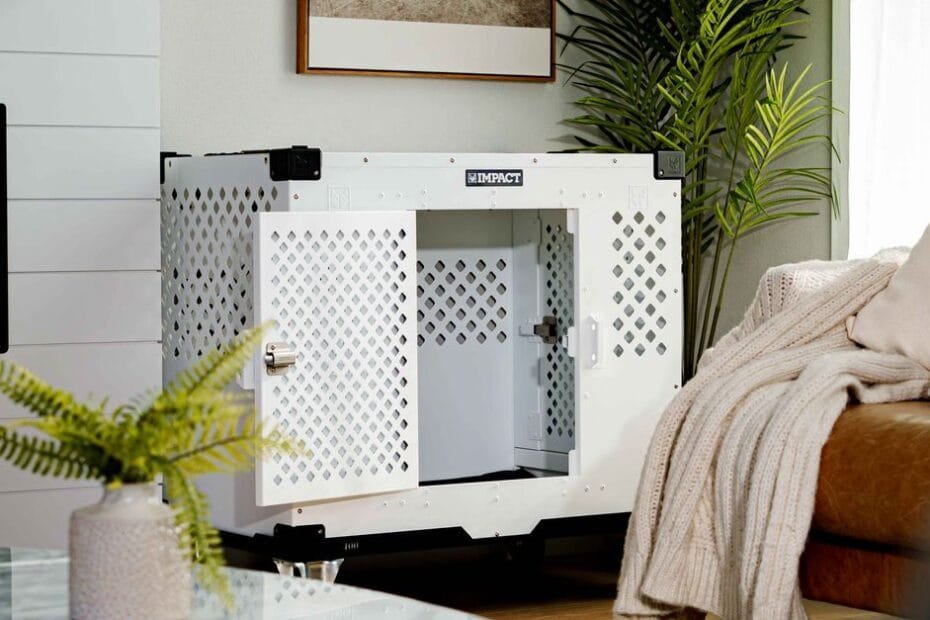
Crate training succeeds on one reframe and four stages: the crate is a BEDROOM, not a jail — and the dog decides which one it is based entirely on how the introduction goes — so the stages run open-door FURNITURE (days of treats discovered inside, zero pressure), MEALS in the crate (the den becomes the restaurant), DOOR reps in seconds-then-minutes (closed, paid, opened before worry starts), and DURATION built behind a chew project while you’re home before you’re ever gone. The two rules that protect the whole project: the crate is NEVER punishment (one angry “go to your crate” can undo three weeks), and time limits are physiology — puppies hold roughly their age-in-months in hours, adults max out around a work-half-day with relief — because a crate is a bedroom, and nobody should live in a bedroom.
This is the complete crate-training playbook: the reframe and why dens work, choosing and setting up the crate (size, type, placement, and the divider trick), the four stages step-by-step with their stall-and-recovery notes, the overnight protocol for the first weeks, the time-limit table stated plainly, the whining decision tree (the hardest judgment in dog ownership, made simple), and the graduation question — when the door stops closing.
Key Takeaways
- The crate is a bedroom the dog furnishes with associations — every stage exists to make those associations good.
- Four stages: open-door furniture, meals inside, second-long door reps, duration behind a chew — each boring before the next.
- Size to stand-turn-lie; use the divider for puppies — a hall-sized crate un-trains the den instinct.
- Never punishment, never past the physiology: age-in-months hours for puppies, a half-day ceiling for adults.
- The whining tree: needs-relief whining gets a boring potty trip; protest whining waits out ONE beat of quiet before the door opens.
- Most trained dogs graduate to open doors — the crate becomes furniture they choose, which was the point.
The Reframe (Dens, Bedrooms, and Why It Works)
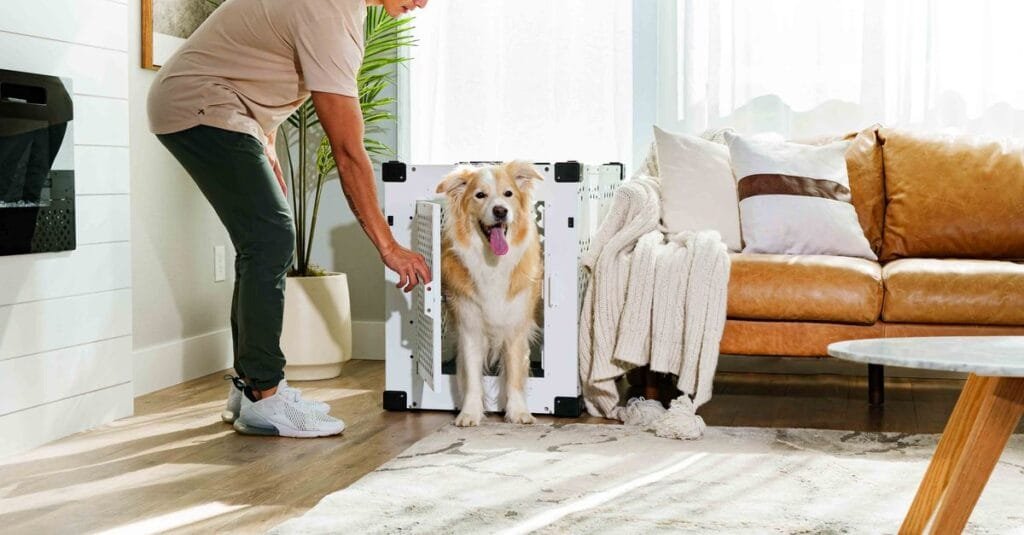
THE DEN CASE, made honestly: dogs are den-adjacent rather than den-obsessed — the instinct is real (enclosed, covered rest spots self-select all over your house already) but the crate’s value is BUILT, not innate: a properly introduced crate becomes the predictable retreat that serves travel, recovery from surgery, houseguest chaos, and the alone-time infrastructure this week’s seasonal guide leans on.
Also Read



THE WELFARE FRAME that keeps the tool honest: the crate solves MANAGEMENT problems (un-supervisable puppies, destructive adolescence, multi-dog feeding, travel) while the training installs; it is not a storage solution for an under-exercised dog — the budget gets spent before crate hours, always — and the households that hate crates are almost always describing crates used past the physiology or as punishment, which this guide bans in its first paragraph.
THE ALTERNATIVES, named without judgment: the gated puppy-zone (an exercise pen around the crate — the open-door hybrid most modern trainers start with), the dog-proofed room for the crate-averse adult, and the honest note that a trained crate plus a gated zone covers essentially every management situation a household meets — the tools stack.
McCann’s complete crate plan above runs the same staged build this guide writes out — watch the door reps especially; the seconds-long timing is where home attempts usually rush.
The Setup (Size, Type, Placement, Divider)
SIZE: stand-turn-lie is the formula — room to stand at full height, turn around, and stretch out lying down, and not much more — because the hall-sized crate lets a puppy sleep one end and soil the other, un-training the cleanliness instinct that makes crates potty-training’s best ally; the PUPPY answer is the adult-sized crate WITH the divider panel moved back as the puppy grows — one purchase, per the crate guide’s buying math.
TYPE by household: the WIRE crate (airflow, visibility, the divider system, folds flat) is the standard; the PLASTIC travel crate (denier, cozier, airline-relevant) suits the burrow temperament; the FURNITURE tier (the credenza crates) passes the living-room test at a premium; and the soft-sided tier is for trained travel dogs only — a determined un-trained dog exits fabric in minutes.
PLACEMENT AND FURNISHING: the crate lives where the family IS (the bedroom at night for the first weeks, the living-room edge by day — isolation defeats the bedroom frame), furnished with a washable bed and safe chew (the crate-kit tier bundles the starters), water for longer stints, cover-blanket for the wire crate’s cave-preferrers — and the collar-off rule inside: tags catch wire, and the naked-dog crate is the safe crate.
The Four Stages (With Stall Notes)
STAGE ONE — FURNITURE (days 1–3+): door fixed open, treats and the fed Kong discovered inside “by accident,” zero cueing, zero pressure — the dog who begins napping inside voluntarily has passed; the stall note: the suspicious rescue may need a week here, and the week is cheap.
STAGE TWO — THE RESTAURANT: every meal moves into the crate (bowl at the mouth, then midway, then the back), the door still open — the strongest association-builder in the program doing its work at zero risk; STAGE THREE — DOOR REPS: door closed during a meal and opened BEFORE the food ends, then closed-paid-opened in five-second reps that grow to minutes while you sit beside, then across the room — the timing law: the door opens during calm, never during protest (the lesson either way is permanent).
STAGE FOUR — DURATION: the long-chew project (the frozen Kong economy) behind a closed door while you’re HOME and moving normally — fifteen minutes to an hour across a week — then the first real departures per the rehearsed-absence ladder, short and boring; the stall note for every stage is the same instruction: one rung back down, win-rate up, climb again — the 80% rule wearing a crate door.
Overnights, Time Limits, and the Whining Tree
THE FIRST-WEEKS OVERNIGHT: crate in the bedroom (the puppy who can hear you breathe settles in half the nights), last water pulled an hour before bed, the final potty trip at lights-out, and the 2 a.m. puppy trip run BORING (out, business, back, zero party) — the overnight bladder grows into the schedule within weeks, and the bedroom crate migrates later only if the household wants it to.
THE TIME-LIMIT TABLE, physiology not preference: puppies hold roughly AGE-IN-MONTHS hours (the three-month puppy = three-ish hours), adolescents and adults cap around four-to-six with a relief break making the school-day shape workable, seniors often shorten again — and past the ceiling isn’t training, it’s confinement: the midday walker, the pen hybrid, or the outsourcing chapter closes the gap the calendar can’t.
THE WHINING DECISION TREE, the program’s hardest judgment made mechanical: FIRST rule out needs (recent potty? water? the schedule says?) — needs-whining gets the boring relief trip, no play, straight back; protest-whining (needs met, stage maybe rushed) waits for ONE beat of quiet before any door opens — the door that opens mid-cry pays the cry — and whining that escalates toward the panic tier (frantic, drooling, self-injurious) is not protest at all: it exits the training program and enters the separation-distress lane with its vet-first escalation, because you cannot crate-train panic.
Special Cases and the Graduation Question
THE RESCUE-AND-HISTORY DOG: unknown crate histories mean stage one may take weeks or the crate may be permanently poisoned — the pen-and-room alternates serve identically, the 3-3-3 rhythm outranks any crate timeline, and the trauma-tier reactions (immediate panic at the sight) skip straight to a professional rather than a slower ladder.
THE ADULT-DOG START: the same four stages run faster with adult attention spans — most settled adults reach duration inside two weeks — and the motivation matters: adults crate-train beautifully for travel, recovery, and the September schedule, which is precisely why this guide publishes in the first week of August.
GRADUATION: the trained dog eventually earns the open door — most households find the adult sleeping in the crate by choice with the door never closing again except for travel and recovery, which is the tool completing itself: the bedroom stays a bedroom, the management need retires, and the crate’s last job is being the one familiar room that travels to every vet stay, road trip, and new house the dog will ever see.
Frequently Asked Questions
How long does it take to crate train a dog?
Puppies: two-to-four weeks through the four stages run patiently; settled adults often inside two weeks. The clock resets at every rushed stage — the 80%-success rule with one-rung-back recovery is faster than pushing through protest.
How long can a dog stay in a crate?
Physiology, not preference: puppies roughly their age-in-months in hours; adults four-to-six with a midday relief break; seniors often less. Past the ceiling is confinement, not training — the walker, the pen hybrid, or a different plan closes gaps the crate shouldn’t.
Should I ignore my puppy whining in the crate?
Run the tree: rule out needs first — needs-whining gets a boring potty trip and straight back. Protest-whining waits for one beat of quiet before the door opens (the mid-cry door pays the cry). Frantic, drooling, self-injurious panic is neither — that’s the separation-distress lane, vet first.
What size crate should I buy?
Stand-turn-lie and not much more — the oversized crate lets a puppy sleep one end and soil the other, breaking potty-training’s best ally. Buy the adult size with a divider panel and grow the space with the puppy.
Where should the crate go at night?
The bedroom for the first weeks — the puppy who can hear you breathe settles in half the nights — with the last-hour water pull, the lights-out potty trip, and boring 2 a.m. relief runs. Migrate it later if you want; many households never bother.
Is crate training cruel?
Built right, it’s a bedroom the dog chooses — the welfare problems live in misuse: punishment crating (banned in paragraph one), hours past the physiology, and crating instead of exercising. The graduation test says it plainly: trained dogs nap in open-door crates voluntarily.
The Crate Through a Dog’s Life (The Long Game)
THE LIFECYCLE TOUR: the puppy’s potty-training ally and chew-management den, the adolescent’s decompression room during the teenage months, the adult’s travel pod and vet-stay familiar (the crate-trained dog recovers from surgery in its own bedroom instead of a scary pen — ask any vet tech which patients rest better), the multi-dog household’s feeding-peace infrastructure, and the senior’s guaranteed-undisturbed rest as households get louder around them.
THE TRAVEL DIVIDEND cashed for a lifetime: the crate-trained dog rides secured per the car-safety chapter, checks into hotels and rentals with its bedroom in the trunk, evacuates in emergencies without adding panic to crisis (shelters and evacuation sites are crate-required realities), and boards anywhere calmly — the August training project quietly underwriting a decade of logistics.
THE MAINTENANCE DOSE: a trained crate stays trained on a few paid reps weekly (the meal inside, the chew project behind a closed door), the door still never closing in anger, and the setup audited as the dog ages — the senior’s crate gains the orthopedic mat and loses the height, per the same dignity engineering as everything else in the old dog’s house.
The Two-Crate Household Math
Multi-dog crating runs per-animal always (the shared-crate experiment ends at the first resource dispute), crates spaced so tails don’t touch wire between them, feeding-in-crates as the multi-dog peace infrastructure it was born for — and the travel note that one collapsed wire crate per dog fits most trunks flat, which is how the two-dog road trip keeps two bedrooms in the luggage.
The Bottom Line
Reframe it as the bedroom, size it stand-turn-lie with the divider, run the four stages each-boring-before-the-next, respect the physiology table, work the whining tree without paying the cry, and let the door eventually stop closing — the crate built in August is the September schedule’s quiet hero, and the dog napping in it by choice is the whole argument.
The mistakes audit, compressed: THE DAY-ONE DOOR (closed on an unconditioned dog — the program run backwards), THE PUNISHMENT CRATE (banned, and worth re-banning), THE HALL-SIZED PUPPY PALACE that un-trains cleanliness, THE MID-CRY DOOR that pays the protest, THE COLLAR LEFT ON against the wire, THE CRATE-AS-SCHEDULE that substitutes containment for the exercise budget, and THE ISOLATION PLACEMENT in the laundry room that converts bedroom to exile — seven classics, every one of them cheaper to read than to retrain out of a dog who learned the wrong lesson first.
Jail is imposed. Bedrooms are furnished by their owners — and your dog has been picking den corners all along.