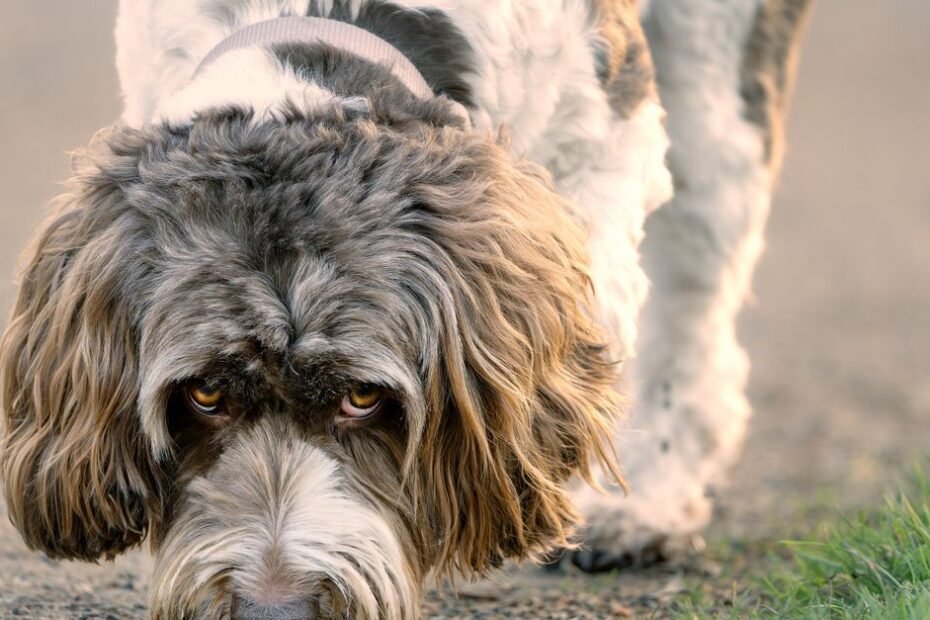
You planned a brisk thirty-minute walk. Your dog planned a forensic investigation of one fire hydrant, four grass clumps, and a suspicious lamppost — total distance covered: 200 meters.
Before you tug the leash in frustration, here’s the reframe that changes everything: your dog isn’t wasting the walk. For a dog, the sniffing is the walk.
Quick answer: Dogs sniff everything on walks because smell is their primary sense — with up to hundreds of millions of scent receptors (versus our ~6 million), a dog reads the neighborhood through its nose the way we read a news feed. Sniffing gathers social information from other animals’ scent marks, provides serious mental exercise, and measurably lowers stress. Trainers and behaviorists now recommend deliberately allowing sniffing — “sniff walks” can tire and calm a dog more effectively than the same minutes of brisk marching.
Also Read
-
Puppy Teething: The Timeline, the Frozen Tier, and the Ten Thousand Trades

-
How to Socialize a Kitten: The Window, the Food Rule, and the Checklist

-
How to Stop a Cat Scratching Furniture: The Reroute, the Placement Law, and the Specs

-
How to Crate Train a Dog: The Four Stages, the Whining Tree, and the Physiology Table
Key Takeaways
- A dog’s nose has tens of times more scent receptors than ours, plus a dedicated organ for reading animal chemical signals.
- Sniffing is social media for dogs — every mark tells who passed, when, their sex, health, and mood.
- Sniffing is mental exercise: ten minutes of nose work can tire a dog like a much longer plain walk.
- Letting dogs sniff is linked to lower stress and more optimism — pulling them away all walk removes the walk’s best part.
- The balanced answer: dedicated sniff time plus a “let’s go” cue — structure, not suppression.
- Obsessive ground-hunting for food or frantic scavenging is the version worth training (and vet-checking).
How Powerful Is a Dog’s Nose, Really?
The numbers sound made up, but they’re the accepted science:
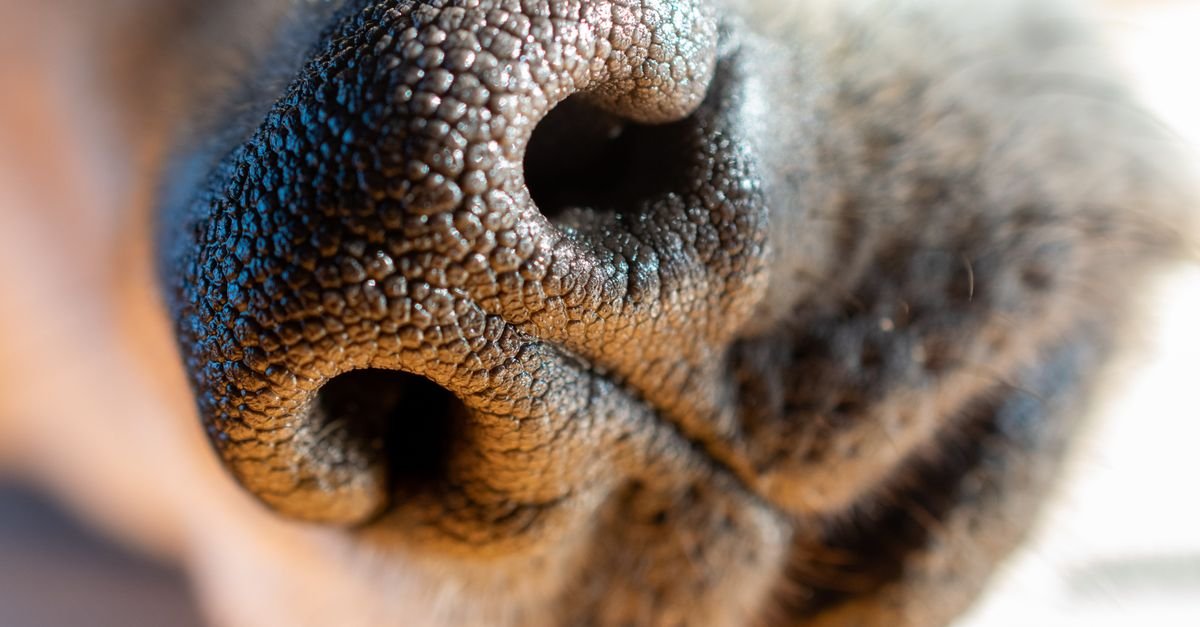
Dogs carry on the order of hundreds of millions of olfactory receptors — commonly cited around 100–300 million depending on breed — against our roughly six million. The brain region processing smell is proportionally dozens of times larger than ours.
Their nostrils work semi-independently, letting them tell which direction a smell came from — stereo smelling. And a slit at the side of each nostril lets exhaled air exit without disturbing the scent they’re pulling in, so they can sniff continuously.
On top of all that, dogs own an accessory scent organ we effectively lack: the vomeronasal (Jacobson’s) organ, tuned specifically to pheromones — the chemical signals other animals leave behind.
Translation: your dog doesn’t see the street with a hint of smell. Your dog smells the street, with a hint of vision.
What Is Your Dog Actually Reading Down There?
That lamppost your dog is studying? It’s the neighborhood’s community noticeboard — and the AKC only half-jokes when it calls sniffing a dog’s version of social media.
From one scent mark, a dog can plausibly read: who passed (individual identity), when (scent freshness), their sex and reproductive status, roughly their health and diet, and their emotional state — stress leaves chemical traces.
Your dog is checking timelines, reading comments, and leaving replies (that’s what the counter-pee is — posting).
Seen that way, dragging a dog past every scent spot is like snatching someone’s phone mid-sentence, every sentence, for the entire walk.
Why Is Sniffing Such Good Exercise?
Here’s the part that surprises even devoted owners: sniffing is work — cognitively expensive, genuinely tiring work.
Processing scent engages a huge share of the dog brain: sorting layered smells, dating them, mapping them, cross-referencing against memory. It’s deep concentration wearing a wet nose.
That’s why trainers repeat the rule of thumb: ten minutes of dedicated sniffing can tire a dog comparably to a much longer plain-march walk. Professional trainer Zak George (video above) builds entire walk strategies around the nose for exactly this reason.
For puppies, seniors, dogs on restricted activity, and rainy-day energy crises, nose work is the exercise cheat code — big fatigue, tiny mileage. It drains the same restlessness budget that otherwise funds zoomies, excavation projects, and tail-chasing.
Does Sniffing Actually Calm Dogs Down?
The evidence points that way, and it matches what owners see.
Research on dogs given sniffing opportunities has associated nose work with lower pulse rates and more “optimistic” judgement in behavioral tests — and sniffing appears to be genuinely self-soothing: dogs often sniff the ground deliberately in tense moments as a calming signal.
Behaviorists talk about letting a dog “get their sniffs in” the way we talk about a person needing their morning coffee and quiet — a decompression ritual, not a delay.
If your dog is anxious, reactive, or wired, a slow sniff-heavy walk in a quiet area is often more therapeutic than a fast march past triggers. Calmer input, calmer dog.
Should You Let Your Dog Sniff on Every Walk? (The Balanced Answer)
Yes to sniffing — with structure. The practical framework trainers recommend:
Split your walks by purpose
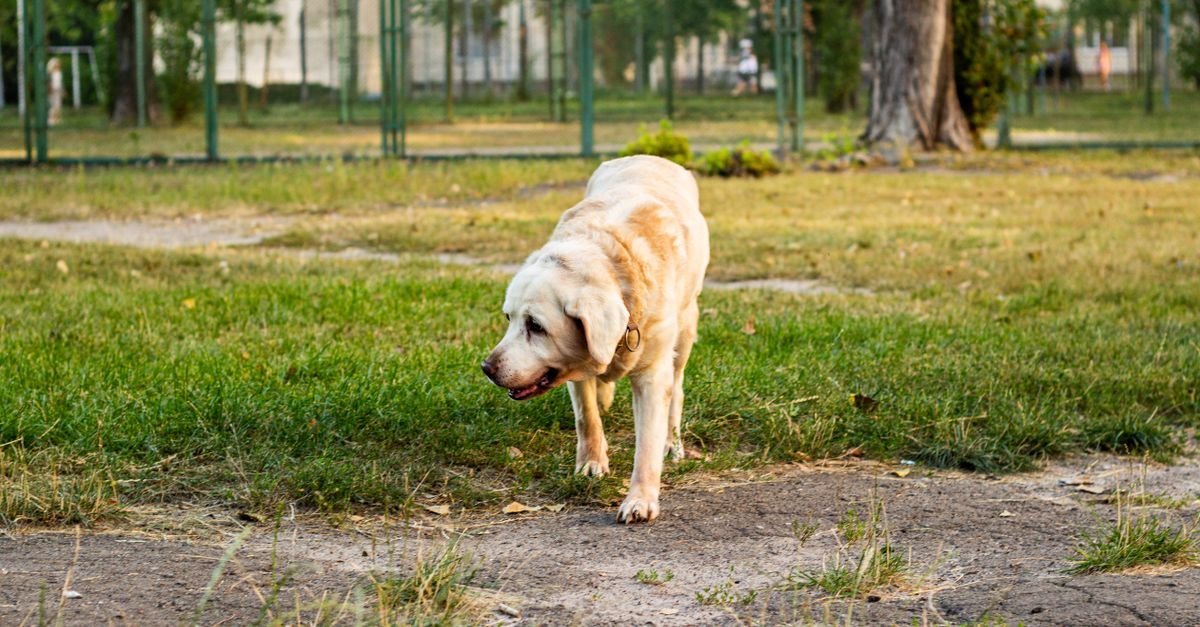
Sniff walks (enrichment): slower, dog-led, generous line — the dog chooses the route within reason and reads every noticeboard. Even 15–20 minutes counts as premium enrichment.
Exercise walks (mileage): brisker and more structured, with sniff breaks at intervals you choose.
Most dogs thrive on a mix — and knowing which walk this is keeps both ends of the leash sane.
Teach the two magic cues
“Go sniff” — the release that grants noticeboard time. Use it at good spots and the sniffing becomes a reward you control.
“Let’s go” — the polite resume-walking cue: say it cheerfully, take a step, reward the dog for coming along. No leash-yanking required — a taut-leash tug into a mid-read dog just teaches leash tension.
Budget the time honestly
A 30-minute outing might be 10 minutes of travel and 20 of investigation — and that ratio is a successful dog walk, whatever the step counter says.
Why Does My Dog Sniff One Spot Forever?
The five-minute fire-hydrant deep-read has reasons:
Layered history. Popular marking posts hold weeks of overlapping messages — your dog is scrolling a long thread, oldest to newest.
A high-value correspondent. An unfamiliar dog, an intact male’s mark, a female in season — some posts warrant close study.
Pre-reply investigation. Thorough reading often precedes the counter-mark — due diligence before posting.
Give the big landmarks a real read when you can, then use your cheerful “let’s go.” If one specific spot triggers fixation every single walk to the point of distress, vary the route for a while — some threads are too spicy to keep re-reading.
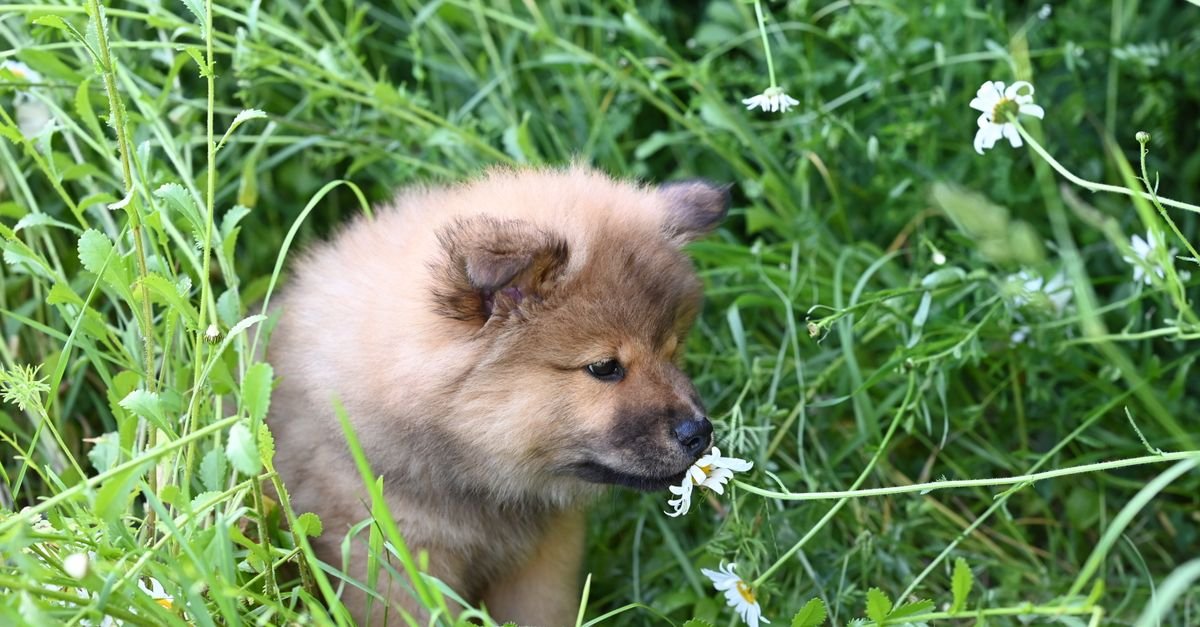
When Is Sniffing a Problem?
Sniffing is healthy — but a few versions deserve attention:
Scavenging, not sniffing. If the nose-down behavior is really a food-hunt — hoovering crumbs, chicken bones, mystery snacks — that’s a safety issue. Train a rock-solid “leave it,” consider route changes, and for committed vacuum-dogs, a basket muzzle on risky routes is kind protection, not cruelty.
Frantic, can’t-disengage ground obsession paired with pacing or stress signals — sometimes anxiety wearing a sniffing costume. Worth a trainer’s eyes.
Sudden change in sniffing behavior — a scent-obsessed dog losing interest in smells can signal illness or nasal trouble; the nose is health infrastructure. Vet visit.
Obsessive licking after sniffing or air-snapping — different behaviors that ride along; our guide on why dogs lick so much covers that lane.
Standing note: education, not diagnosis — behavior changes plus any physical signs go to your veterinarian.
How Do You Give a Dog More Nose Work at Home?
Rainy day? Recovery week? The noticeboard comes indoors:
Scatter feeding: toss part of dinner across the lawn or a snuffle mat — a meal becomes a twenty-minute treasure hunt.
The shell game: treat under one of three cups, shuffle, release the nose. Escalate difficulty as your detective levels up.
Hide and seek: stash treats (or yourself) around the house — “find it!” is the happiest command most dogs ever learn.
Cardboard destruction box: treats hidden in a box of crumpled paper — recycling becomes enrichment.
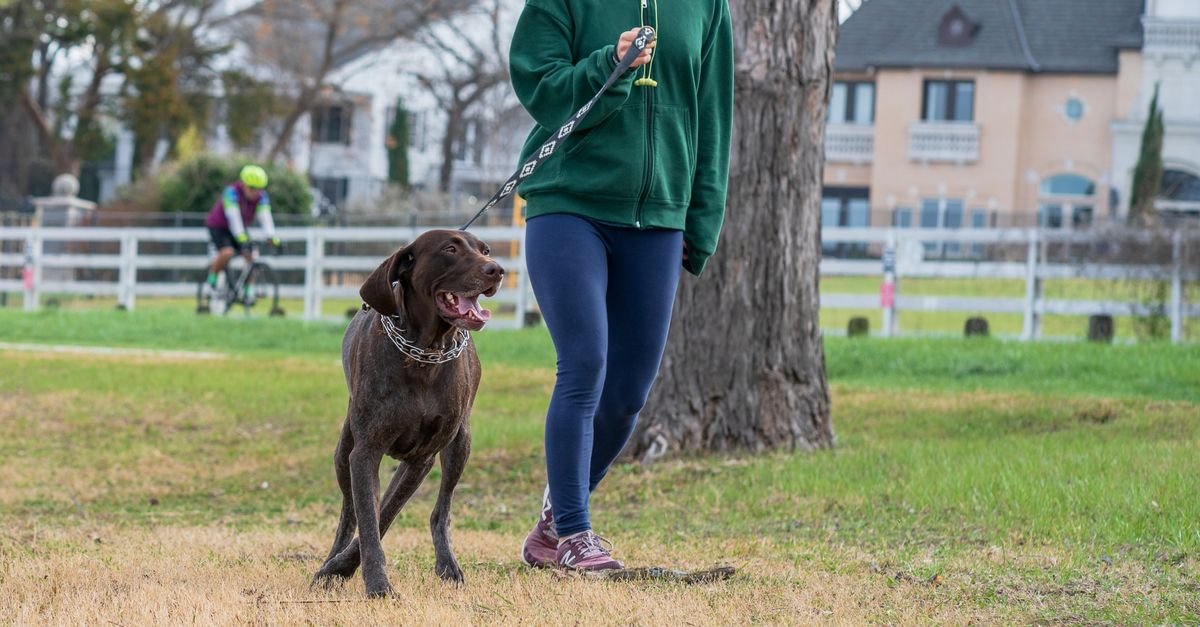
Sniff-walk upgrades — reader favorites on Amazon:
The Sniff-Walk Starter Plan (This Week)
Turn theory into a routine in four steps:
- Declare one walk a day (or three a week) a sniff walk. Slower pace, longer line if safe, dog picks the pages to read.
- Install the cues: “go sniff” at good spots, cheerful “let’s go” plus a treat to resume. One week of consistency and the negotiation ends.
- Trade equipment if pulling is the fight: a well-fitted harness beats collar pressure for a nose-down dog — our guide to leash training tools compares the options.
- Watch the after-effect: most owners report a sniff-walked dog naps harder than a marched one. Let the evidence convert you.
Why Does My Dog Sniff People? (The Awkward Question)
Dogs greet people the way they greet everything: nose-first. And because scent glands cluster in human armpits and groins, dogs aim for exactly the areas that make dinner guests nervous.
To your dog, this is a completely polite handshake — a scent-read of who you are, where you’ve been, how you feel, even hormonal states. Dogs famously detect pregnancy, stress, and illness shifts in human scent; some are trained to alert to medical changes precisely because this reading is so accurate.
Managing the enthusiasm politely: teach a solid sit for greetings (a sitting dog can’t crotch-dive), reward calm four-paws-on-floor hellos, and give committed greeters a scent-acceptable alternative — offering guests a hand to sniff first satisfies most of the curiosity.
No punishment needed — it’s information-gathering, not rudeness. Your dog is just reading the new arrival’s profile page.
Do Some Breeds Sniff More Than Others?
Dramatically so. Scent hounds — Beagles, Bassets, Bloodhounds, Coonhounds — were bred for generations to follow their noses to the exclusion of all else; expecting a Beagle to march past smells is expecting a librarian to march past books.
Working sniffers like Labs, Spaniels, and German Shepherds (the backbone of detection-dog work) also run nose-forward lives.
If you share a leash with one of these, budget extra sniff time and lean harder on nose-work games at home — you’re not fixing a flaw, you’re feeding a specialty.
Frequently Asked Questions
Why does my dog sniff everything on walks?
Smell is your dog’s primary sense — with vastly more scent receptors than humans, dogs read neighborhood scent marks like a social news feed: who passed, when, their sex, health, and mood. Sniffing is information-gathering, mental exercise, and stress relief in one behavior.
Should I let my dog sniff during walks?
Yes — deliberately. Trainers recommend dedicated “sniff walks” or generous sniff breaks: nose work provides serious mental exercise and is associated with calmer, lower-stress dogs. Pair the freedom with a cheerful “let’s go” cue so you can resume walking without leash battles.
Do sniff walks really tire dogs out?
Remarkably well — processing scent is cognitively demanding, and a common trainer rule of thumb holds that ten minutes of engaged sniffing fatigues a dog comparably to a much longer plain walk. It’s the exercise cheat code for puppies, seniors, and rainy days.
Why does my dog sniff one spot for so long?
Popular marking spots hold layered messages from many dogs across days or weeks — your dog is reading a long thread, often before leaving a reply of its own. Let the big landmarks get a real read, then cue onward cheerfully.
How do I stop my dog from sniffing the ground constantly?
Don’t eliminate it — structure it: teach “go sniff” as a granted reward and “let’s go” (plus treat) to resume, split walks into sniff-focused and exercise-focused, and train “leave it” if the real issue is food scavenging. Suppressing all sniffing removes the walk’s main enrichment.
Is sniffing calming for dogs?
Yes — research links sniffing opportunities with lower pulse rates and more optimistic behavior, and dogs deliberately sniff to self-soothe in tense moments. Slow, sniff-rich walks are often better therapy for anxious dogs than brisk marches.
Why does my dog sniff and then pee on the same spot?
That’s reading the noticeboard and posting a reply — scent marking over another dog’s message is standard canine correspondence, especially at high-traffic landmarks. Completely normal social behavior.
The bottom line
The walk you planned and the walk your dog needs are both real — so schedule both. Give the nose its newspaper time, install two friendly cues, and watch a “stubborn slow walker” reveal itself as what it always was: a brilliant reader, finally allowed to finish the page.

Hello! I'm Khan Hisham, a dedicated student with a profound passion for enhancing the lives of pets through comprehensive care. At Pawspera, our mission—"Prospering Pets, Every Day"—drives everything we do. We are committed to providing the latest insights, tips, and products that ensure your pet's health and happiness. Join us at Pawspera as we explore innovative ways to care for our furry friends with love and dedication.